Wheels and Tyres Guide - General Information
Run-flat tyres, structure and identification of a SST tyre
In this manual: Wheels and Tyres Guide - General Information
~3min read
Removing and fitting run-flat tyres → Chapter.If run-flat tyres are used, a Tyre Pressure Monitor display must be fitted.Damage to the tyre and the resulting pressure loss cannot be detected with the naked eye. |
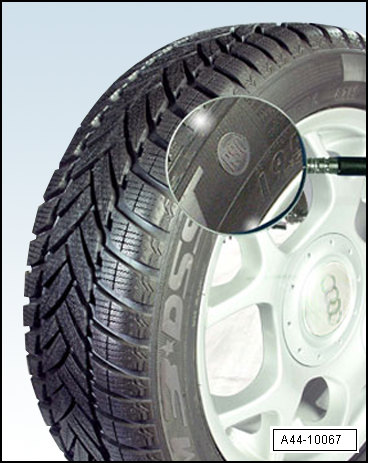
SST tyres are identified by a specific sign (RSC = Runflat System Component) in the sidewall. The identification for run-flat tyres on the sidewall may differ depending on the manufacturer. Self-supporting tyres are tyre systems with run-flat capabilities in the case of pressure loss. In case of a deflated tyre, the driver can still drive to the next workshop whereas some restrictions must be adhered to → Owner's manual. AdvantageIn case of a complete pressure loss, the SST tyres allow for moderate driving with a maximum speed of 80 km/h and over a maximum distance of 50 km. The distance that can be travelled during a breakdown depends on the driving style, the vehicle speed, the road condition, the weather conditions, the condition of the tyres, and the tyre load. In case of a complete pressure loss, the wheel must not be changed immediately, if SST tyres are fitted (e.g no wheel change in poorly visible and hazardous road sections). The brakes, the steering system and the drive train feel similar, even after a complete pressure loss in the tyre. If SST tyres are used, no spare wheel is required. This allows for more space and a lower weight in favour of the customer. |
 |
Body
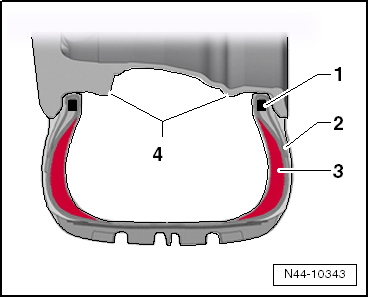
Detailed information on the technologyStandard tyres without run-flat capabilities |
 |
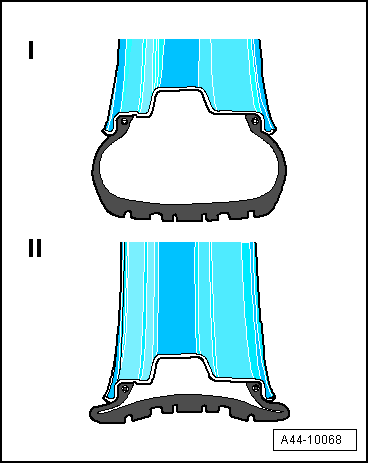
SST tyres with reinforced sidewallThe SST technology is based on self-supporting reinforced sidewalls. |
 |
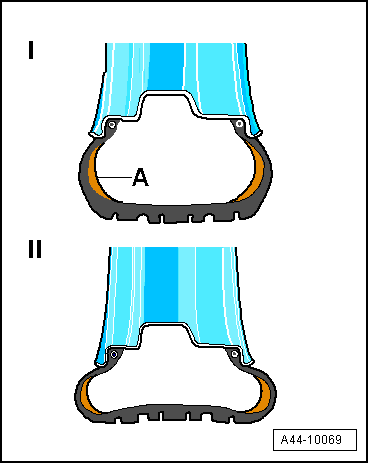
Differences between H2 wheel rims and EH2 wheel rims with extended humpIn case of a pressure loss, the extended hump of wheel rim EH2 prevents the SST tyre from becoming detached from the wheel rim.The extended hump wheel rim EH2 is higher relative to the centre of the wheel.
|
 |
 WARNING
Test yourself
A quick Volkswagen Golf quiz: every answer comes with an explanation and a link to the manual page.
Was this page helpful?