Wheels and Tyres Guide - General Information
Tyre damage due to insufficient tyre pressure
In this manual: Wheels and Tyres Guide - General Information
~1min read
| The most common causes for tyre failure are minor external damage, a defective valve or a leaking rim due to corrosion or damage. |
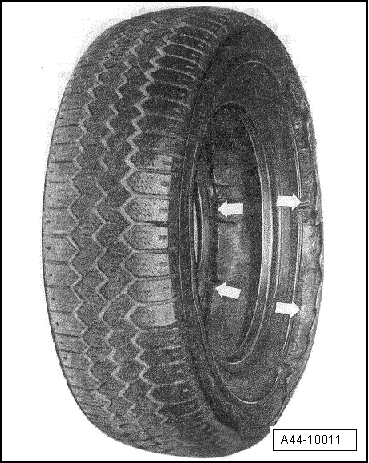
Separation of carcass and rubberExcessive heating due to driving with substantially insufficient tyre pressure led to overheating and subsequent separation of the carcass from the rubber material -arrows-. The tyre shown here was periodically driven with an inflation pressure which was insufficient for the load. Typical evidence for this is the circumferential scuffing along the bead caused by the wheel flange and also the discolouration. Small, furrowed creases are visible along the inside of the sidewall. When the tyre rolls, strong shear forces develop between the layers of steel cord, especially at the ends of the belts. |
 |
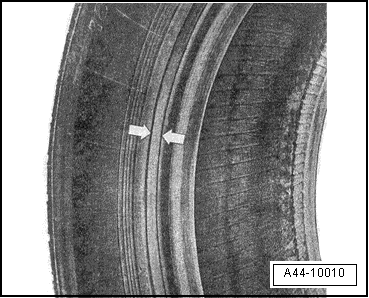
Tyres with wide, circumferential furrows near the beadWide, circumferential furrows near the bead -arrows- indicate that the tyre was driven with insufficient pressure. Driving a vehicle with insufficient tyre pressure or ignoring or not recognising tyre damage can have serious consequences. The tyre can no longer withstand the forces which develop when the vehicle is driven. The defects mentioned above severely restrict the function of the tyre. The rubber compounds separate, which results in the partial separation of tyre components or even its complete destruction. |
 |
Test yourself
A quick Volkswagen Golf quiz: every answer comes with an explanation and a link to the manual page.
Was this page helpful?