Spark Plugs
GENERAL INFORMATION
A spark plug consists of a center electrode, an insulator with a shell, and ground electrode(s). A spark jumps between the center electrode and the ground electrode, igniting the air-fuel mixture. Do not use spark plugs other than those recommended. The recommended plug type is determined, among other things, by the heat range.
The heat range indicates the thermal load rating of the spark plug. The lower the heat range number, the higher the thermal load on the plug. Such a plug dissipates heat better, which prevents auto-ignition of the fuel mixture. A hot-range plug has the disadvantage that its self-cleaning temperature is higher. It is more prone to carbon fouling, particularly when the engine often does not reach operating temperature, for example in city driving or short trips in winter.
The correct heat range of the spark plug is specified by the vehicle manufacturer. Plugs are available with one or several ground electrodes, with different thread lengths and thread diameters. When replacing a spark plug, install only spark plugs that conform to the vehicle manufacturer's specifications.
Spark plug service life varies. The electrode material also plays a significant role. Nickel-chromium alloy has very high thermal conductivity and high corrosion resistance. Silver provides the best heat dissipation, while platinum electrodes have high corrosion and burn-off resistance. Spark plug service life is between 20,000 and 100,000 km, depending on the electrode material and number of electrodes.
Depending on engine design, there are two types of seal between the spark plug and cylinder head. A flat seal has an external sealing washer that is not lost and is retained on the plug body. A taper seat does not require additional sealing elements. Where installation space is limited, spark plugs with a flat seat and a small hex size are used in most cases. Spark plugs with a conical seat are more compact.
Spark plugs should be replaced every 60,000 km.
The appearance of the spark plugs allows conclusions about combustion, carburetor adjustment, mixture condition and engine condition (pistons, piston rings, etc.) (refer to the photo inserts).
When installing spark plugs, make sure they are not overtightened, as the sealing washer may be damaged. Do not exceed the tightening torque specified in the Specifications.
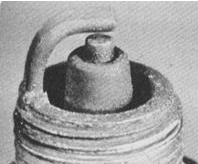
Carbon Fouling
Symptoms: Soot deposits indicate an over-rich air-fuel mixture or weak spark intensity. Causes misfiring, hard starting and unstable engine operation.
Recommendations: Check whether the air filter is clogged, whether the fuel level in the float chamber is too high, whether the choke valve is stuck, and whether the contacts are excessively worn. Try using plugs with a longer insulator nose, which increases resistance to fouling.

Normal Spark Plug Condition
Symptoms: Grey-brown color and slight electrode wear. The heat range of the spark plugs matches the engine type and its general condition.
Recommendations: When replacing spark plugs, install plugs of the same type.

Oil Fouling
Symptoms: Oil fouling of the spark plug is caused by wear of the valve stem oil seals. Oil enters the combustion chamber through worn valve guides or piston rings. Causes misfiring, hard starting and unstable engine operation.
Recommendations: Perform mechanical repairs and replace the spark plugs.
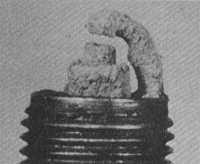
Ash Deposits
Symptoms: Soft brownish deposits on one or both spark plug electrodes. They are formed by additives in the engine oil and/or fuel. Excessive buildup can insulate the electrodes and cause misfiring and unstable engine operation under acceleration.
Recommendations: If deposits build up quickly, replace the oil deflector caps to prevent oil from entering the combustion chambers. Try changing the fuel grade.
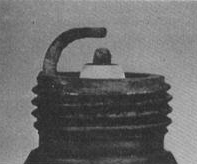
Overheating
Symptoms: Porous, white insulator, electrode erosion and no visible deposits. Shortens spark plug service life.
Recommendations: Check that the heat range of the installed spark plugs meets the Specifications, that ignition timing is set correctly, that the air-fuel mixture is not too lean, that there are no intake manifold vacuum leaks and that the valves are not sticking. Also check the coolant level and whether the radiator is clogged.

Wear
Symptoms: Rounded electrodes with a small buildup of deposits on the firing end. Normal color. Causes hard starting in cold, humid weather and increased fuel consumption.
Recommendations: Replace the spark plugs with new ones of the same type.

Pre-ignition
Symptoms: Melted electrodes. The insulator is white but may be contaminated due to misfiring or foreign particles entering the combustion chambers. May lead to engine failure.
Recommendations: Check the heat range of the installed spark plugs, the ignition timing, the mixture quality (whether it is too lean), whether the cooling system is clogged and whether the lubrication system functions properly.

Detonation
Symptoms: Insulators may be chipped or cracked. Improper spark plug gap adjustment may also damage the insulator. May cause damage to the pistons.
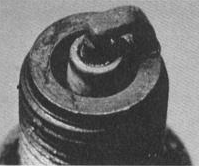
Conductive Glazing
Symptoms: Yellowish, polished-looking insulator. Indicates a sudden rise in combustion chamber temperature during hard acceleration. Normal deposits melt and take on a varnish-like coating. Causes misfiring at high speeds.
Recommendations: Replace the spark plugs with colder ones, while keeping the driving style in mind.
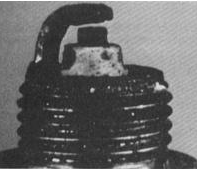
Oil Fouling
Symptoms: After misfiring over a long period, deposits may loosen while the combustion chamber remains at operating temperature. At high speeds, deposit flakes break off the piston and stick to the hot insulator, causing misfiring.
Recommendations: Replace the spark plugs, or clean and reinstall the old ones.

Bridging of Electrodes
Symptoms: Combustion residue enters the electrode gap. Solid deposits accumulate and form a bridge between the electrodes. Causes ignition failure in the cylinder.
Recommendations: Remove deposits from the electrode gap.
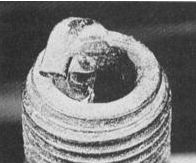
Mechanical Damage
Symptoms: May be caused by foreign material entering the combustion chamber or by the piston striking a spark plug that is too long. Leads to cylinder malfunction and piston damage.
Recommendations: Remove foreign particles from the engine and/or replace
Test yourself
A quick Audi A3 quiz: every answer comes with an explanation and a link to the manual page.