Ignition Timing Control System
GENERAL INFORMATION
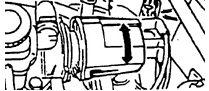
Initial Ignition Timing Adjustment
The breakerless ignition system is designed to forcibly ignite the
compressed air-fuel mixture in the engine cylinder. The mixture is ignited by a spark between the spark plug electrodes.
High power output and good fuel economy of the engine, while reducing the amount of
harmful exhaust emissions into the atmosphere, are ensured by the electronic ignition timing control system (ITCS), which is controlled by the ECU.
engine.
To calculate ignition timing, the ECU must monitor the
following parameters:.
- crankshaft angle position.
- crankshaft speed.
- engine load (intake manifold vacuum).
- atmospheric pressure.
- engine coolant temperature.
- generation of high-voltage reference signal. This signal allows the ECU to calculate crankshaft speed and angular position.
- generation of low-voltage reference signal. The corresponding wire
is connected to ground at the ignition module. Presence of voltage may disrupt normal
operation of the ignition system. Therefore, an open circuit in this wire may lead to deterioration of
ITCS performance and reduced engine power.
- shunt control. When crankshaft speed reaches approx. 400 rpm, the ECU applies a 5 V control voltage to terminal C3 to switch
ignition timing control function from the ignition module to the ECU. When
shorted to ground or an open circuit occurs in the wire, the ECU sets fault code 42 and
transfers ignition timing control function back to the ignition module. In this case,
the engine operates with the initially set ignition timing plus a
small advance angle programmed into the ignition module algorithm.
- generation of ignition timing control signal. Through terminal D10 and the corresponding wire, the ECU sends control pulses to the ignition module. The ECU does not determine the absolute value of ignition timing. It calculates only the correction relative to the initially set (base) timing value.
The ECU sends control signals that slightly lag or
lead the reference signal received from the ignition module. For this reason,
incorrect initial ignition timing setting leads to a general
shift of ignition timing in all engine operating modes.
An open circuit or short to ground in the ITCS signal wire causes fault code 42 and disables ITCS. In this case, the ignition timing is set by the
ignition module without ECU control. When adjusting ignition timing, the ECU
processes signals from the intake manifold absolute pressure sensor (MAP) and engine coolant temperature sensor (ECT). The ECU control algorithm provides for
the following:
• increase in ignition advance at low MAP sensor signal voltage and at low engine coolant temperature.
• decrease in ignition advance at high MAP sensor signal voltage and at
high engine coolant temperature. Therefore, knock typically
occurs at low MAP sensor signal voltage or at high electrical
resistance of the ECT thermistor. Engine power reduction may be observed at high MAP sensor signal voltage or at low electrical resistance of the ECT thermistor.
Test yourself
A quick Daewoo Nexia quiz: every answer comes with an explanation and a link to the manual page.