Braking system
Hydraulic system - bleeding (conventional braking system)
In this manual: Braking system
~6min read
Note: On cars equipped with the Anti-lock Braking System, refer to Section 23. Warning: Hydraulic fluid is poisonous; wash off immediately and thoroughly in the case of skin contact, and seek immediate medical advice if any fluid is swallowed or gets into the eyes. Certain types of hydraulic fluid are inflammable, and may ignite when allowed into contact with hot components; when servicing any hydraulic system, it is safest to assume that the fluid is inflammable, and to take precautions against the risk of fire as though it is petrol that is being handled. Hydraulic fluid is also an effective paint stripper, and will attack plastics; if any is spilt, it should be washed off immediately, using copious quantities of fresh water. Finally, it is hygroscopic (it absorbs moisture from the air) - old fluid may be contaminated and unfit for further use. When topping-up or renewing the fluid, always use the recommended type, and ensure that it comes from a freshlyopened sealed container. 1 This is not a routine operation but will be required after any component in the system has been removed and refitted or any part of the hydraulic system has been opened. Where an operation has only affected one circuit of the hydraulic system, then bleeding will normally only be required to that circuit (front and rear diagonally opposite). If the master cylinder or the pressure regulating valve have been disconnected and reconnected, then the complete system must be bled.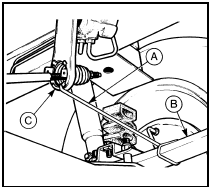
11.2 Light laden valve retained in open position - Van models
17 These too are available from motor accessory shops and are usually operated by air pressure from the spare tyre. 18 By connecting a pressurised container to the master cylinder fluid reservoir, bleeding is then carried out by simply opening each bleed screw in turn and allowing the fluid to run out, rather like turning on a tap, until no air bubbles are visible in the fluid being expelled. 19 Using this system, the large reserve of fluid provides a safeguard against air being drawn into the master cylinder during the bleeding operations. 20 This method is particularly effective when bleeding “difficult” systems or when bleeding the entire system at time of routine fluid renewal. All systems
21 On completion of bleeding, top-up the fluid level to the mark. Check the feel of the brake pedal, which should be firm and free from any “sponginess” which would indicate air still being present in the system.
2 When bleeding the brake hydraulic system on a Van, tie the light laden valve actuating lever to the right-hand rear roadspring so that it is in the fully open position (see illustration). This will ensure full fluid flow during the bleeding operations.
11.2 Light laden valve retained in open position - Van models
A Wire
B Roadspring
C Actuating
lever
17 These too are available from motor accessory shops and are usually operated by air pressure from the spare tyre. 18 By connecting a pressurised container to the master cylinder fluid reservoir, bleeding is then carried out by simply opening each bleed screw in turn and allowing the fluid to run out, rather like turning on a tap, until no air bubbles are visible in the fluid being expelled. 19 Using this system, the large reserve of fluid provides a safeguard against air being drawn into the master cylinder during the bleeding operations. 20 This method is particularly effective when bleeding “difficult” systems or when bleeding the entire system at time of routine fluid renewal. All systems
21 On completion of bleeding, top-up the fluid level to the mark. Check the feel of the brake pedal, which should be firm and free from any “sponginess” which would indicate air still being present in the system.
22 On Van models release the light laden valve actuating lever.
Test yourself
A quick Ford Escort quiz: every answer comes with an explanation and a link to the manual page.
Was this page helpful?