Booster Seats
Use a booster seat with a seat belt for children who have outgrown or can no longer properly fit in a child restraint (typically children under 57 inches (1.45 m) in height, over 4 years of age and under 12 years of age, and weighing between 40 lbs (18 kg) and 80 lbs (36 kg) and up to 100 lbs (45 kg) if recommended by your child restraint manufacturer). Many states and provinces require that children use approved booster seats until they reach eight years of age, 57 inches (1.45 m) in height or 80 lbs (36 kg).
Boosters should be used until you can answer YES to ALL of these questions when seated without a booster:
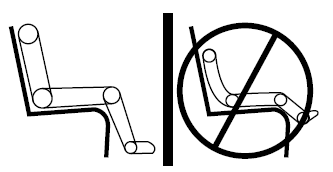
- Can the child sit all the way back against the vehicle seatback with knees bent comfortably at the edge of the seat cushion?
- Can the child sit without slouching?
- Does the lap belt lie low across the hips?
- Does the shoulder belt lie across the center of the shoulder and chest?
- Can the child stay in this position for the entire trip?
Always use booster seats in combination with the vehicle lap and shoulder belts.
Types of Booster Seats
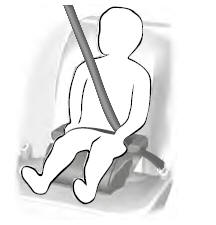
- Backless Boosters
If your backless booster seat has a removable shield, remove the shield. If the vehicle seat has a low seatback or no head restraint, a backless booster may position your child's head (measured by the tops of the ears) above the top of the seat. In this case, move the backless booster to another seating position with a higher seatback or head restraint, and the knee and shoulder belts, or consider using a high-back booster seat.
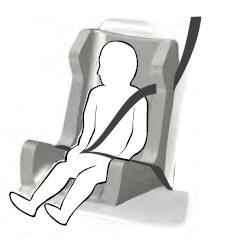
- High-Back Boosters
If you cannot find a seating position that adequately supports your child's head with a backless booster, a high-back booster seat will be the better choice.
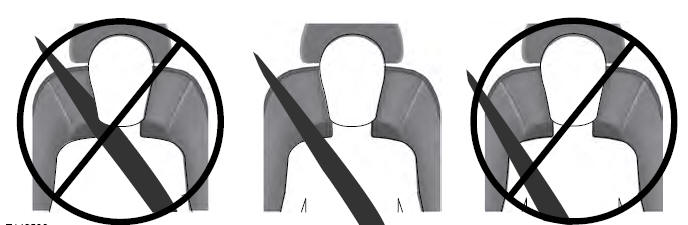
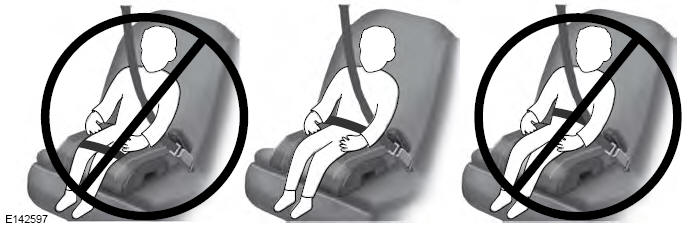
Child restraints and booster seats vary in size and shape. Choose a booster that keeps the lap belt low and snug across the hips, never up on the abdomen, and allows you to adjust the shoulder belt so that it crosses the chest and rests comfortably near the center of the shoulder. The following illustrations compare the correct fit (center) with a shoulder belt that is uncomfortably close to the neck and a shoulder belt that may slip off the shoulder. The illustrations also show how the lap belt should be low and snug across the child's hips.
If the booster slides on the vehicle seat it is used on, placing a non-slip mat, sold as a shelf liner or carpet insert, under the booster seat may improve this condition. Do not place any item thicker than this under the booster seat. Check the booster seat manufacturer's instructions.
Test yourself
A quick Ford Fusion quiz: every answer comes with an explanation and a link to the manual page.