Inflatable Seat Belts
WARNINGS
- Do not repair, service or modify the rear inflatable seat belt.
- If the rear inflatable seat belt has deployed, it will no longer function. The rear inflatable seat belt system must be replaced by an authorised dealer.
The rear inflatable seat belts are fitted to the shoulder straps of the seat belts for the outboard seats in the second row.
Note: the rear inflatable seat belts are only compatible with Group 2 and 3 booster seats with belt guidance, when correctly fitted. See Installing Child Safety Seats (page 18).
This is because the rear inflatable seat belts are designed to inflate with a cooled gas, at a lower pressure and more slowly than conventional airbags.
Once inflated, the shoulder strap of the seat belt remains cool to the touch.
The rear inflatable seat belt consists of the following components:
- an inflatable bag located in the shoulder strap of the seat belt;
- an inflatable bag located in the shoulder strap of the seat belt;
- an indicator light, an electronic control unit and a diagnostic unit identical to those of the front seat belts;
- impact sensors located at various points in the vehicle.
How does the rear inflatable seat belt system work? Rear inflatable seat belts work like the conventional restraint systems used every day.
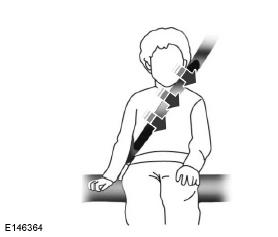
If the impact of a collision is sufficiently strong, the inflatable belt inflates inside the strap.
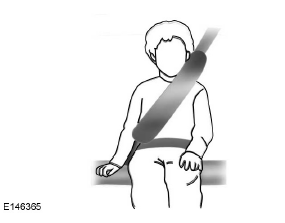
When the belt is inflated, its larger diameter holds the occupant more effectively in the correct seating position and spreads the impact forces over a larger part of the body than conventional seat belts. This reduces pressure on the chest and controls the movement of the occupant's head and neck.
Rear inflatable seat belts are designed to inflate in frontal collisions, near-frontal collisions and certain side collisions. If a rear inflatable seat belt did not inflate during a collision, this does not mean the system is faulty. Rather, the impact force was not sufficient to trigger deployment.
Test yourself
A quick Ford Mondeo quiz: every answer comes with an explanation and a link to the manual page.