Cargo Hauling
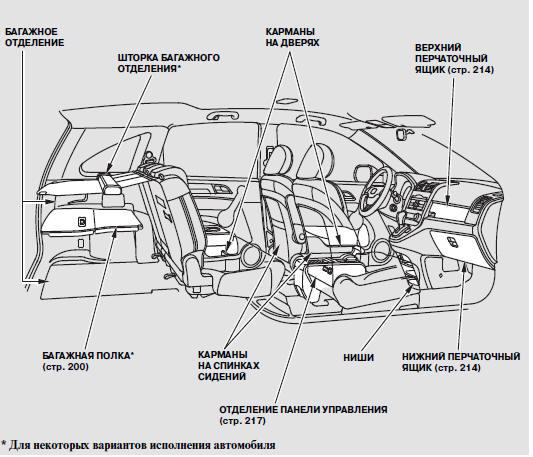
The vehicle has many convenient places for storing luggage and small items:
• Upper glove box
• Lower glove box
• Door pockets and seatback pockets
• Cargo area, including the ability to fold down the rear seat.
• Storage compartment in the center console
• Storage recesses on the instrument panel
• Upper and lower cargo area with cargo shelf (if equipped).
• Roof rack (if equipped)
However, remember that overloading the vehicle or improper loading may adversely affect the handling and stability of the vehicle and therefore reduce safety. Before carrying any cargo in the vehicle, carefully read the information on the following pages.
Load Limits
When loading the vehicle, keep in mind that the total weight of the vehicle including passengers, cargo and towing equipment must not exceed the maximum permissible value. For any loading condition, the load on the front and rear axles must also not exceed the permissible limits. Information on the gross vehicle weight rating and the maximum load on each axle is given on page 570.
Overloading the vehicle or improper loading may adversely affect its handling and stability, cause a traffic accident, and result in injury or even death of the driver or passengers.
Do not exceed the maximum load capacity when loading the vehicle and do not violate other restrictions specified in this Owner's Manual.
Carrying Cargo Inside the Vehicle
• Securely fasten items carried inside the vehicle to prevent them from shifting in the event of sudden braking or a traffic accident.
• Make sure items placed on the floor behind the front seats cannot roll forward and interfere with the driver's free operation of the pedals or proper adjustment of the front seats. Do not load cargo so that it extends above the top of the front seatbacks.
• Keep the lower glove box lid closed while the vehicle is in motion. An open glove box lid may cause injury to the front passenger's knees in the event of sudden stopping or a traffic accident.
• If you have folded the rear seatback or the entire rear seat, securely tie down cargo so that it cannot move during a collision or sudden braking. Do not stack luggage higher than the lower edge of the windows. Otherwise, the luggage may prevent the window airbags from deploying properly.
Securely tie down cargo with rope or cord so that it cannot shift while the vehicle is moving. Do not load cargo so that it extends above the top of the front seatbacks.
For information on how to fold the rear seat, refer to pages 190 and 192.
On some models: If either rear seat is folded down, do not use the cargo shelf.
Carrying Cargo in the Cargo Area and on the Roof Rack
• Distribute cargo evenly, placing it as close to the front of the vehicle as possible and placing heavy items low, on the floor of the cargo area. Securely tie down cargo with rope or cord so that it cannot shift while the vehicle is moving.
• Do not place any items on the cargo cover (if equipped) and do not stack luggage higher than the top of the rear seatbacks.
This may reduce visibility, and in a collision or sudden braking, items may be thrown into the passenger compartment.
• If you must transport long cargo that prevents the rear liftgate from closing, be aware that engine exhaust gases may enter the passenger compartment. In this case, follow the precautions described in "Carbon Monoxide Poisoning Hazard" on page 76.
• When carrying cargo on the roof rack, make sure the total weight of the cargo does not exceed 75 kg.
If necessary, consult a Honda dealer about using various accessories and mounting devices available from the automotive accessories market on your vehicle.
Carrying Luggage on the Cargo Shelf
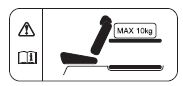
For vehicles equipped with a cargo shelf
Do not place items on the cargo shelf that may reduce visibility or that could be thrown forward in a collision.
If either rear seat is folded down, do not use the cargo shelf.
Do not exceed the maximum load limit of 10 kg.
Cargo Tie-Down Loops
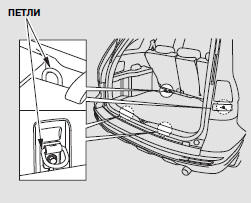
Use the four loops located in the cargo area to secure cargo. Before driving, make sure the cargo is securely fastened.
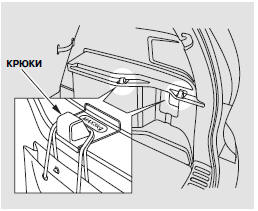
On certain vehicle variants
Your vehicle is equipped with cargo hooks located on the side panels of the cargo area.
They are designed for securing light items. Heavy items may break the hook. Make sure the weight of cargo secured to each hook does not exceed 3 kg.
Cargo Net (Optional Equipment)
The cargo net can be used to hold soft and light items carried in the cargo area.
Heavy items must be securely fastened to the cargo area floor.
The net may not be able to hold heavy items, and they may be thrown forward in a collision or sudden braking.
Test yourself
A quick Honda CR-V quiz: every answer comes with an explanation and a link to the manual page.