Heating, Ventilation, and Air Conditioning
Ambient Temperature Sensor Repair Procedures
In this manual: Heating, Ventilation, and Air Conditioning
7steps
~42min
2/5difficulty
Done 0 of 7
Inspection
- Check the resistance of the ambient temperature sensor between terminals 1 and 2. Check that it changes when the ambient temperature changes.
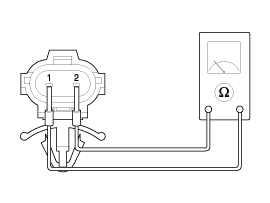
1. Ambient Temperature Sensor (+) 2. Sensor Ground
SpecificationAmbient Temperature
[°C (°F)]Resistance between Terminals 1 and 2 (kΩ) -30 (-22) 480,41 -20 (-4) 271,21 -10 (14) 158,18 0 (32) 95.096 10 (50) 58.799 20 (68) 37.315 30 (86) 24.26 40 (104) 16.13 50 (122) 10,95
Diagnosis Using GDS
- The Heating, Ventilation and Air Conditioning (HVAC) system can quickly diagnose faulty parts using the Global Diagnostic System (GDS).
The Diagnostic System (GDS) provides the following information. (1) Self-diagnosis: Check the Diagnostic Trouble Code (DTC) and display. (2) Current data: Check the input/output status of the system. (3) Actuation test: Check the operating status of the system. (4) Additional functions: Other controls such as system option and zero point adjustment. - Select "Vehicle Model" and the system to be checked to inspect the vehicle with the tester.
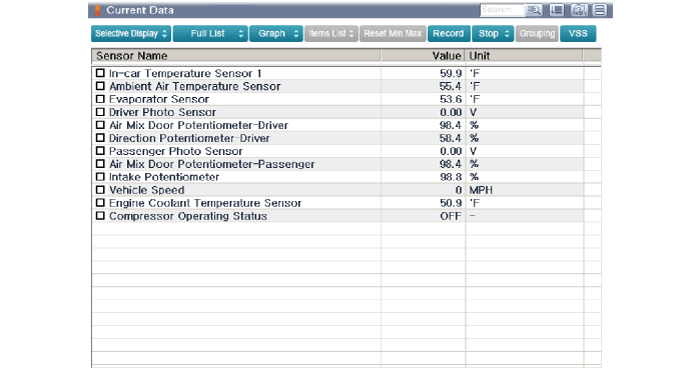
- Select the Current Data menu to check the current status of the input/output data. The input/output data for the sensors related to the ambient temperature sensor can be checked.
Replacement
- Disconnect the negative (-) battery terminal.
- Remove the front bumper. (Refer to Body - "Front Bumper Cover")
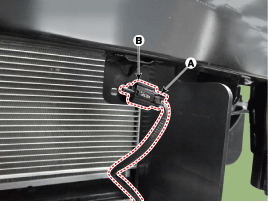
- Disconnect the connector (A) and remove the ambient temperature sensor (B).
- To install, reverse the removal procedure.
Test yourself
A quick Hyundai Elantra AD quiz: every answer comes with an explanation and a link to the manual page.
Was this page helpful?