Heating, Ventilation, and Air Conditioning
A/C Pressure Sensor Repair Procedures
In this manual: Heating, Ventilation, and Air Conditioning
11steps
~66min
3/5difficulty
Done 0 of 11
Inspection
- Measure the high-pressure line pressure by measuring the output voltage between terminals "1" and "2".

- Check whether the voltage value is within the normal value or not.
Voltage = 0.00878835 * Pressure + 0.37081095
- If the measured voltage value does not meet the specification, replace the A/C pressure sensor.
Diagnosis Using GDS
- The Heating, Ventilation and Air Conditioning (HVAC) system can quickly diagnose faulty parts using the Global Diagnostic System (GDS).
The Diagnostic System (GDS) provides the following information. (1) Self-diagnosis: Check the Diagnostic Trouble Code (DTC) and display. (2) Current data: Check the input/output status of the system. (3) Actuation test: Check the operating status of the system. (4) Additional functions: Other controls such as system option and zero point adjustment. - Select "Vehicle Model" and the system to be checked to inspect the vehicle with the tester.
- Select the "Current Data" menu to check the current input/output status. The input/output data for sensors corresponding to the A/C pressure sensor can be checked.

Replacement
- Disconnect the negative (-) battery terminal.
- Recover the refrigerant using a recovery/recharging station.
- Disconnect the air conditioner pressure sensor connector (A).
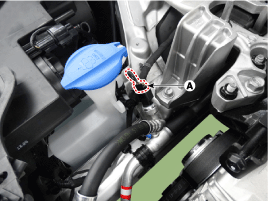
- Remove the A/C pressure sensor (A).
Tightening torque: 9.8 ~ 11.8 N·m
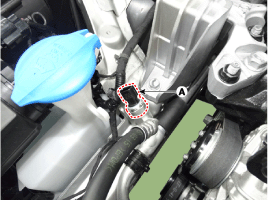
Be careful not to bend the liquid line and suction line.
- To install, reverse the removal procedure.
Test yourself
A quick Hyundai Elantra AD quiz: every answer comes with an explanation and a link to the manual page.
Was this page helpful?