Driving Your Vehicle
Blind-Spot Collision Warning (BCW)
In this manual: Driving Your Vehicle
~1min read
Description of the System
The Blind-Spot Collision Warning (BCW) system uses radar sensors in the rear bumper to monitor and warn the driver of approaching vehicles in the driver's blind spot zone.
1) Blind spot
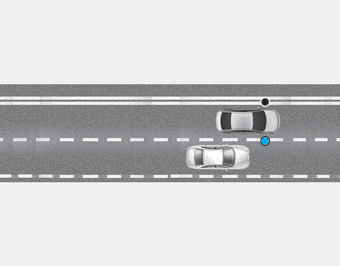
The blind-spot detection range depends on the vehicle speed.
Note that if your vehicle is moving much faster than the vehicles around you, the warning will not appear.
2) High-speed closing
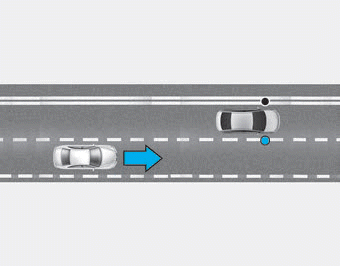
The Lane Change Assist function warns you when it detects an approaching vehicle in the adjacent lane at high speed. If the driver turns on the turn signal when the system detects an approaching vehicle, the system sounds a warning tone.
WARNING
- Always monitor road and traffic conditions while driving and be prepared for unexpected situations, even when the Blind-Spot Collision Warning (BCW) system is operating.
- The Blind-Spot Collision Warning (BCW) system is an auxiliary system to assist you. Do not rely solely on the system. Always pay attention while driving for your safety.
- The Blind-Spot Collision Warning (BCW) system does not replace proper and safe driving. Always drive safely and use caution when changing lanes or backing up the vehicle.
- The Blind-Spot Collision Warning (BCW) system may not detect every object near the vehicle.
Test yourself
A quick Hyundai Elantra AD quiz: every answer comes with an explanation and a link to the manual page.
Was this page helpful?