Brake System
Description and Operation
In this manual: Brake System
15steps
~90min
4/5difficulty
Done 0 of 15
Description
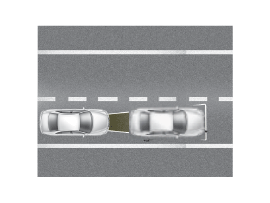
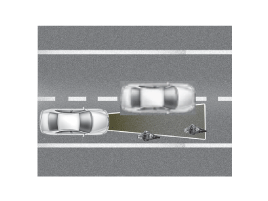
- The AEB system is designed to help avoid a potential collision or reduce its impact when the driver applies insufficient brake force, applies the brakes late, or does not brake at all to avoid a collision.
- The system detects road risk factors using the front collision sensor, warns the driver, and activates emergency braking to prevent a collision or reduce collision speed.
- Detection of vehicles (pedestrians) ahead and data analysis (CAN communication) are performed by the radar sensor of the Smart Cruise Control (SCC) system and the camera sensor of the Lane Departure Warning System (LDWS).
- Confirm the AEB target object (vehicles and pedestrians) using the analyzed data.
- Calculate the required deceleration based on speed, distance, and the presence or absence of a preceding vehicle.
- Transmit the "required deceleration" to the Vehicle Dynamic Control (VDC) system (CAN communication).
- After calculating the required torque to achieve the "required deceleration," the VDC performs automatic control (CAN communication).
Operation

- Step 1: Issue a visual (display) and audible warning when a hazard is detected.
- Step 2: Reduce engine torque and activate AEB when the probability of a collision is high.
- Step 3: Activate emergency braking when a collision is unavoidable.
- After the vehicle stops: Hold the brake pedal for a specified time, then release it.
|

|
Test yourself
A quick Hyundai Elantra AD quiz: every answer comes with an explanation and a link to the manual page.
Was this page helpful?