The Idle Stop & Go (ISG) function automatically stops the engine when the vehicle is stationary and the clutch is not operated, and restarts it as soon as the clutch is depressed. This reduces not only fuel consumption but also emissions. The Idle Stop & Go (ISG) function also has built-in sensitivity for driving comfort and safety. The ISG system does not operate under certain conditions related to safety and comfort, for example when the engine coolant temperature is low, when the battery is discharged, or when the outside air temperature is below -2°C. It can be deactivated with the ISG OFF switch on the lower instrument panel. Example scenario: engine stop when stopped at a red light or in a traffic jam.
Vehicle is moving.
Gear engaged. Accelerator pedal depressed.
Engine is running
Driver brakes until the vehicle comes to a complete stop.
Driver shifts to neutral and releases the clutch pedal.
Engine stops. The "AUTO STOP" indicator illuminates on the instrument cluster.
Driver wants to continue driving.
Driver depresses the clutch pedal. Engine starts.
The gear can be engaged and vehicle movement continues. The "AUTO STOP" indicator turns off.
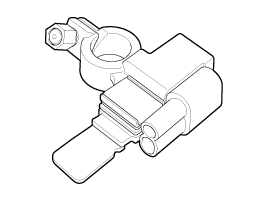
Battery Sensor. The battery sensor monitors the battery condition. Battery charge is a major factor influencing ISG function. It is intended to ensure reliable engine starting after a period of standstill, from the standpoint of the vehicle's electrical system. The battery sensor monitors the following data:
Battery Charge Status
Battery Temperature
Voltage drop when starting the engine
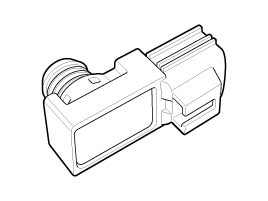
Brake Booster Vacuum Sensor. To provide adequate assistance in all braking situations, the brake booster is equipped with a partial vacuum sensor. The brake booster vacuum sensor is located on the rear side of the brake booster.
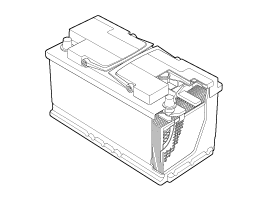
AGM Battery. In all cases, the ISG function works together with intelligent alternator control. Since vehicles equipped with ISG undergo more frequent charging and discharging cycles, battery charge is very important. The cycle stability of AGM batteries ensures a long service life despite the high load.
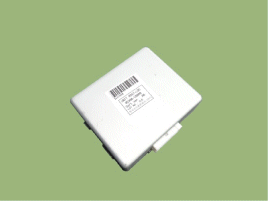
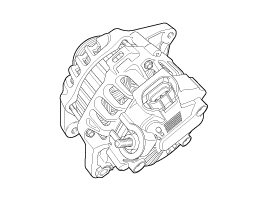
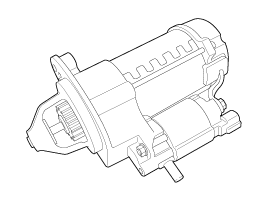
DC-DC Converter. Due to very frequent starting operations, electrical load fluctuations occur frequently, resulting in voltage drops in the vehicle electrical system. To stabilize the power supply for certain voltage-sensitive electrical components, a DC-DC converter is used in combination with the ISG function. The DC-DC converter supplies a constant voltage to the relay during starting. The DC-DC converter is installed at the rear of the glove box. Via a sensing wire for the input voltage and the starter relay, the electronics determine whether power is supplied to the output via the bypass or the DC-DC converter. In bypass mode, the vehicle system voltage does not pass through the DC-DC converter but is transmitted directly to the outputs. During the servo phase, the vehicle voltage is adapted.ISG OFF Switch. The ISG OFF switch on the lower instrument panel can be used to deactivate the ISG function. ALTERNATOR. Battery discharge when the engine is switched off by the ISG function means that a more efficient alternator is installed.STARTER MOTOR. In combination with the ISG function, the starter motor has an even more important task. Therefore, the starter motor components have been adapted to meet the increased requirements for a higher number of starting cycles.Neutral Switch. The neutral switch is installed on the upper part of the transmission. The neutral switch detects the idle position of the gear shift lever. Clutch Switch. The clutch switch is used as an input variable for detecting clutch operation by the ISG function.Seat Belt/Door Switch (Driver). Using the seat belt/door switch, the ISG function can detect whether the driver has fastened the seat belt and closed the door. If the driver has not fastened the seat belt or closed the door, the ISG function operates as follows. If the seat belt is not fastened or the door is open, the engine will not restart or will stop for safety reasons due to the ISG function. Hood Switch. The hood switch is one of the factors affecting ISG function activation. If the hood is open, the engine will not restart or will stop for safety reasons due to the ISG function.
ISG Function Operating Conditions
After each engine start, the function automatically becomes active and goes to sleep. The ISG OFF switch can be used to deactivate the function manually until the next ignition cycle. The indicator light illuminates to confirm switch operation.
1. Idle Stop Condition (Idle → Stop)
▶ Normal condition: neutral position and clutch pedal released.
Required Conditions
Engine coolant temperature must not be low (above 45 °C).
No DPF regeneration
No inhibiting conditions in the operating strategy or engine failure
Driver seat belt fastened, driver door and hood closed.
Engine stalls, gear shifts from engaged to neutral and clutch pedal operates.
3. Automatic Start Condition (Stop → Departure)
The engine will restart automatically without driver action if the following conditions occur: ▶ Normal condition: Neutral position and clutch pedal released.
Required Conditions
No inhibiting conditions in the operating strategy