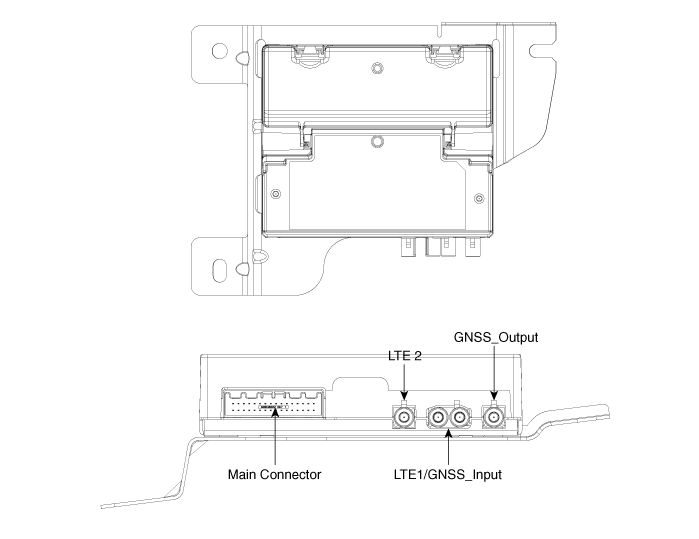
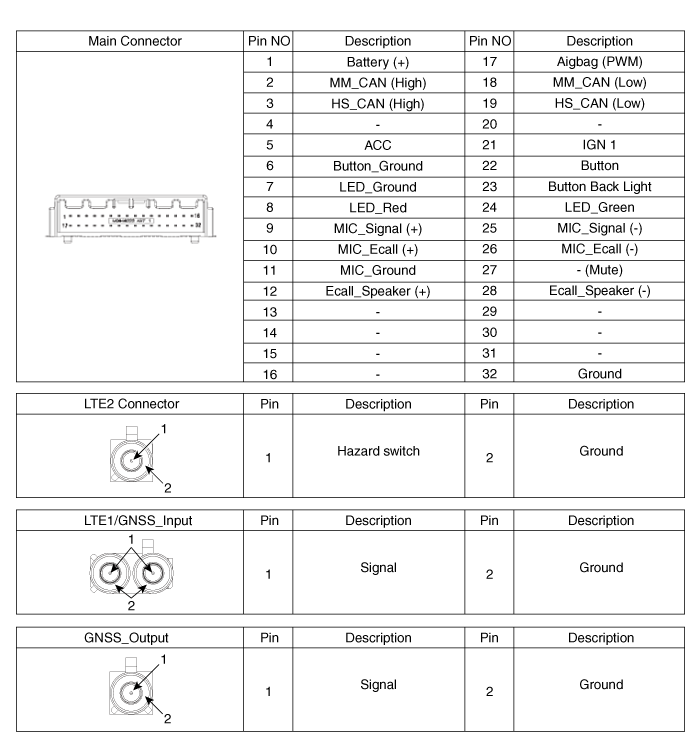
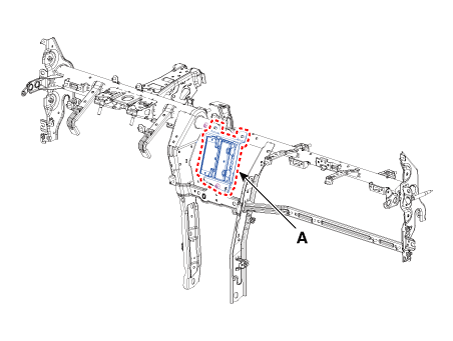
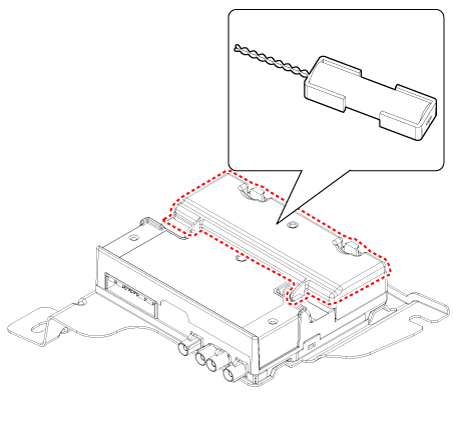
The AVN eCall module is installed in the AVN head unit.
Repair Procedures
Removal
If the RED LED illuminates, inspect the eCall system using diagnostic tools.
eCall module.
Backup battery (BUB).
eCall speaker and microphone.
eCall antenna and roof antenna.
Be careful not to scratch the cluster facia panel and related parts.
When removing with a flat-blade screwdriver or puller, wrap the tool with protective tape to prevent damage to the components.
Handle and store the airbag carefully during removal and installation, as grease and oil may leave stains on the trim.
eCall module
Disconnect the negative (-) battery terminal.
Remove the center airbag panel. (Refer to Body - "Center Airbag Panel")
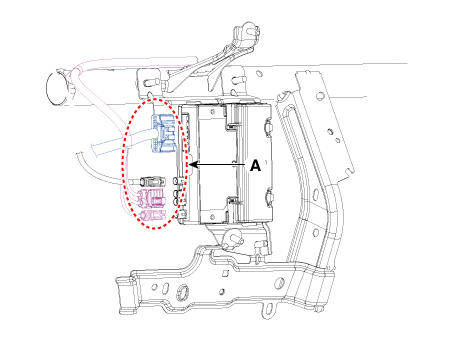
Loosen the mounting nuts and remove the eCall module (A).
Disconnect the connectors of the eCall module (A).
Replacement
eCall Backup Battery (BUB)
Disconnect the negative (-) battery terminal.
Remove the eCall module.
If it is necessary to replace the backup battery, remove the backup battery after removing the backup battery cover (A).
Installation
If the RED LED illuminates, inspect the eCall system using diagnostic tools.
eCall module.
Backup battery (BUB).
eCall speaker and microphone.
eCall antenna and roof antenna.
eCall module
Install the eCall module.
Install the center airbag panel.
Connect the negative (-) battery terminal.
Inspection
Inspection Using Diagnostic Tools: In the eCall system, faults can be quickly diagnosed using the vehicle diagnostic system. The diagnostic system provides the following information.
Self-Diagnosis: Checks malfunction and Diagnostic Trouble Code (DTC)
Current Data: Check the system input/output status.
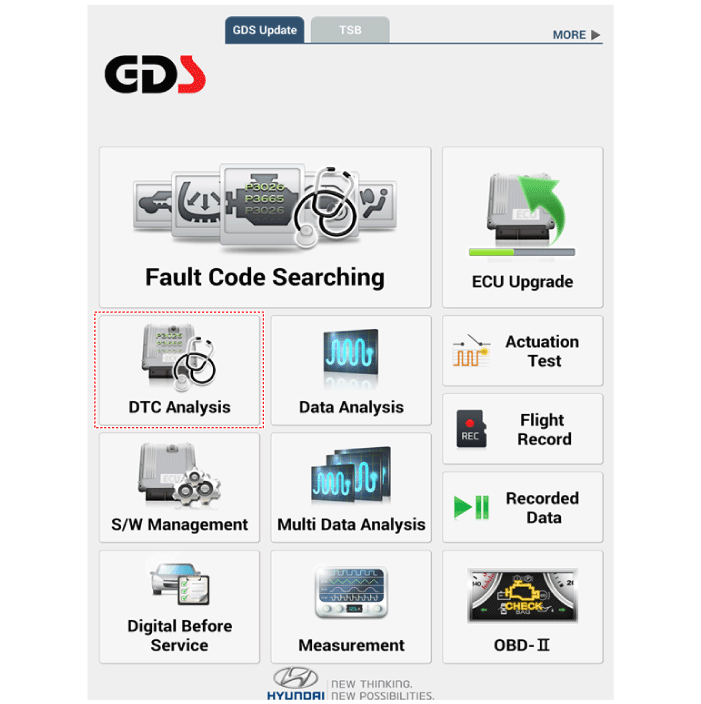
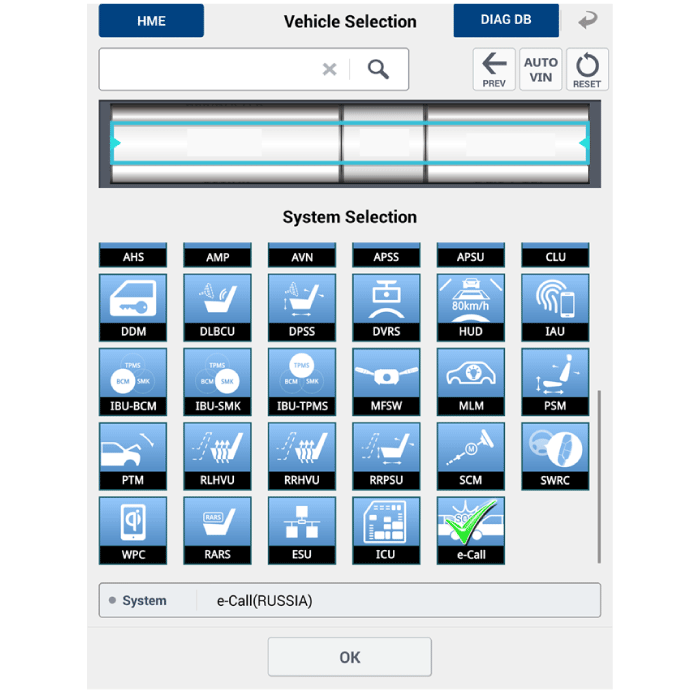
Select "Vehicle Model" and "eCall System" to inspect the vehicle with the tester in sequence.
To determine the cause of a fault in each module using self-diagnosis, select "Diagnostic Trouble Code".
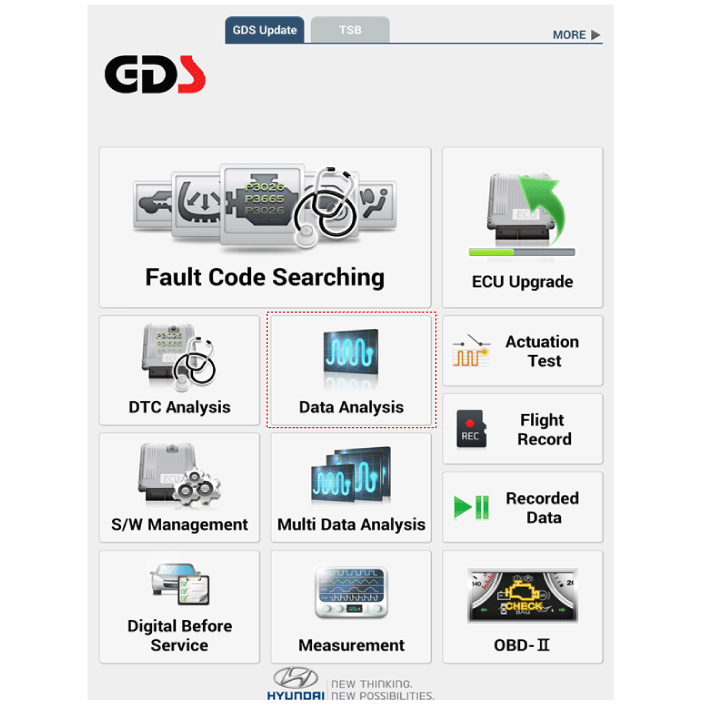
Select the "Current Data" menu to check the current input/output data.
Turn the ignition off.
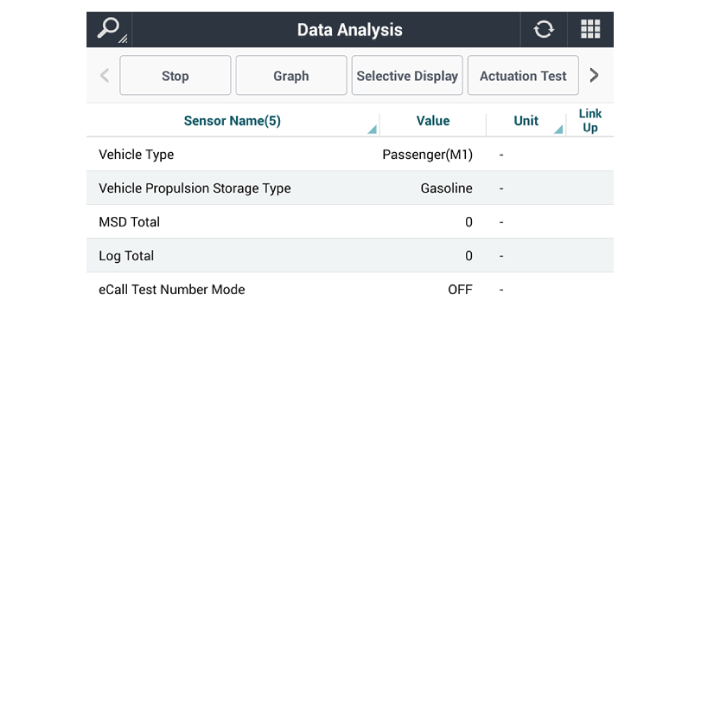
Connect the diagnostic tools.
Turn the ignition ON with the engine OFF.
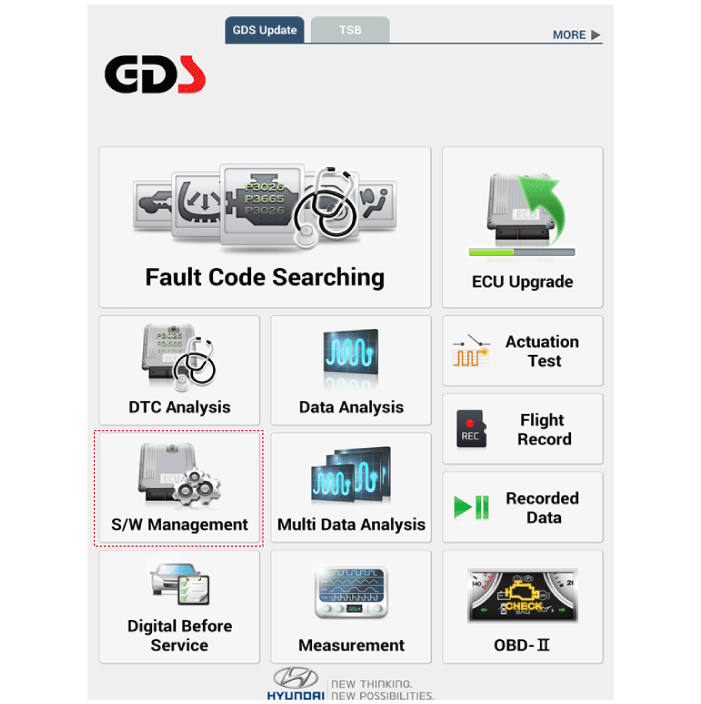
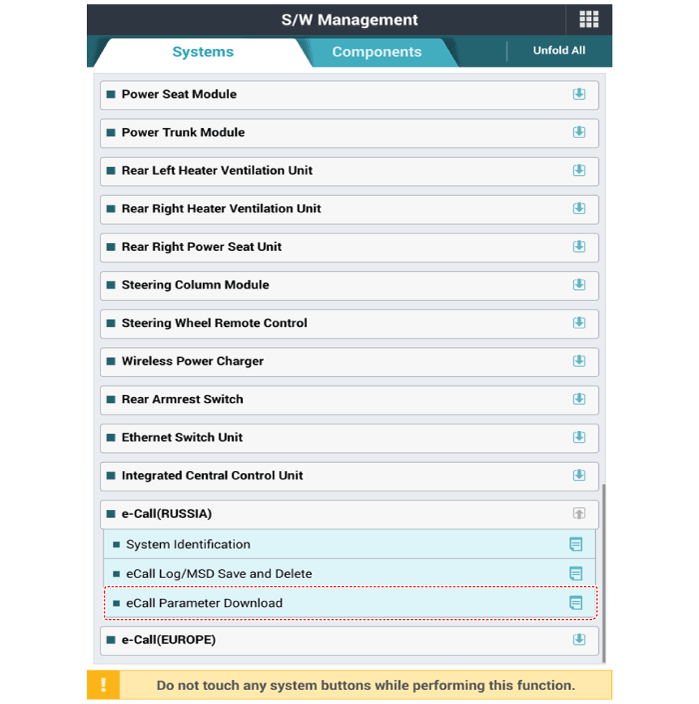
Select "Vehicle Model" and "Software Management".
Select "eCall Parameter Download".
Test Mode Operating Conditions
The vehicle battery must be connected correctly.
One minute must pass after the ignition is turned on.
The vehicle must remain stationary for 1 minute or more.
Conditions Preventing Test Mode Operation
PSAP Call in Progress
Callback Mode: The eCall system enters callback mode after a successful call and remains on standby for 120 minutes to receive calls from the call center.
Test mode is automatically terminated when the vehicle speed reaches 1 km/h or more, or after traveling 300 m or more.
Less than two minutes have passed since the previous test call was completed.
Test Mode Sequence (Audio Guidance)
LED Test
Speaker Test
MIC Test
BUB (Back-Up Battery built into eCall unit) Test (No separate notification is given if the BUB is in normal condition.)
Back-Up Battery Voice Prompt: When the "eCall Back-Up Battery Voltage Low" message is played, repeat the test mode after the battery has been sufficiently charged during driving.
Test Call (Pressing the SOS button sends the test result to the PSAP.)
eCall Parameter Download: The eCall parameter download is used to change the eCall parameter value for Europe. eCall Test Mode: Press the SOS TEST button to activate the voice guidance and test the eCall system by following the instructions. In the Test Call stage, which is the final stage of the test mode, press the SOS button following the voice guidance to send data on faulty components to the call center. To exit the test mode, press the SOS TEST button at the voice guidance prompt.
The red LED remains on if one or more DTCs for the eCall system are set.
If the red LED is on, be sure to use the diagnostic tool (GDS) to check for failure.
Backup Battery Inspection: The backup battery (BUB) built into the eCall system has a limited service life, and prolonged use may reduce its charge/discharge performance. The backup battery ensures operation of the eCall system when the vehicle battery cannot be used due to a collision. Be sure to inspect the backup battery if the red LED illuminates, and replace it if necessary.
Back-up battery warranty: 3 years.
Inspect the back-up battery every three years and replace it if necessary. (Refer to Emergency Call Module – Repair Procedures.)
The eCall system is designed to place an emergency call to the call center in an emergency. Arbitrary removal or operation of system components may affect occupant safety and may result in a false accident report to the emergency call center.
?
Test yourself
A quick Hyundai Palisade quiz: every answer comes with an explanation and a link to the manual page.