Heating, Ventilation, and Air Conditioning
General Safety Information and Precautions
In this manual: Heating, Ventilation, and Air Conditioning
16steps
~96min
4/5difficulty
Done 0 of 16
Instructions
When Handling Refrigerant- Liquid R-134a is very volatile. A drop on the skin may cause local frostbite. When handling refrigerant, always wear gloves.
- It is standard practice to wear safety glasses or goggles to protect the eyes and gloves to protect the hands. If refrigerant splashes into the eyes, flush them immediately with clean water.
- The R-134a container is under high pressure. Never leave it in a hot place, and make sure the storage temperature is below 52 °C.
- Use only an electronic leak detector to check the refrigerant system for leaks. Be aware that R-134a produces phosgene, a highly toxic gas, when it contacts a flame.
- Use only the lubricant recommended for R-134a systems. If lubricants other than those recommended are used, system failure may occur.
- PAG lubricant absorbs moisture from the atmosphere very quickly, so the following precautions must be observed:
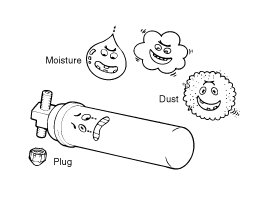
A. When removing refrigerant components from the vehicle, immediately cap the components to prevent moisture from entering. B. When installing refrigerant components on the vehicle, do not remove the cap until the components are ready to be connected. C. Complete the connection of all refrigerant pipes and hoses immediately to prevent moisture from entering the air conditioning system. D. Use only recommended lubricant taken from a sealed container. - In case of accidental discharge of the system, ventilate the work area before resuming work.
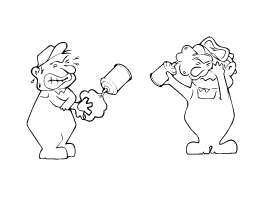
- Never open or loosen a connection until the system has been discharged.
- Immediately cap or plug open component fittings to prevent moisture or dirt from entering.
- Do not remove the sealing caps from a replacement component until it is ready for installation.
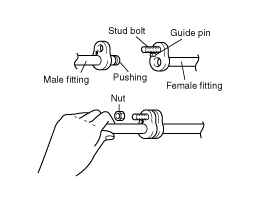
- Always install a new O-ring before connecting an open fitting. Coat the fitting and O-ring with refrigerant oil before connecting.
| Size | Tightening Torque [N·m (kgf·m, ft-lbf)] | |
| Standard Bolt, Nut | ||
| 4T | 7T | |
| M6 | 5 - 6 (0,5 - 0,6, 3,6 - 4,3) | 9 - 11 (0,9 - 1,1, 6,5 - 7,9) |
| M8 | 12 - 14 (1,2 - 1,4, 8,7 - 10) | 20 - 26 (2,0 - 2,6, 14 - 18) |
| M10 | 25 - 28 (2,5 - 2,8, 18 - 20) | 45 - 55 (4,5 - 5,5, 32 - 39) |
| Size | Flange Bolt, Nut | |
| 4T | 7T | |
| M6 | 5–7 (0,5–0,7, 3,6–5,0) | 8–12 (0,8–1,2, 5,8–8,6) |
| M8 | 10 - 15 (1,0 - 1,5, 7 - 10) | 19 - 28 (1,9 - 2,8, 14 - 20) |
| M10 | 21 - 31 (2,1 - 3,1, 15 - 22) | 39 - 60 (3,9 - 6,0, 28 - 43) |
|

- When the refrigerant system must be opened, have everything needed for the service ready so the system is not left open longer than necessary.
- Cap or plug all lines and fittings as soon as they are opened to prevent dirt and moisture from entering.
- All lines and components in the parts stock must remain capped or sealed until they are ready for use.
- Never attempt to bend pre-formed lines to make them fit. Use the correct line for the installation you are servicing.
- All tools, including the refrigerant dispensing manifold, gauge manifold and charging hoses, must be kept clean and dry.
Test yourself
A quick Hyundai Tucson LM quiz: every answer comes with an explanation and a link to the manual page.
Was this page helpful?