Tire Chains
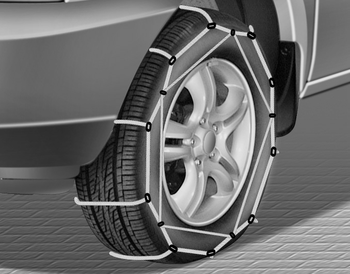
Since the sidewalls of radial tires are thinner, they may be damaged when some types of snow chains are installed on them. Therefore, it is recommended to use winter tires instead of snow chains. Do not install snow chains on vehicles equipped with aluminum wheels; snow chains may damage the wheels. If it is necessary to use snow chains, use wire chains with a link thickness of less than 15 mm (0.59 in.). Damage to your vehicle caused by improper use of snow chains is not covered by the vehicle manufacturer's warranty.
Install snow chains on the front wheels only.
CAUTION
- Make sure the snow chains are the correct size and type for your tires. Improperly fitted snow chains may damage the vehicle body and suspension and are not covered by the vehicle manufacturer's warranty. Also, snow chain connecting hooks may be damaged by contact with vehicle components, causing the snow chains to come off the tire. Make sure the snow chains are SAE Class "S" certified.
- Always check the chain installation after driving approximately 0.5 to 1 km (0.3 to 0.6 mile) to ensure a secure fit. Tighten or reinstall the chains if they are loose.
- If your vehicle is fitted with 225/45R17 or 225/40ZR18 tires, do not use snow chains; they may damage your vehicle (wheels, suspension and body).
Chain Installation
When installing chains, follow the chain manufacturer's instructions and install them as tightly as possible. Drive slowly with the chains installed. If you hear the chains touching the body or chassis, stop and retighten them. If they still contact the vehicle, decelerate until the vehicle stops. Remove the chains as soon as you start driving on cleared roads.
WARNING - Installing Snow Chains
When installing snow chains, park the vehicle on a level surface away from traffic. Turn on the hazard warning lights and place a warning triangle behind the vehicle, if available. Always place the vehicle in P (Park), apply the parking brake and turn off the engine before installing snow chains.
WARNING - Tire Snow Chains
- Using chains may adversely affect vehicle handling.
- Do not exceed 30 km/h or the speed limit recommended by the chain manufacturer, whichever is lower.
- Drive carefully and avoid bumps, potholes, sharp turns and other road hazards that may cause the vehicle to bounce.
- Avoid sudden turns or locked-wheel braking.
CAUTION
- Chains of incorrect size or improper installation may damage the brake lines, suspension, body and wheels.
- Stop and retighten the chains each time you hear them striking the vehicle.
Test yourself
A quick Kia Cee'd quiz: every answer comes with an explanation and a link to the manual page.