Engine Start/Stop Button Location
OFF
To turn off the engine (START/RUN position) or the vehicle power (ON position), press the engine START/STOP button with the shift lever in P (Park). If you press the engine START/STOP button when the shift lever is not in P (Park), the engine START/STOP button will not change to the OFF position but to the ACC position.
In an emergency while the vehicle is moving, you can turn off the engine and shift to ACC by pressing the ENGINE START/STOP button for more than 2 seconds or 3 times in a row within 3 seconds. If the vehicle is still moving, you can restart the engine without depressing the brake pedal by pressing the ENGINE START/STOP button when the shift lever is in N (Neutral).
ACC (Accessory)
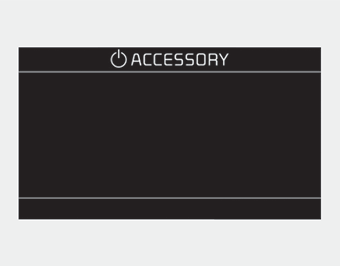
Press the Engine Start/Stop button when it is in the OFF position without depressing the brake pedal. The ACC indicator appears on the instrument cluster LCD. If the Engine Start/Stop button remains in the ACC position for more than 1 hour, it automatically switches off to prevent battery discharge.
ON
Press the engine start/stop button when it is in the ACC position without depressing the brake pedal.
The warning lights can be checked before starting the engine. Do not leave the engine start/stop button in the ON position for a long time. The battery may discharge because the engine is not running.
START/RUN
To start the engine, depress the brake pedal and press the ENGINE START/STOP button when the shift lever is in the P (Park) or N (Neutral) position. For your safety, start the engine with the shift lever in the P (Park) position.
If the Engine Start/Stop button is pressed without depressing the brake pedal on vehicles with automatic transmission, the engine will not start, and the Engine Start/Stop button changes as follows:
OFF ➔ ACC ➔ ON ➔ OFF or ACC
✽ NOTICE
If the ENGINE START/STOP button is left in the ACC or ON position for a long time, the battery will discharge.
WARNING - Engine Start
Never press the ENGINE START/STOP button while the vehicle is moving, except in an emergency. This will result in loss of steering and braking control, which may cause an accident.
Test yourself
A quick Kia Optima DL3 quiz: every answer comes with an explanation and a link to the manual page.