Exterior Care
Exterior General Precautions
It is very important to follow the instructions on the label of any chemical cleaning or polishing product. Read all warnings and cautions printed on the label.
Complete the Maintenance
Washing
To protect your vehicle's paint from rust and wear, wash it thoroughly and often, at least once a month, with warm or cold water.
If you use your vehicle for off-road driving, you should wash it after each off-road trip. Pay special attention to removing any accumulation of salt, mud, dirt, and other foreign materials. Make sure the drain holes in the lower edges of the doors and the rocker panels are kept clean.
Insects, tree sap, tree resin, bird droppings, industrial fallout, and similar deposits may damage your vehicle's finish if not removed immediately.
Even a quick wash with plain water cannot completely remove all of these deposits. You may use a mild soap that is safe for painted surfaces.
After washing, rinse the vehicle thoroughly with warm or cold water. Do not allow soap to dry on the finish.
High-Pressure Washing
- When using a high-pressure washer, keep a sufficient distance from the vehicle. Insufficient clearance or excessive pressure may cause damage or water intrusion.
- Do not spray high-pressure water directly at the camera, sensors, or the area around them. Impact from high-pressure water may damage the device and prevent it from operating normally.
- Do not hold the spray nozzle close to boots (rubber or plastic covers) or connectors, as they may be damaged by high-pressure water.
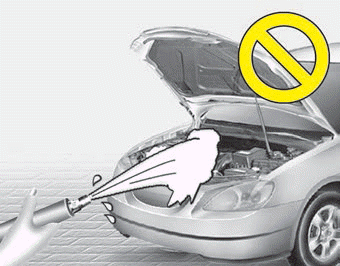
CAUTION - Wet Engine
- Washing the engine compartment with water, including high-pressure water washing, may cause failure of the electrical circuits located in the engine compartment.
- Never allow water or other liquids to contact electrical or electronic components inside the vehicle, as this may cause damage.
WARNING
After washing the vehicle, test the brakes at low speed to check whether they have been affected by water. If braking performance has decreased, dry the brakes by applying them lightly while maintaining a slow forward speed.
Waxing
Wax the vehicle when water no longer beads on the paint.
Always wash and dry the vehicle before applying wax. Use a quality liquid or paste wax and follow the manufacturer's instructions. Apply wax to all metal trim to protect it and maintain its shine.
Removing oil, resin and similar materials with a spot remover will usually remove wax from the finish. Be sure to re-wax these areas, even if the rest of the vehicle does not yet need waxing.
Do not apply wax to embossed unpainted parts, as this may cause them to become dull.
CAUTION - Drying the Vehicle
- Wiping dust or dirt from the body with a dry cloth may scratch the finish.
- Do not use steel wool, abrasive cleaners, acidic cleaners, or strong cleaners with high alkali or caustic content on chrome or anodized aluminum parts. This may damage the protective coating and cause discoloration or wear of the paint.
Complete the Repair of Damage
Deep scratches or chips in the painted surface must be repaired immediately. Exposed metal rusts quickly and may lead to major repair costs.
If your vehicle is damaged and requires repair or replacement of metal parts, make sure the body shop applies anti-corrosion materials to the repaired or replaced parts.
Bright Metal Care
- To remove road tar and insects, use a tar remover, not a scraper or other sharp tool.
- To protect bright metal surfaces from corrosion, apply a coat of wax or chrome preservative and rub to a shine.
- In winter or in coastal areas, cover bright metal parts with a heavier coat of wax or preservative. If necessary, cover the parts with non-aggressive petroleum jelly or another protective compound.
Underbody Maintenance
Road salt and other corrosive chemicals are used in cold weather to melt snow and prevent ice buildup. If these chemicals are not removed regularly, they corrode the underbody and, over time, damage fuel lines, fuel tank mounting system, suspension, exhaust system, and even the body frame.
- Wash the underbody regularly in winter and whenever your vehicle has been exposed to such salts or chemicals.
- Thoroughly wash the underbody at the end of winter.
- Use professional service technicians or government inspection stations to check for corrosion annually.
- Have your vehicle inspected immediately if you visually notice corrosion flaking or scaling, or if you notice any change in the vehicle, such as soft or spongy brakes, fluid leakage, steering control deviation, suspension noise, or rattling metal belts.
Aluminum Wheel Care
Aluminum wheels are coated with a clear protective lacquer.
- Do not use abrasive cleaners, polishing compounds, solvents, or wire brushes on aluminum wheels. They may scratch the coating.
- Clean the wheel when it has cooled down.
- Use only mild soap or a neutral detergent and rinse thoroughly with water. Always clean the wheels after driving on salted roads. This helps prevent corrosion.
- Avoid washing wheels with high-speed vehicle wash brushes.
- Do not use alkaline or acidic cleaners. They may damage and corrode aluminum wheels with a clear protective coating.
Corrosion Protection
Protecting Your Vehicle from Corrosion
Using the most advanced design and construction techniques to combat corrosion, we produce vehicles of the highest quality. However, this is only part of the job. To achieve the long-term corrosion resistance your vehicle can provide, the owner's cooperation and assistance are also required.
Common Causes of Corrosion
The most common causes of corrosion on your vehicle are:
- Road salt, dirt and moisture that can accumulate under the vehicle.
- Removal of paint or protective coatings by stones, gravel, abrasion, or minor scratches and dents, leaving unprotected metal exposed to corrosion.
High-Corrosion Areas
If you live in an area where your vehicle is regularly exposed to aggressive materials, corrosion protection is especially important. Common causes of accelerated corrosion are road salts, dust control chemicals, ocean air and industrial pollution.
Moisture Causes Corrosion
Moisture creates the conditions under which corrosion is most likely to occur. For example, corrosion is accelerated by high humidity, especially at temperatures just above freezing. Under these conditions, corrosive material stays in contact with the vehicle surface with moisture that evaporates slowly.
Mud is especially aggressive because it dries slowly and retains moisture in contact with the vehicle. Even though mud appears dry, it can still hold moisture and promote corrosion.
High temperatures can also accelerate corrosion of parts that are not properly ventilated so that moisture can evaporate. For all these reasons, it is especially important to keep your vehicle clean and free of dirt or accumulated foreign materials. This applies not only to visible surfaces but especially to the underside of the vehicle.
Test yourself
A quick Kia Optima DL3 quiz: every answer comes with an explanation and a link to the manual page.