Abs (abs/tcs) hu/cm system inspection
the ABS (ABS/TCS) HU/CM detects a failure. Follow the troubleshooting procedures.
3. Turn the ignition switch off.
4. On level ground, jack up the vehicle and support it evenly on safety stands. Shift the transaxle to N position.
5. Release the parking brake.
6. Rotate the wheels by hand, and inspect for brake drag.
Operation of ABS inspection1. Perform the Preparation.
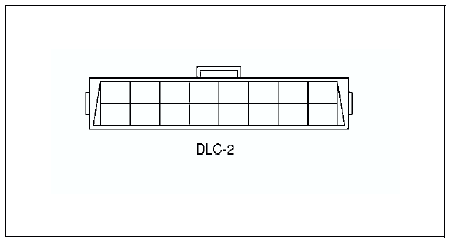
2. Connect the SSTs(WDS or equivalent) to the data link connector-2 (DLC-2).

3. Set up an active command mode inspection according to the combination of commands below.
The chart above shows an example of a right wheel inspection.
Note- When working with two people, one should press on the brake pedal, the other should attempt to rotate the wheel being inspected.
4. Send the command while pressing on the brake pedal and attempting to rotate the wheel being inspected.
5. When pressure is being maintained, and click sound indicating the solenoid is operating comes from the ABS (ABS/TCS) HU/CM, confirm that the wheel does not rotate. When pressure is being reduced, and click sound indicating the solenoid is operating comes from the ABS (ABS/TCS) HU/CM, confirm that the wheel rotates, even though the brake pedal is being depressed.
Note- To protect the ABS (ABS/TCS) HU/CM, the solenoid valve used for simulations and the ABS motor stay on for 10 seconds each time they are switched on.
- Performing the inspections above determines the following.
- The ABS (ABS/TCS) HU/CM brake lines are normal. - The ABS (ABS/TCS) HU/CM hydraulic system is not significantly abnormal. - The ABS (ABS/TCS) HU/CM wiring is normal.
- However, the following items cannot be checked.
- ABS (ABS/TCS) HU/CM input system harness and parts - Extremely small leaks in the ABS (ABS/TCS) HU/CM internal hydraulic system - Unusual intermittent occurrences in the above items
Test yourself
A quick Mazda 6 quiz: every answer comes with an explanation and a link to the manual page.