Air conditioning system with refrigerant R134a
Leak detection in refrigerant circuit using compressed air or nitrogen
In this manual: Air conditioning system with refrigerant R134a
~3min read
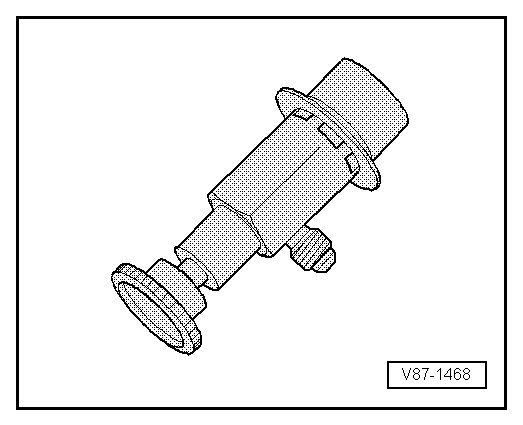
 Note A leak in the refrigerant circuit can be detected, for example, by pressurising the circuit to a maximum of 15 bar using cleaned and dried compressed air or nitrogen → Chapter. If the leak is large, the leakage point can be detected by sound as the air or gas escapes. |
Introduce the compressed air or the nitrogen through the service connection. |
 |
| The quick-release coupling adapter for service connection can be fitted with a modified charging hose -A- (e.g. with a 5/8"-18 UNF thread, depending on the thread of the quick-release coupling adapter) and a suitable adapter -B- to connect to the workshop compressed air system → Chapter. To ensure no moisture, oil or other contaminants can enter the refrigerant circuit from the workshop compressed air system, use, for example, a supplementary combination fine filter element with an oil, dirt and water separator as normally used in paint shops. Install it between the compressed air system and the charging hose -A- → Workshop equipment catalogue. | 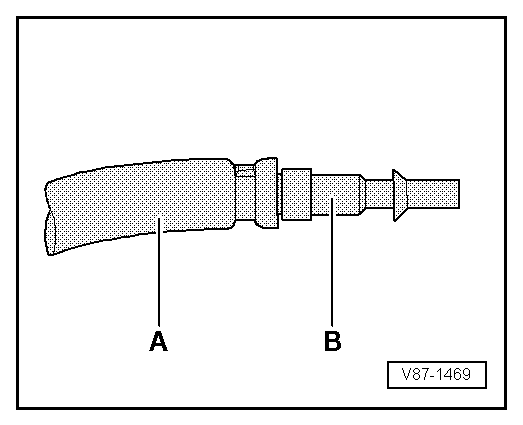 |
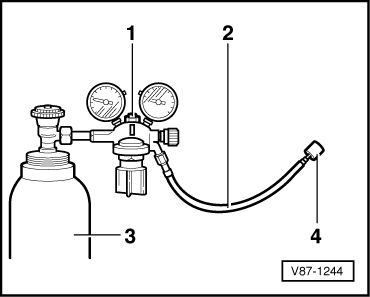
Using the manifold gauge with pressure reducer for nitrogen (maximum reduced pressure: 15 bar) -1- you can connect a full nitrogen gas cylinder -3- via a charging hose -2- (e.g. with 5/8"-18 UNF threaded connection) to the service connection, to which a quick-release coupling adapter is connected, of a closed refrigerant circuit. → Chapter
|
 |
 WARNING
Test yourself
A quick Volkswagen Golf quiz: every answer comes with an explanation and a link to the manual page.
Was this page helpful?