Wheels and Tyres Guide - General Information
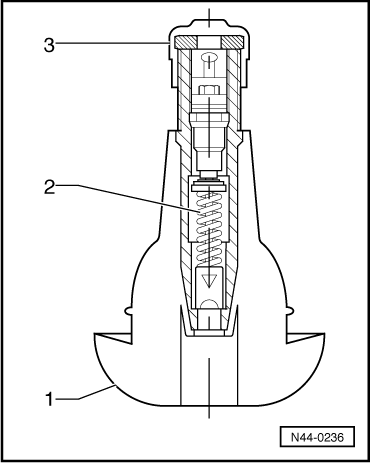
Removing and installing valve, description of the valve
In this manual: Wheels and Tyres Guide - General Information
~2min read
1. Valve body
2. Valve coreThe valve insert has the most important job in the valve. It creates a seal and enables the regulation of the air pressure. The small flat seal on the valve core can only function correctly if it is free of foreign particles, dirt and moisture. The compressed air system must be free of water and oil!3. Valve capA valve cap must always be screwed onto the valve. It prevents dirt from getting into the valve. Dirt which may be in the valve would reach the seal of the valve plate when the tyre is inflated and cause a leak.The valve must be renewed every time a new tyre is fitted.If the vehicle is driven without caps on the valves, there is the danger that dirt may get into the valve. This leads to a gradual loss of air, which in turn can lead to the destruction of the tyre.Separation of carcass and rubber → Fig.Wide, circumferential furrows near the bead → Fig.Stripped tread or stripped protector → Fig.
|
 |
 WARNING
Test yourself
A quick Volkswagen Golf quiz: every answer comes with an explanation and a link to the manual page.
Was this page helpful?