Information Call, Roadside Assistance Call and Emergency Call Service
In this manual: Information Call, Roadside Assistance Call and Emergency Call Service
View from the front — 1Rear view — 1Driver door — 1Driver side — 1Center console — 1Passenger's side — 1Symbols in the instrument cluster — 1Warning and information texts — 1Introduction to the instrument cluster — 1Operating the Volkswagen Digital Cockpit — 1Volkswagen Digital Cockpit information displays — 1Charge status and range in the digital instrument cluster — 1Power display — 1Head-up display (HUD) — 1ID. Light — 1Service menu — 1Service display — 1Vehicle settings menu — 1Limits of the Driver Alert System — 1Operating the Driver Alert System — 1Limits of the Dynamic Road Sign Display — 1Operating the Dynamic Road Sign Display — 1Correct seating position — 1Fasten seat belts reminder — 1Fastening and unfastening the safety belts — 1Safety belt positioning — 1Safety belt height adjuster — 1Automatic safety belt retractor, safety belt pretensioner, safety belt load limiter — 1Safety belt pretensioner servicing and disposal — 1Functions of the proactive passenger protection system — 1Limitations of the proactive passenger protection system — 1Indicator light — 1Installation Locations and Deployment Zones — 1Front airbags — 1How to Recognize that the Front Passenger's Front Airbag is Switched Off — 1Side airbags — 1Types of child restraints — 1Installing and using child restraints — 1Securing systems — 1Attaching a child restraint with ISOFIX or i-Size — 1Securing the child restraint with the upper strap (top tether) — 1Securing a child restraint with a safety belt — 1Securing yourself and the vehicle — 1What to do in the event of an accident or fire — 1Emergency equipment — 1Information Call, Roadside Assistance Call and Emergency Call Service — 1Legally required eCall Emergency System — 1Vehicle key functions — 1Replacing the button cell battery — 1Synchronizing a vehicle key — 1Setting up primary users for the vehicle — 1Using a mobile key — 1Unlocking or locking using Keyless Access — 1Opening the doors — 1Control for central locking — 1Opening and closing the driver's door in an emergency — 1Locking the front passenger door and rear doors in an emergency — 1Electrical childproof lock — 1SAFELOCK — 1Anti-theft alarm system — 1Interior monitoring and towing protection — 1Opening and closing the trunk lid — 1Power opening and closing the trunk lid — 1Trunk lid with Easy Open motion sensor — 1Automatic trunk lid closing Easy Close — 1Opening and closing the windows — 1Power window pinch protection — 1Adjusting the steering wheel position — 1Manually adjusting front seats — 1Adjusting power front seats — 1Folding the rear bench seat backrest forward or backward — 1Adjusting the head restraints — 1Removing and installing the head restraints — 1Center armrest — 1Memory function — 1Massage feature — 1Switching the turn signals on and off — 1Switching the lights on and off — 1Switching the high beam headlights on and off — 1High Beam Control (Light Assist) — 1Advanced high beam control (Dynamic Light Assist) — 1Switching the poor weather lights on and off — 1Parking lights — 1Entry and exit lighting (orientation lighting) — 1Headlight range control — 1Adjusting headlights (travel mode) — 1Interior/reading lights, ambient lighting — 1Operating the windshield wiper lever — 1Rain/light sensor — 1General safety precautions — 1Interior rearview mirror — 1Outside mirrors — 1Sun visors — 1Sunshade in the sunroof — 1Overview of the Climatronic — 1Air conditioner menu in the Infotainment system — 1Temperature regulation — 1Air distribution and blower speed — 1Air recirculation — 1Seat heating — 1Steering wheel heating — 1Windshield defroster — 1Operating the stationary air conditioning — 1Programming the stationary air conditioning — 1Functions of the electric drivetrain — 1Steering information — 1Information on the pedals — 1Information on the brakes — 1Switching the ignition on and off — 1Activating the vehicle's drive system — 1Exiting a vehicle while the vehicle's drive system is active — 1Deactivating the vehicle's drive system — 1Driving mode selector — 1Brake energy recuperation — 1General driver information — 1Eco tips — 1Driving a loaded vehicle — 1Driving with an open trunk lid — 1Driving through water on roads — 1Operating the vehicle in different countries and continents — 1Selecting the driving mode — 1Standard behavior of the driving mode and the vehicle systems — 1Limits of the sensor system — 1Operating the cruise control system — 1Operating the speed limiter — 1System Limitations of the Predictive Control — 1Driving with predictive control — 1Eco assist — 1Special driving situations — 1System Limitations of ACC — 1Switching ACC on and off — 1Adjusting the ACC settings — 1System Limitations of Predictive Cruise Control — 1Driving with predictive cruise control — 1Warning levels and braking support — 1System Limitations of Front Assist — 1Using Front Assist — 1Lane Assist system limitations — 1Driving with Lane Assist — 1Operating Travel Assist — 1Using assisted lane changing — 1Driving with Emergency Assist — 1Side Assist system limitations — 1Driving with Side Assist — 1Parking — 1Electronic parking brake — 1Auto Hold — 1Automatic braking intervention — 1Switching Park Distance Control (PDC) on and off — 1Parking (Rear View Camera system with parking mode selection) — 1Changing the camera perspective — 1Searching for parking spaces — 1Driving into parking spaces — 1Exiting a parking space — 1Calibrating the parking process — 1Displaying and editing parking spaces — 1Driving into or out of a parking space — 1Rear Traffic Alert — 1Information about braking assistance systems — 1Switching ASR Sport and ESC Sport on and off — 1Sockets in the vehicle — 1Charging Options for Mobile Devices — 1Cyber security — 1Download and software installation — 1V2X limitations — 1Traffic hazard alert — 1USB port — 1Bluetooth interface — 1Establishing a data connection — 1Setting up and deactivating a Wi-Fi hotspot — 1Setting up a Wi-Fi client — 1Quick connection — 1Apps — 1Apple CarPlay — 1Android Auto — 1MirrorLink — 1Introduction to online services — 1Data processing — 1Prerequisites for Using Services — 1Situations that can affect system functions — 1Services That Do Not Require Activation — 1Ordering Services and Activation in the Vehicle — 1Setting, Changing and Resetting the S-PIN — 1Carrying Out Volkswagen Ident — 1Manage services — 1Managing Users — 1Changing and Deleting User Data — 1Status display — 1Impact on online vehicle functions — 1Customizable vehicle settings — 1Viewing and enabling functions — 1Safety instructions — 1User information — 1Overview and controls of the 12" version — 1Overview and controls of the 10" version — 1Operating the Infotainment system — 1Personalizing the Infotainment system — 1System and sound settings — 1Cleaning the screen — 1Brands, licenses, copyright — 1Functions and radio symbols — 1Special functions in radio mode — 1Online functions in radio mode — 1Functions and media symbols — 1Selecting and playing a media source — 1Entertainment playback via the Infotainment system — 1Function descriptions — 1Functions and symbols of the navigation system — 1Inputting destinations and starting route guidance — 1Setting a 360º range display and Electric Vehicle Route Planner — 1Navigation data — 1Traffic information — 1Functions and symbols of the phone interface — 1Coupling, connecting and managing — 1Calling and sending text messages — 1Phone directory, favorites and speed dial keys — 1Introduction to using voice control — 1Starting and ending voice control — 1Activation word — 1Stowing luggage and cargo — 1Luggage compartment cover — 1Second luggage compartment floor - functions — 1Fitting and removing the screen separator behind the rear bench seat — 1Fitting and removing the screen separator behind the front seats — 1Tie-downs — 1Luggage net — 1Shopping bag hooks — 1Load-through hatch — 1Hitching a trailer — 1Loading a trailer — 1Driving with a trailer — 1Trailer stabilization — 1Swiveling out the ball mount — 1Dimensions and mounting points for retrofitting a trailer hitch — 1Attaching a rear carrier system or bicycle rack to the ball mount — 1Mounting a roof rack — 1Loading the roof rack — 1Warning signs for the high-voltage system — 1Handling the high-voltage battery — 1Charging — 1Charging process indicator — 1Emergency release for the charging connector — 1Overview of the charging settings — 1Battery charge limits — 1Charging locations — 1Departure Times (time-delayed charging) — 1Charging with solar power — 1Bidirectional charging — 1Instructions for the charging cable — 1Charging cable for charging stations with alternating current (AC) — 1Charging cable for mains sockets — 1Vehicle tool kit components — 1Putting the windshield wipers in the service position — 1Cleaning and changing wiper blades — 1Information on bulb replacement — 1Replacing bulbs in LED headlights — 1Fuses in the hood space — 1Fuse table for fuses in the hood space — 1Fuses in the instrument panel — 1Fuse table for fuses in the instrument panel — 1Replacing blown fuses — 1Ground jump-start point — 1Preparing and Performing a Jump-start — 1Instructions for towing — 1Towing — 1Installing the front towing eye — 1Installing the rear towing eye — 1Safety precautions for working in the hood space — 1Preparing the vehicle for work in the hood space — 1Display — 1Operating fluids and operating equipment — 1Washer fluid — 1Engine coolant specifications — 1Checking and filling engine coolant — 1Brake fluid specifications — 1Checking the Brake Fluid — 1Checking the 12 V vehicle battery acid level — 1Handling tires — 1Handling rims — 1Checking the tire pressure — 1Monitoring the tightening torque — 1Replacing tires — 1Monitoring the tread depth — 1Winter tires — 1Snow chains — 1How the Tire Pressure Monitoring System Works — 1Limitations of the Tire Pressure Monitoring System — 1Calibrating the Tire Pressure Monitoring System — 1Troubleshooting the Tire Pressure Monitoring System — 1Preparing Your Vehicle — 1Removing and Fitting Hubcaps — 1Removing and Fitting Wheel Hub Covers — 1Removing and Fitting the Wheel Bolt Caps — 1Loosening wheel bolts — 1Raising the vehicle with the vehicle jack — 1Changing a wheel — 1Preparing Your Vehicle — 1Sealing and pumping up tires — 1Tire labeling and tire classifications — 1Maintenance procedures and digital maintenance schedule — 1Information about operating conditions — 1Scope of service — 1Vehicle care information — 1Washing the vehicle — 1Exterior care and cleaning — 1Care and cleaning of the vehicle interior — 1Accessories and replacement parts — 1Sensors and Cameras — 1Repairs and technical modifications — 1Airbag system repairs and situations that can affect the system function — 1Mobile phone usage in the vehicle — 1Volkswagen dealer warranty — 1Data Storage and Data Protection Information — 1Event data recorder (crash data recorder) — 1Labels and signs — 1Fluids in the air conditioning system — 1Component protection — 1Disposal of old batteries and electronic devices — 1Declaration of conformity — 1Third Party Copyright Information — 1Useful information on vehicles with N1 type approval (light commercial vehicle) — 1Radar Sensors — 1Mapping tables — 1Dimensions — 1
~10min read

Volkswagen ID.4 emergency call button with indicator light on roof console
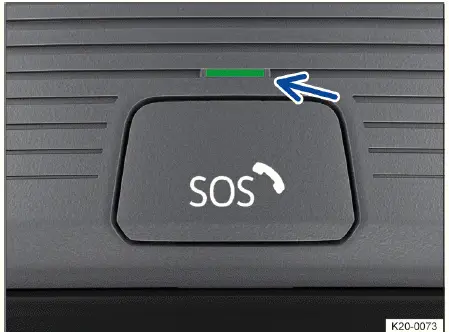
Fig. 1 Located on the roof console: Emergency Call Service button (behind a button cover) and indicator light.
Volkswagen ID.4 emergency call button in overhead console
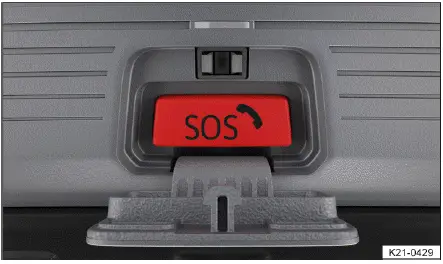
Fig. 2 Located on the roof console: Emergency Call Service button.

Volkswagen ID.4 overhead console controls for information and roadside assistance calls
Fig. 3 In the overhead console: Controls for the information call and roadside assistance call.

Volkswagen ID.4 information call button icon Information call.

Volkswagen ID.4 roadside assistance call button icon Roadside assistance call.

In the Volkswagen ID.4, the controls located in the roof console → fig. 1, → fig. 2, → fig. 3 provide access to advanced voice-based support services. Depending on the vehicle equipment and country of operation, these features include the Information Call, Roadside Assistance Call, and Emergency Call Service. If available, the Emergency Call Service is activated for a limited period as standard, with connectivity provided via an integrated control module installed at the factory.

Volkswagen ID.4 We Connect system information icon Additional information about We Connect services should be reviewed for full functionality and service availability.

Indicator lights for the Emergency Call Service

The indicator light shown in → fig. 1 (arrow) is integrated into the control panel of the Volkswagen ID.4. It displays different colors and flashing patterns depending on the operational status of the Emergency Call Service:

Volkswagen ID.4 emergency call indicator light off status The indicator light remains off: the Emergency Call Service is not active or not available.

Volkswagen ID.4 red flashing indicator light system error A red indicator light flashes after ignition: system malfunction detected. The Emergency Call Service is deactivated.

Volkswagen ID.4 red steady indicator light system limited or unavailable A red indicator light remains on: system error. Emergency Call Service functionality is limited or unavailable.

Volkswagen ID.4 green indicator light system ready A green indicator light remains on: the Emergency Call Service in the Volkswagen ID.4 is fully operational and ready for use.

Volkswagen ID.4 green blinking indicator active call A green indicator light flashes: a call is currently in progress.

Information call

  • Using the information call feature in the Volkswagen ID.4 connects you directly to the Volkswagen AG support hotline.
  • This service may only be available in specific regions depending on local availability.
  • The support representative will communicate in the language configured in the Volkswagen ID.4 infotainment system.

Roadside assistance call

  • In the event of a breakdown, the Volkswagen ID.4 allows you to contact an authorized Volkswagen dealer or service center using the roadside assistance function.
  • Relevant vehicle data, such as the current location of the Volkswagen ID.4, may be transmitted automatically during the call.
  • The support representative will typically communicate in the language of the country where the vehicle is registered with We Connect.
  • If the Volkswagen ID.4 is not registered with We Connect, communication will default to the language of the vehicle’s production destination.

Emergency Call Service

  • The Emergency Call Service in the Volkswagen ID.4 enables rapid assistance in critical or life-threatening situations.
  • Once activated, a direct connection is established with the Volkswagen emergency call center.
  • If triggered manually or automatically (e.g., in the event of airbag deployment or safety belt tensioner activation), important data such as vehicle position is transmitted automatically.
  • The operator will communicate in the language set in the infotainment system. If unavailable in the region, English will be used as a fallback language.
  • The Volkswagen ID.4 is equipped with additional safety components such as a dedicated emergency microphone, speaker system, and an independent backup battery to ensure system operation even after a severe accident.
  • The Emergency Call Service can be permanently deactivated by an authorized Volkswagen service center. Volkswagen recommends consulting an official dealer before doing so.
  • If the legally required eCall system is installed, it can be partially managed via the infotainment system, app, or online portal. However, mandatory eCall functionality cannot be fully disabled.

For optimal safety and connectivity, Volkswagen recommends keeping all communication services in the Volkswagen ID.4 active and regularly checking system status through the infotainment interface.

WARNING

The following conditions in the Volkswagen ID.4 may limit or completely prevent a manual or automatic emergency call from being placed:

  • The Volkswagen ID.4 is located in an area without mobile network or satellite coverage, or where signal strength is too weak for communication.
  • The vehicle is in an area with network coverage, but the telecommunications provider’s infrastructure is unavailable. In such cases, the system may attempt to route the call via the legally required eCall Emergency System.
  • The Emergency Call Service may not be legally permitted or supported in certain countries where the Volkswagen ID.4 is being operated.
  • No valid license or subscription exists for the Emergency Call Service in the Volkswagen ID.4.
  • Critical system components required for emergency calling are damaged, malfunctioning, or do not have sufficient power supply.
  • The Emergency Call Service has been manually deactivated via the Volkswagen portal or mobile application. In this situation, calls may be redirected to the mandatory eCall system if available.
  • The Emergency Call Service has been disabled due to restricted data transmission settings. If the legally required eCall system cannot function, the Emergency Call Service in the Volkswagen ID.4 may automatically reactivate.
  • The ignition of the Volkswagen ID.4 is switched off, preventing system activation.

Triggering an emergency call manually

1. If equipped, briefly press the protective cover of the emergency button → fig. 1 and fold it downward.

2. Press and hold the emergency call button → fig. 2 until the green indicator light begins flashing in the Volkswagen ID.4.

Once activated, the Volkswagen ID.4 will initiate an emergency call and establish a voice connection with the Volkswagen emergency call center.

If the emergency call was triggered unintentionally, cancel it immediately to avoid unnecessary dispatch of emergency services:

1. Press the emergency call button again until the indicator light remains steadily green.

Volkswagen ID.4 emergency call button usage instruction Only use the emergency call button in genuine emergency situations → fig. 2.

Automatic emergency call

In the Volkswagen ID.4, the automatic emergency call function operates only when the ignition is switched on.

If a serious collision occurs and airbags or safety belt pretensioners are activated, the Volkswagen ID.4 will automatically initiate a call to the emergency call center. This process cannot be canceled by pressing the emergency button → fig. 2.

If no response is received from vehicle occupants, emergency services will be alerted and dispatched automatically based on transmitted data.

Integrated battery

The Volkswagen ID.4 is equipped with an integrated backup battery that ensures the Emergency Call Service remains functional even if the main 12 V battery is disconnected or fails.

If the integrated battery becomes depleted or defective, a notification will appear in the instrument cluster. In such cases, it is essential to contact an authorized Volkswagen dealer or service center immediately for inspection and replacement.

Volkswagen ID.4 integrated emergency call backup battery maintenance reminder The integrated battery in the Volkswagen ID.4 should be inspected and, if necessary, replaced approximately every three years by an authorized Volkswagen service facility.

Data transmission

During an emergency call in the Volkswagen ID.4, essential vehicle data is transmitted to the Volkswagen emergency call center to help determine the appropriate rescue response.

The system temporarily stores recent vehicle location data; however, only the last ten positions are retained. This ensures that the Volkswagen ID.4 cannot be continuously tracked, maintaining user privacy.

Emergency call data is processed solely for system functionality and safety purposes. All transmitted data is automatically deleted approximately 13 hours after the emergency call has been completed.

For enhanced safety and reliability, Volkswagen recommends regularly checking the operational status of the Emergency Call Service in your Volkswagen ID.4 and ensuring that all related systems remain active and properly maintained.

The following data will be transmitted by the Volkswagen ID.4 when an emergency call is initiated:

  • The exact current position of the Volkswagen ID.4 at the moment the emergency call is triggered.
  • Up to nine previously recorded vehicle positions shortly before the emergency call (covering several kilometers / approximately 2 miles of the driven route).
  • Vehicle Identification Number (VIN) of the Volkswagen ID.4.
  • Type of vehicle drive (electric drive system).
  • Vehicle model, specifically identifying the Volkswagen ID.4.
  • Trigger type, indicating whether the call was initiated automatically or manually.
  • Type of call being placed.
  • The direction in which the Volkswagen ID.4 was traveling at the time of the incident.
  • Severity of the detected accident.
  • Direction of impact.
  • Type of vehicle involved in the collision, if detectable.
  • Exact time of impact.
  • Ambient temperature at the time of the event.
  • Type of road or driving environment.
  • Accuracy and reliability of the positioning data.
  • Version of the transmitted data set.
  • Counter indicating how many data sets have been transmitted during the call.
  • Estimated number of occupants inside the Volkswagen ID.4.
  • Language selected in the infotainment system.
  • Optional data identifiers for system processing.

You have the right to request access to or deletion of transmitted data by contacting the Volkswagen emergency call center. Volkswagen ensures that data handling for the Volkswagen ID.4 complies with applicable privacy regulations.

Volkswagen ID.4 data transmission affected by privacy settings Depending on equipment and regional regulations, data transmission in the Volkswagen ID.4 may be influenced by individual privacy settings. Full Emergency Call Service functionality is only guaranteed when data transmission is fully enabled.

Volkswagen ID.4 aftermarket infotainment impact on emergency call system The use of aftermarket infotainment systems in the Volkswagen ID.4 may limit or interfere with Emergency Call Service functionality.

Routing to the Statutory eCall Emergency System

In certain conditions, the Emergency Call Service in the Volkswagen ID.4 may be limited or unavailable. If the legally required eCall Emergency System is present, the vehicle will attempt to establish a connection with the nearest public emergency service center. In such cases, all available data will be transmitted to assist emergency responders in determining the appropriate rescue measures.

Troubleshooting

Volkswagen ID.4 emergency call system malfunction warning icon Emergency Call Service malfunction

The red indicator light on the emergency call button in the Volkswagen ID.4 remains illuminated Volkswagen ID.4 red emergency call button indicator. Additionally, the instrument cluster may display the message Volkswagen ID.4 emergency call error message display Error: Emergency call function. Service vehicle.

This indicates a system malfunction in the Volkswagen ID.4, and the Emergency Call Service may not function correctly or may be unavailable.

1. Immediately contact an authorized Volkswagen dealer or Volkswagen Service Facility to diagnose and resolve the issue. Volkswagen strongly recommends professional inspection and repair.

Volkswagen ID.4 limited emergency call system warning icon Emergency Call Service limited

The red indicator light remains on in the Volkswagen ID.4 Volkswagen ID.4 limited function indicator, and the following message may appear in the instrument cluster: Volkswagen ID.4 emergency call limited message display Emergency call function limited. Service vehicle.

In this case, the Emergency Call Service is partially functional. For example, a voice connection to the Volkswagen emergency call center may not be possible.

1. Contact an authorized Volkswagen dealer or service center immediately to restore full functionality of the system in the Volkswagen ID.4.

Controls are responding differently than expected

Environmental factors such as moisture, dirt, or grease can affect the responsiveness of the control buttons in the Volkswagen ID.4.

1. Keep all control surfaces clean, dry, and free from contaminants to ensure proper operation.

For optimal reliability of safety systems in the Volkswagen ID.4, it is recommended to regularly inspect system indicators and ensure that all communication and emergency features are functioning correctly.