Refueling
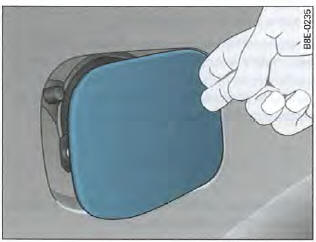
Fig. 213 Right rear of vehicle: opening the fuel filler flap

Fig. 214 Fuel filler flap with fuel filler cap
When the central locking is operated, the fuel filler flap unlocks or locks automatically.
Opening the fuel filler cap
- Press the right side of the fuel filler flap to open it => Fig. 213.
- Turn the fuel filler cap counterclockwise to unscrew it.
- Hook the cap by its top onto the open fuel filler flap => Fig. 214
Closing the fuel filler cap
- Turn the fuel filler cap clockwise onto the filler neck until it clicks audibly.
- Close the fuel filler flap.
As soon as the fuel pump nozzle shuts off correctly, the fuel tank is “full”. Do not continue refueling after the first automatic shut-off - you would fill the expansion space provided in the tank.
The fuel to be used is specified on a label affixed to the inside of the fuel filler flap. You will find more information on fuel
The tank capacity is listed in the technical data.
CAUTION!
Fuel is slightly flammable and can cause severe burns and other injuries.
- For safety reasons, switch off the stationary heater* before refueling.
- When refueling or filling a fuel canister, do not smoke and do not stay near open flames - risk of explosion!
- Observe the legal regulations in force when using, storing and transporting a fuel canister.
- For safety reasons, we recommend not transporting a fuel canister. In an accident, the canister may be damaged and fuel could leak out.
- If, in very exceptional cases, you must transport fuel in a canister, observe the following:
- Never fill a fuel canister while it is in or on the vehicle. Filling generates electrostatic charges that can ignite fuel vapors - risk of explosion! Always place the canister on the ground when filling it.
- Insert the nozzle as far as possible into the filler neck.
- If it is a metal canister, keep the nozzle in contact with the canister while filling it with fuel to prevent the build-up of static charges.
- Never spill fuel inside the vehicle or in the luggage compartment. Evaporating fuel is explosive - danger to life!
 Warning!
- If fuel has spilled onto the bodywork, wipe it off immediately. This applies in particular to RME (biodiesel) fuel - risk of damage to the paint!
- Never drive until the tank is completely empty. An irregular fuel supply can cause misfiring.
Unburned fuel will then enter the exhaust system - risk of damage to the catalytic converter!
- If you have driven a diesel vehicle until it ran out of fuel, switch the ignition on for at least 30 seconds without starting the engine after refueling. The engine may then take longer than usual to start, up to approximately one minute.
 Environment
Do not overfill the fuel tank. Fuel could overflow as it heats up and expands.
Test yourself
A quick Audi A4 quiz: every answer comes with an explanation and a link to the manual page.