Brakes
The service brake consists of two independent circuits.
If one of them fails, the vehicle can still be stopped using the other. However, braking requires firm pressure on the brake pedal, which takes much greater force. The braking distance is longer. Have the vehicle checked by a service center before continuing your journey.
Caution If one of the brake circuits fails, more force is required to depress the brake pedal and the braking distance increases. Have the brake system checked and repaired as soon as possible. An authorized service center is recommended. If the brake pedal can be pressed further down than normal, the brakes may need repair.Contact a service center immediately. An authorized service center is recommended.
Caution Do not rest your foot on the brake pedal while driving. This will cause the brake components to wear faster. The brakes may also overheat, which will increase the braking distance and reduce driving safety. Warning After driving through deep water, washing the vehicle, or braking heavily while descending a steep hill, the brakes may temporarily lose effectiveness. This may be caused by wet or overheated brakes. If the brakes temporarily lose effectiveness due to overheating: When descending hills, shift to a lower gear. Do not keep pressing the brake pedal continuously.If the brakes temporarily lose effectiveness due to wetness, the following procedure will help restore normal braking performance:
- Check that no vehicles are following behind you.
- Maintain a safe speed and a safe distance from the edge of the road and from vehicles behind you.
- Gently press the brake pedal until normal braking performance is restored.
ABS system
The ABS system prevents the wheels from locking during braking.
As soon as any wheel begins to lock, the system adjusts the brake line pressure accordingly. As a result, the vehicle keeps its steerability even during very hard braking.
ABS operation is felt as pulsation of the brake pedal and is accompanied by a characteristic noise.
For optimal braking performance, keep pressing the brake pedal fully down despite its pulsation. Do not reduce the pressure of your foot on the pedal.
Do not reduce the pressure of your foot on the brake pedal.
When starting the vehicle, mechanical noises may be heard for a short time after the ignition is switched on.
This is normal and indicates that the ABS system is ready.
Indicator light .
Malfunction
Warning If a fault occurs in the ABS system, the wheels may lock when the brake pedal is pressed, because much greater forces act on them. The ABS system will then not prevent wheel lock. During hard braking, the vehicle may lose steerability and skid.Have the cause of the fault corrected at a service center.
Parking brake
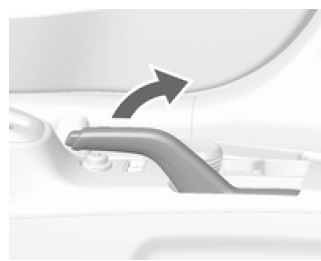
When parking on a slope, apply the parking brake with maximum force without pressing the release button.
To release the parking brake, lift the lever slightly, press the release button, then fully lower the lever.
To reduce the forces acting on the parking brake, press the foot brake pedal at the same time.
Indicator light .
Brake Assist system
This system activates when the brake pedal is pressed quickly and fully down, applying maximum pressure to the brakes of each wheel (the wheels are braked with maximum force).
Throughout braking, keep constant pressure on the brake pedal. When the pedal is released, normal pressure is restored in the brake system.
Hill Start Assist system
The system prevents the vehicle from rolling backward when starting on an incline.
When the vehicle is on an incline and the driver releases the brake pedal to press the accelerator pedal, brake system pressure is held for approximately 2 seconds.
Test yourself
A quick Chevrolet Aveo quiz: every answer comes with an explanation and a link to the manual page.