Intelligent servitude unit
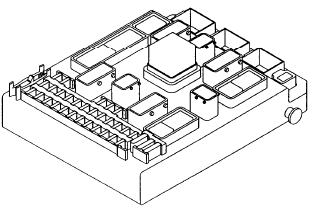
Intelligent servitude unit
The Intelligent Servitude Unit (BSI) is a control unit that includes:
- interface electronics (relays, fuses, diagnostic socket),
- control electronics: the BSI manages communication between the control units and the transfer of information between the networks,
- computing electronics: it independently manages basic functions (central locking, indicators, visibility, interior lighting, immobiliser, etc.),
- non-volatile memory for anti-theft protection (vehicle VIN, key and remote control codes, radio identification, etc.). A code called the diagnostic code is stored in the BSI. This code, accessible by diagnostic tools, gives precise information on the control units fitted to the vehicle, in particular those connected to the VAN network,
- a program that controls all functions and performs diagnosis and coding.
The BSI acts as an interface between the control units connected to the VAN network and the diagnostic tool. The BSI helps manage energy by commanding reduced-consumption modes for itself and the other multiplexed control units.
Operating principle: multiplexing
Method of operating electrical equipment, requiring a suitable electrical architecture with a single circuit connecting all components.
All messages sent on this circuit contain an information or command part and a recipient identification part.
All components connected to the circuit receive the message, but only the identified recipient can read it and be activated. This process is supervised by the BSI.
Multiplexing uses standardised communication protocols:
VAN (Vehicle Area Network)
CAN (Controller Area Network)
The associated architecture greatly reduces wiring harness complexity and allows new features to be offered to the customer.
Test yourself
A quick Citroen C5 Aircross quiz: every answer comes with an explanation and a link to the manual page.