Transmission Ranges
The indicator in the instrument cluster shows the position of the shift lever when the ignition switch is in the ON position.
P (Park)
Always come to a complete stop before shifting to P (Park).
To shift out of P (Park), depress the brake pedal and make sure your foot is not on the accelerator pedal.
If you have done all of the above and still cannot move the shift lever out of the P (Park) position, refer to "Shift-Lock Release" in this chapter.
The shift lever must be in the P (Park) position before the engine is turned off.
WARNING
- Shifting to P (Park) while the vehicle is moving may cause loss of vehicle control.
- After stopping the vehicle, always make sure the shift lever is in the P (Park) position, apply the parking brake, and turn off the engine.
- When parking on a slope, block the wheels to prevent the vehicle from rolling down.
- Do not use the P (Park) position in place of the parking brake.
- RPM (revolutions per minute) may increase or decrease while the Intelligent Variable Transmission (IVT) performs self-diagnosis.
R (Reverse)
Use this position to drive the vehicle in reverse.
NOTICE
Always come to a complete stop before shifting into or out of R (Reverse). Shifting into R (Reverse) while the vehicle is moving may damage the transmission.
N (Neutral)
The wheels and transmission are disengaged.
Use N (Neutral) if you need to restart a stalled engine, or if you need to stop with the engine running. Shift to P (Park) if you need to leave the vehicle for any reason.
Always depress the brake pedal when shifting from N (Neutral) to another gear.
WARNING
Do not shift into gear unless your foot is firmly on the brake pedal. Shifting into gear when the engine is running at high speed may cause the vehicle to move very quickly. You may lose control of the vehicle and hit people or objects.
D (Drive)
This is the normal driving position. The transmission will shift automatically, providing the best fuel economy and power. For additional power when passing another vehicle or driving uphill, press the accelerator pedal further until you feel the transmission downshift.
The DRIVE MODE switch, located on the shift lever console, allows the driver to switch from NORMAL mode to ECO or SPORT mode (if equipped).
DS (Sport Driving) Mode
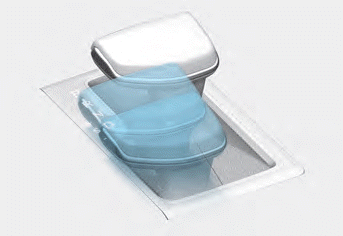
- To switch to DS mode, move the shift lever from the D (Drive) position to the manual shift gate. The engine and transmission control logic is automatically optimized for sport driving.
- In DS mode, if you move the shift lever to the + (up) or - (down) position, the transmission switches to manual shift mode. If the shift lever is moved back to D (Drive), it changes to D (Drive). The vehicle operates according to the drive mode selected (NORMAL, SPORT, SMART).
Manual Shift Mode
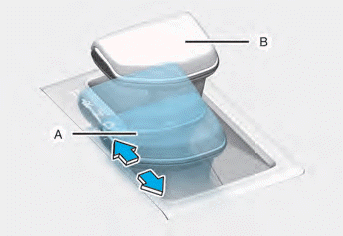
Whether the vehicle is stationary or moving, manual shift mode is selected by pushing the shift lever from the D (Drive) position into the manual shift gate. To return to D (Drive), push the shift lever back into the main gate.
In manual shift mode, move the shift lever forward and back to select the gear suitable for the current driving conditions.
+ (Up): Push the lever forward once to shift up one gear.
- (Down): Pull the lever back once to shift down one gear.
Information
- Only the first six forward gears can be selected. To reverse or park the vehicle, move the shift lever to the R (Reverse) or P (Park) position as required.
- Downshifting occurs automatically when the vehicle decelerates. When the vehicle stops, 1st gear is automatically selected.
- When the engine speed approaches the red zone, the transmission will upshift automatically.
- If the driver pushes the shift lever to the + (up) or - (down) position, the transmission cannot shift to the requested gear if the next gear is outside the allowable engine speed range. The driver should shift to a higher gear according to road conditions, taking care to keep the engine speed below the red zone.
- When driving on a slippery road, push the shift lever forward to the + (up) position. This causes the transmission to shift to 2nd gear, which is better for smooth driving on slippery roads. Move the shift lever toward the - (down) position to shift back to 1st gear.
- When driving in manual shift mode, decelerate before shifting to a lower gear. Otherwise, the lower gear may not engage if the engine speed is outside the allowable range.
Test yourself
A quick Hyundai Elantra CN7 quiz: every answer comes with an explanation and a link to the manual page.