Tire Pressure Monitoring System (TPMS, if equipped)
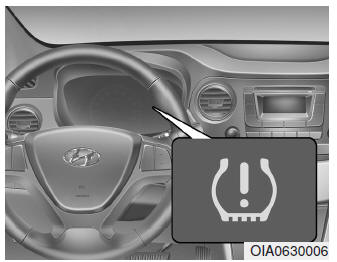
Low Tire Pressure Warning Light / TPMS Malfunction Indicator. Each tire, including the spare (if equipped), should be checked monthly when cold and inflated to the tire pressure recommended by the vehicle manufacturer on the vehicle placard or tire inflation pressure label. (If your vehicle has tires of a different size than the size indicated on the vehicle placard or tire inflation pressure label, you should determine the proper tire inflation pressure for those tires.)
As an additional safety measure, the vehicle has been equipped with a tire pressure monitoring system (TPMS) that illuminates a low tire pressure warning light when one or more tires are significantly under-inflated. Accordingly, when the low tire pressure warning light illuminates, you should stop and check your tires as soon as possible, and inflate them to the proper pressure. Driving on a significantly under-inflated tire causes the tire to overheat and can lead to tire failure.
Under-inflation also reduces fuel efficiency and tire tread life, and may affect the vehicle's handling and braking ability.
Note that the TPMS does not replace proper tire maintenance, and it is the driver's responsibility to maintain correct tire pressure, even when under-inflation has not reached the level to trigger the TPMS low tire pressure warning light.
The vehicle is also equipped with a TPMS malfunction indicator, which signals when the system is not operating properly.
The TPMS malfunction indicator is combined with the low tire pressure warning light. When the system detects a malfunction, the light flashes for approximately one minute and then remains steadily on. This sequence will continue at subsequent vehicle starts as long as the malfunction persists. When the malfunction indicator illuminates, the system may be unable to detect or signal low tire pressure as intended. TPMS malfunctions may occur for a variety of reasons, including the installation of replacement or alternative wheels or tires on the vehicle, which prevent the TPMS from functioning correctly. Always check the TPMS malfunction indicator after replacing one or more wheels or tires, to ensure that the replacements allow the TPMS to continue functioning properly.
NOTE
If the TPMS indicator does not illuminate for 3 seconds when the ignition switch is in the ON position or the engine is running, or if it comes on after flashing for approximately one minute, it is recommended that you contact an authorized HYUNDAI dealer.
Test yourself
A quick Hyundai i10 quiz: every answer comes with an explanation and a link to the manual page.