Suspension System
Description and Operation
In this manual: Suspension System
5steps
~30min
2/5difficulty
Done 0 of 5
Description
The Tire Pressure Monitoring System (TPMS) monitors tire pressure and tire temperature to warn the driver of pressure changes that may affect vehicle operation. The TPMS control module analyzes wireless information from the sensors. In other words, the system detects the air pressure in the tires and warns the driver if tire pressure drops below the standard level. Low tire pressure warning light on the instrument panel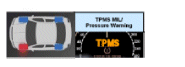
- Indicator light ON
- The light comes on when tire pressure drops below the standard level.
- Indicator light OFF
- Low tire pressure: The warning light turns off when tire pressure exceeds the pressure required to turn off the indicator.
- Warning conditions and display
- When the system detects a fault in the external operating environment (low battery voltage, abnormal vehicle speed, etc.), the warning light flashes for about 1 minute and then stays on.
- Indicator light OFF
- The warning light turns off when the malfunction code is cleared. The malfunction code is cleared automatically when the system receives no malfunction signals for 30 or more ignition cycles after it has moved to the previous malfunction code.
- GENERAL OPERATION
- The system monitors input elements to identify potential malfunctions.
- Malfunction priority depends on its cause.
- Some malfunctions are not diagnosed as DTCs.
- To diagnose additional malfunction symptoms when a malfunction occurs in the ignition line, check the warning light when the ignition is turned on.
- Check that the warning light comes on and then goes off.
Test yourself
A quick Hyundai i20 quiz: every answer comes with an explanation and a link to the manual page.
Was this page helpful?