Brake System
ESP Control Unit Repair Procedures
In this manual: Brake System
12steps
~72min
3/5difficulty
Done 0 of 12
Removal
- Turn the ignition switch OFF, then disconnect the negative (-) battery cable.
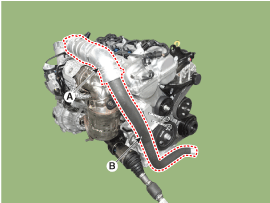
- Disconnect the intercooler inlet hose (A) from the turbocharger, then remove the intercooler inlet pipe (B). [Gasoline 1.6 T-GDI] Tightening torque: Clamp: 4.9–6.9 N·m Mounting bolt: 18.6–24 N·m
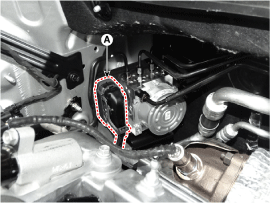
- Pull up the HECU connector lock, then disconnect the connector (A).
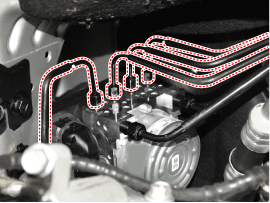
- Disconnect the brake tubes from the HECU by turning the nuts (6 pcs.) counterclockwise using a wrench.
Tightening torque: 12.7–16.7 N·m
Tightening torque: 18.6 – 22 N·m
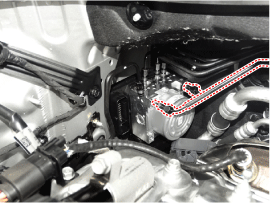
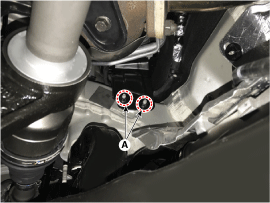
- Loosen the ABS control module mounting nut (A) and remove the ABS control module from the vehicle.
Tightening torque: 12.7–16.7 N·m
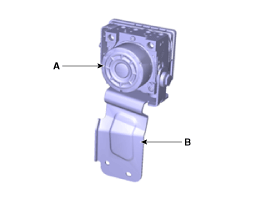
- Separate the bracket (B) after removing the mounting bolt from the HECU (A).
Installation
- To install, reverse the removal procedure.
- Tighten the HECU mounting bolts and nuts to the specified torque.
- After installation, bleed the brake system. (Refer to Electronic Stability Program (ESP) System - "ESP System Bleeding")
- Perform variant coding.
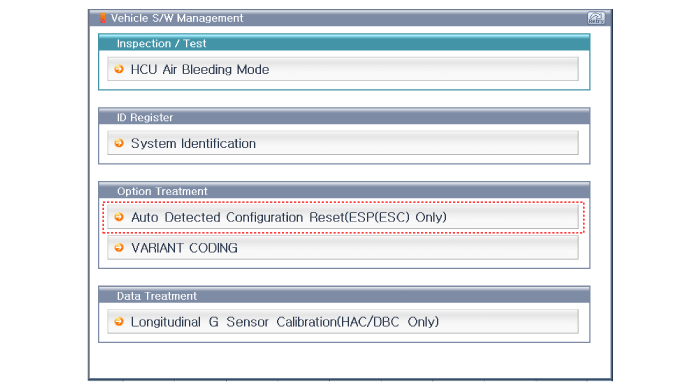
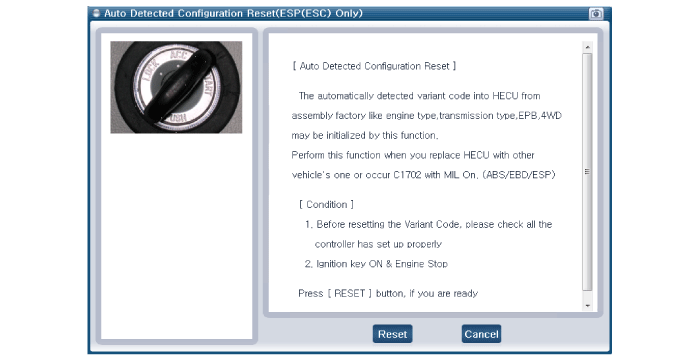
- Perform automatic sensor calibration.
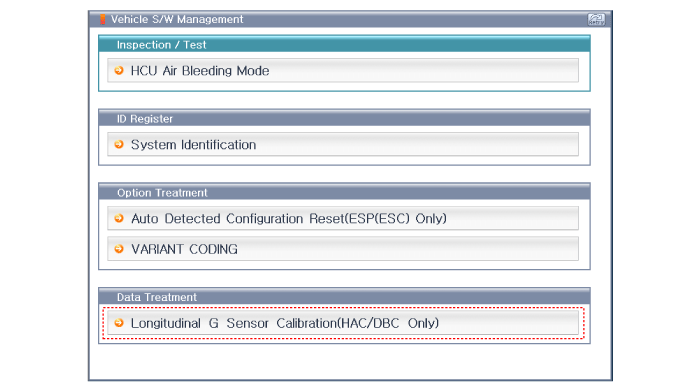
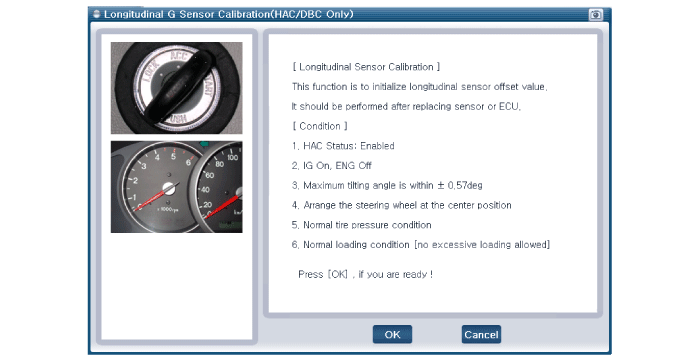
- Perform longitudinal acceleration sensor calibration.
Adjustment
Diagnostic Procedure Using a Scan Tool: As a guide to diagnostic methods using the scan tool, the main contents are as follows: Connect the self-diagnosis connector (16-pin) located at the lower part of the driver's side instrument panel to the self-diagnosis device, then turn the self-diagnosis device on after turning the key ON. Select "Vehicle Model" and "ABS/ESC" on the GDS vehicle selection screen, then select OK.[Variant Coding]
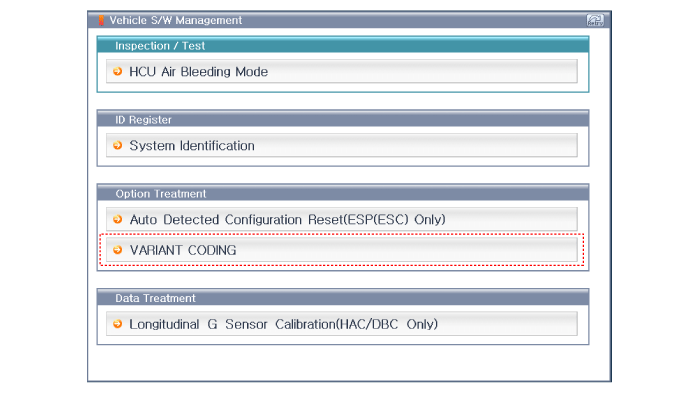
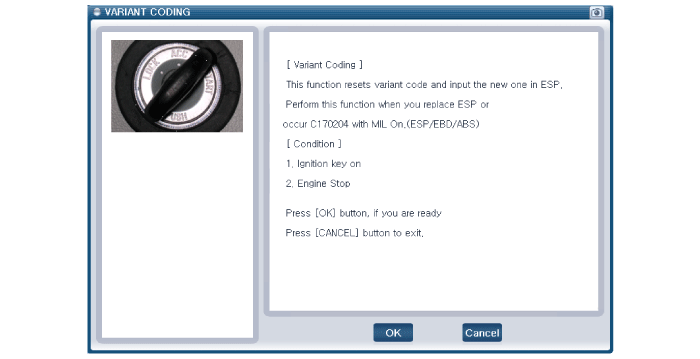
[Automatic Sensor Calibration]
[Longitudinal Acceleration Sensor Calibration]
Test yourself
A quick Hyundai Kona quiz: every answer comes with an explanation and a link to the manual page.
Was this page helpful?