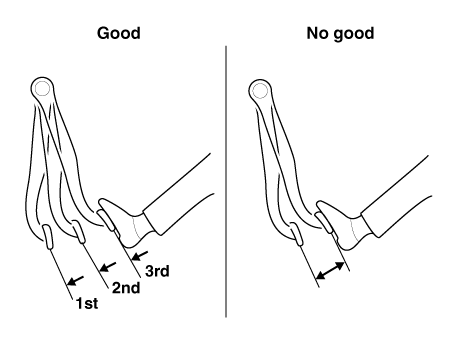
Start the engine for one or two minutes, then stop it. If the pedal fully depresses the first time but gradually rises on subsequent depressions, the booster is operating correctly. If the pedal height remains unchanged, the booster is not operating.
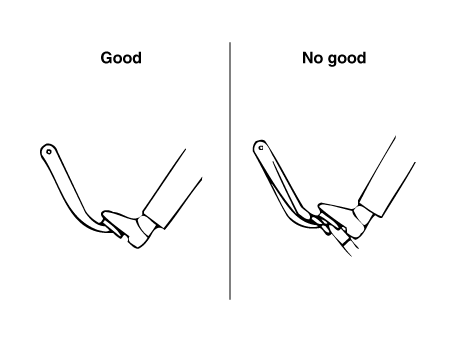
With the engine stopped, depress the brake pedal several times. Then depress the brake pedal and start the engine. If the pedal moves slightly down, the booster is in good condition. If there is no change, the booster is not operating.
With the engine running, depress the brake pedal, then stop the engine. Keep the pedal depressed for 30 seconds. If the pedal height does not change, the booster is in good condition. If the pedal rises, the booster is not operating.If the above three tests are all good, the booster performance can be considered good. Even if one of the above three tests is not good, check the check valve, vacuum hose, and booster for malfunction.
Removal
Turn the ignition switch OFF and disconnect the negative (-) battery cable.
Remove the air cleaner assembly. (Refer to Engine Mechanical System - "Air Cleaner")
Remove the master cylinder. (Refer to Brake System - "Brake Master Cylinder")
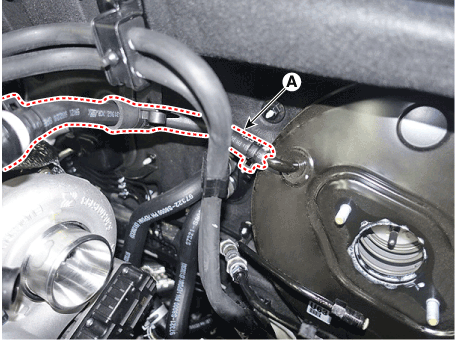
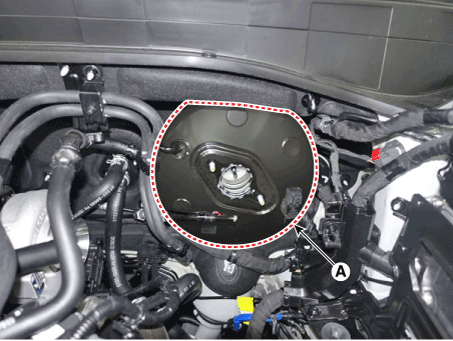
Remove the clip and vacuum hose (A) from the brake booster.
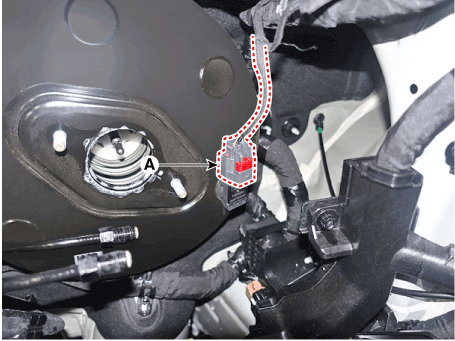
Disconnect the brake booster vacuum pressure sensor connector (A).
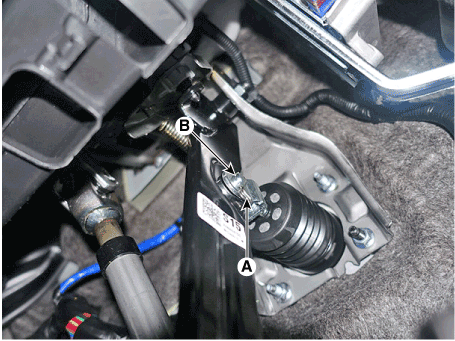
Remove the lock pin (A) and the flat head pin (B).
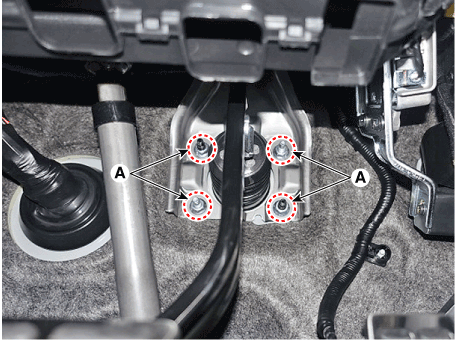
Loosen the lock nut (A) and remove the brake booster (B).
Tightening torque: 16.7–26 N·m
Inspection
Inspect the vacuum hose.
Check the boot for damage.
Installation
To install, reverse the removal procedure.
Apply grease to the joint before installing the pin.
When installing, use a new clip.
After installation, bleed the brake system. (Refer to Brake System - "Brake System Bleeding") (Refer to Brake System - "ESP System Bleeding")
Check for brake fluid leakage and pedal condition.
?
Test yourself
A quick Hyundai Palisade quiz: every answer comes with an explanation and a link to the manual page.