Brake System
Rear disc brake repair procedures
In this manual: Brake System
66steps
~401min
5/5difficulty
1special tools
Done 0 of 66
Removal [Without EPB]
- Remove the rear wheel and tire.
Tightening torque: 88.3 ~ 108 N·m
- Release the parking brake lever. The parking brake cable is slack.
- Remove the parking brake cable (A) after removing the clip (B).
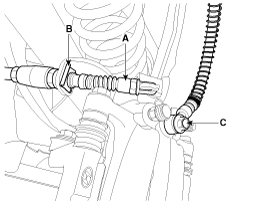
- Remove the brake hose banjo bolt (C). Tightening torque: Brake hose to caliper: 24.5 ~ 29 N·m
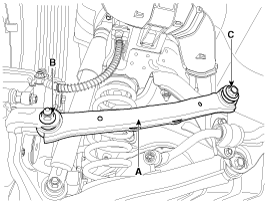
- Remove the upper arm (A). Tightening torque: B: 137.3 ~ 157 N·m (14.0 ~ 16.0 kgf·m, 101.3 ~ 115.7 ft-lbf) C: 156.9 ~ 176 N·m (16.0 ~ 18.0 kgf·m, 115.7 ~ 130.2 ft-lbf)
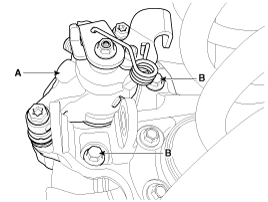
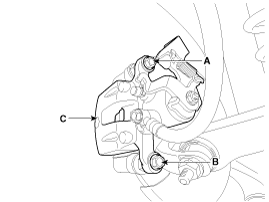
- Loosen the caliper mounting bolts (B), then remove the rear caliper assembly (A). Tightening torque: Caliper assembly to carrier (B): 63.7 ~ 74 N·m
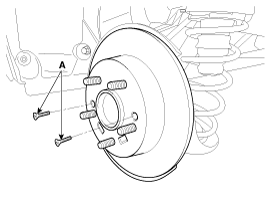
- Remove the rear brake disc by loosening the screws (A).
Tightening torque: 4.9 - 5.9 N·m
Removal [With EPB]
- Remove the rear wheel and tire.
Tightening torque: 88.3 ~ 108 N·m
- Release the parking brake.
- Disconnect the EPB actuator connector (A).
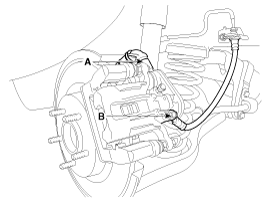
- Disconnect the brake hose from the brake caliper by loosening the bolt (B).
Tightening torque: 24.5 - 29 N·m
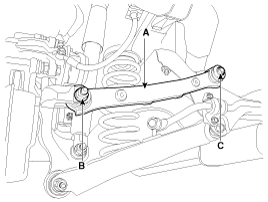
- Remove the rear upper arm (A). Tightening torque: B: 137.3 ~ 157 N·m (14.0 ~ 16.0 kgf·m, 101.3 ~ 115.7 ft-lbf) C: 156.9 ~ 176 N·m (16.0 ~ 18.0 kgf·m, 115.7 ~ 130.2 ft-lbf)
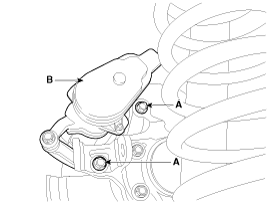
- Loosen the caliper mounting bolts (A) and remove the rear caliper assembly (B).
Tightening torque: 63.7 ~ 74 N·m
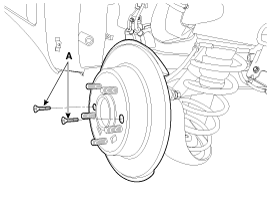
- Remove the rear brake disc by loosening the screws (A).
Replacement [Without EPB]
Rear Brake Pads
- Remove the rear wheel and tire.
Tightening torque: 88.3 ~ 108 N·m
- Release the parking brake lever. The parking brake cable is slack.
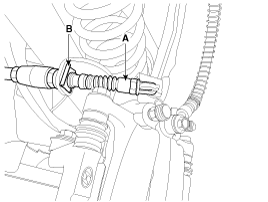
- Remove the parking brake cable (A) after removing the clip (B).
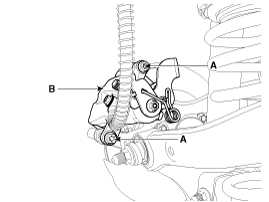
- Loosen the guide rod bolt (A) and remove the rear caliper body (B).
Tightening torque: 21.6 ~ 31 N·m
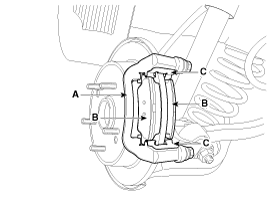
- Replace the pad retainers (C) and brake pads (B) in the caliper carrier (A).
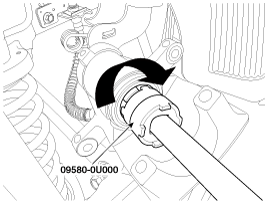
- Insert the piston into the cylinder using SST (09580-0U000).
- Place the caliper body (B) on the caliper carrier and tighten the guide rod bolts (A).
Tightening torque: 21.6 ~ 31 N·m
- Install the rear wheel and tire.
Tightening torque: 88.3 ~ 108 N·m
Replacement [With EPB]
Rear Brake Pads- Remove the rear wheel and tire.
- Connect the GDS to the data link connector located under the instrument panel.
- Ignition "ON" and engine "OFF".
- Release the electric parking brake.
- Select the vehicle model and the EPB system.
- Select "PAD Change Mode".
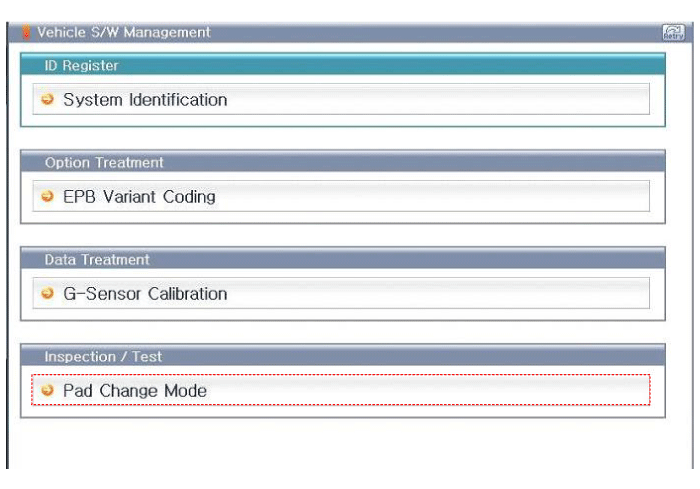
- Perform the "Pad Replacement Mode (Before Pad Replacement)" procedure using GDS.
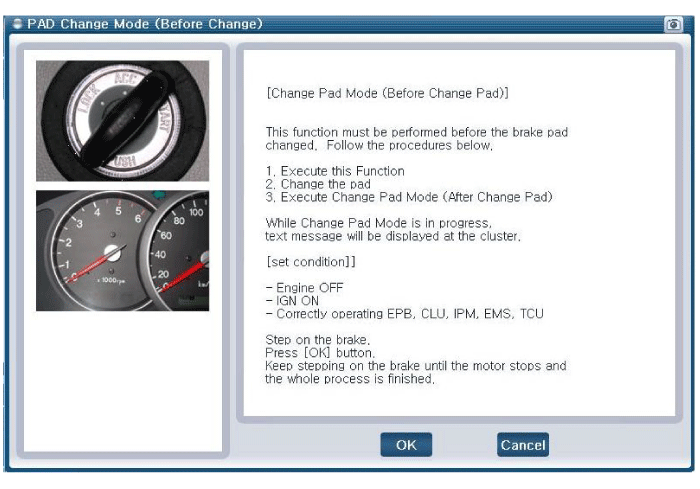
- Ignition switch OFF.
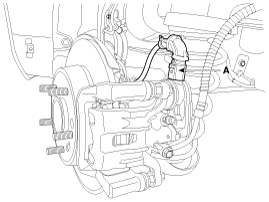
- Disconnect the electric parking brake connector (A).
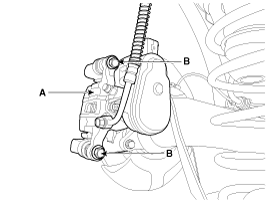
- Loosen the guide rod mounting bolts (B) and remove the caliper body (A).
- Replace the pad retainers (C) and brake pads (B) in the caliper carrier (A).
- Insert the piston into the cylinder using SST (09580-0U000).
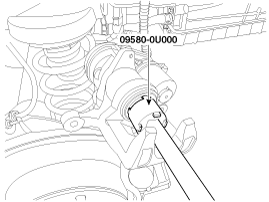
- Place the caliper body (A) on the caliper carrier and tighten the guide pin bolts (B).
Tightening torque: 21.6 ~ 31 N·m
- Connect the electric parking brake connector (A).
- Ignition switch ON.
- Select "PAD Change Mode".
- Perform the "Pad Replacement Mode (Before Pad Replacement)" procedure using GDS.
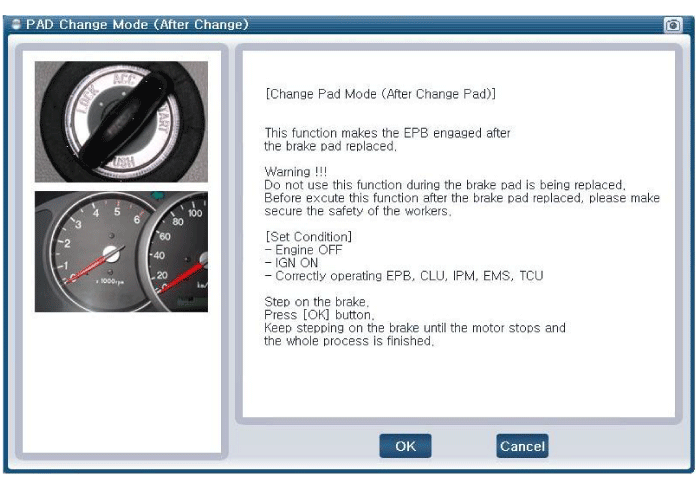
- Turn the ignition switch "OFF" and disconnect the GDS.
- Install the rear wheel and tire.
Tightening torque: 88.3 ~ 108 N·m
Inspection
Rear brake disc thickness inspection
- Inspect the brake pads for wear and discoloration.
- Inspect the brake disc for damage and cracks.
- Remove all rust and contamination from the surface, and measure the disc thickness at 8 points at equal distances (5 mm) from the outer edge of the brake disc. Brake disc thickness Standard: 10 mm (0.394 in.) Maximum service limit: 8.4 mm (0.331 in.) Thickness variation: less than 0.01 mm (0.0004 in.)
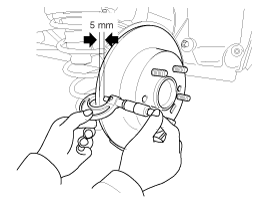
- If wear exceeds the service limit, replace the discs and pads as a set, left and right of the vehicle.
Rear brake pad inspection
- Inspect the pad wear. Measure the pad thickness and replace it if it is less than the specified value. Pad thickness Standard: - EPB: 10 mm (0.394 in.) Maximum limit: 2.0 mm (0.0787 in.)
- Check the pad and metal backing for damage and grease contamination.
Rear brake disc runout inspection
- Position the dial indicator approximately 5 mm (0.2 in) from the outer edge of the brake disc and measure the disc runout.
Brake disc runout Limit: 0.05 mm (0.0020 in.) or less (new)
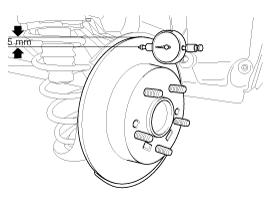
- If brake disc runout exceeds the limit, replace the disc, then measure the runout again.
- If runout exceeds the specified limit, reposition the brake disc by turning it 180°, then re-check the brake disc runout.
- If runout cannot be corrected by changing the position of the brake disc, replace the brake disc.
Installation [Without EPB]
- Install in the reverse order of removal.
- Insert the piston into the cylinder using SST (09580-0U000).
- After installation, bleed the brake system. (Refer to Brake System Bleeding)
Installation [With EPB]
- Install in the reverse order of removal.
- Insert the piston into the cylinder using SST (09580-0U000).
- After installation, bleed the brake system. (Refer to Brake System Bleeding)
Parking Brake Adjustment [Without EPB]
- Remove the floor console to access the adjusting nut.
- Loosen the parking brake cable until both control levers are fully in the OFF position.
- Bring the brake pads into operating position by depressing the brake pedal. Pump the pedal several times until resistance is felt.
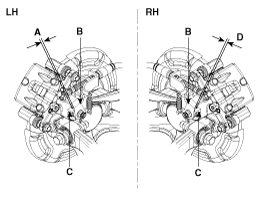
- Tighten the parking brake cable by turning the adjusting nut until the control levers on both calipers lift from the stopper to the distance (A) and (D) between the operating lever (B) and the stopper (C).
Distance (A+D): Max. 3 mm (0.12 in.)
- Install the floor console.
- The parking brake lever in the vehicle must be in the fully released position.
- If the parking brake cables have been replaced, apply the parking brake with maximum force several times to stretch the parking brake cables, then adjust the control as described above.
- Check that the wheels turn freely.
- Road test.
Test yourself
A quick Kia Cee'd quiz: every answer comes with an explanation and a link to the manual page.
Was this page helpful?