Chassis
System operation
In this manual: Chassis
~2min read
SYSTEM OPERATION:
The "X"-split brake circuit of the Mégane II consists, on the whole range, of:
- four disc brakes,
- a single 11-inch brake booster.
The BOSCH ESP also provides:
- ABS (anti-lock braking system): the main functions of the ABS system are electronic brake force distribution (EBD) between the front and rear axles, by regulating rear wheel slip and preventing wheel lock, and regulating the slip of all four wheels.
- MSR (engine torque control): prevents driven wheel slip on lift-off by limiting engine braking.
- ASR (traction control): limits driven wheel spin during pull-away by limiting engine torque and braking the spinning wheel(s).
- ESP (dynamic stability control): dynamic stability control limiting oversteer or understeer by braking certain wheels and controlling engine torque.
- CSV (understeer control): specific control of pronounced understeer situations by autonomously generating strong vehicle braking combined with specific dynamic stability control.
- AUTOMATIC HAZARD LIGHT ACTIVATION: sends a request over the CAN network to the UCH to switch on the hazard lights in the event of braking causing very strong deceleration.
- AUTOMATIC BRAKE LIGHT ACTIVATION: during understeer control (CSV only), the ESP control unit switches on the brake lights via a relay to warn of the strong deceleration generated by the system.
IDENTIFICATION:
Two external features allow an ABS unit to be distinguished from an ABS-ESP unit:
- The size of the units (the ABS-ESP unit is larger than the ABS unit). The ABS unit has 8 solenoid valves and the ABS-ESP unit has 12.
- The number of control unit pins (the ABS control unit has 26 pins and the ABS-ESP control unit has 46 pins).
DIAGNOSTIC WARNING LIGHT STRATEGY:
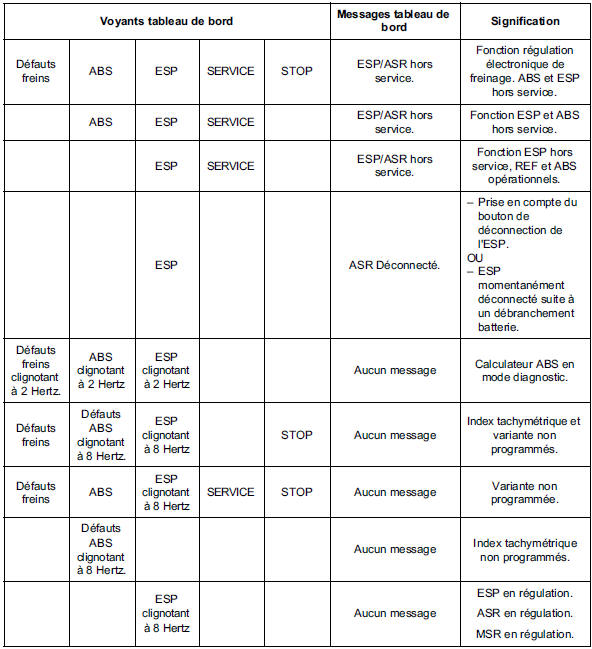
NOTE: The brake warning light is always accompanied by a non-repeating audible signal (1 beep).
Test yourself
A quick Renault Megane quiz: every answer comes with an explanation and a link to the manual page.
Was this page helpful?