Body Electrical System
Repair Procedures
In this manual: Body Electrical System
2steps
~17min
2/5difficulty
1special tools
Done 0 of 2
Service Point Target Automatic Calibration (SPTAC)
This procedure provides a method of calibrating the camera by having the service technician align the vehicle with a well-lit simulated straight road target, preferably a wall. A DTC "System Out of Calibration" will be set for the LDWS camera if it does not operate within the specified tolerances. The LDWS will be supplied for field replacement with the DTC "System Calibration Required / Variant Coding Error" if it is a service part supplied directly from the supplier's production.- Target Selection Guidelines. The following conditions are required to successfully complete the LDWS static calibration procedure:
A. The target surface (SST: 09890-3V100) must be perpendicular to the camera in both horizontal and vertical orientation to maintain a maximum roll of 1°. B. Target is mounted on a rigid backing material to meet flatness requirements. C. The target must have reflective (not faded or poorly colored) markings so that it does not show lane features. D. The size must be 30 cm wide and 100 cm high. E. Installation area must NOT have cross-hatching or text markings near the target. F. Target must be well lit for optimal operation using constant lighting. There must be no continuous shadows on the target. 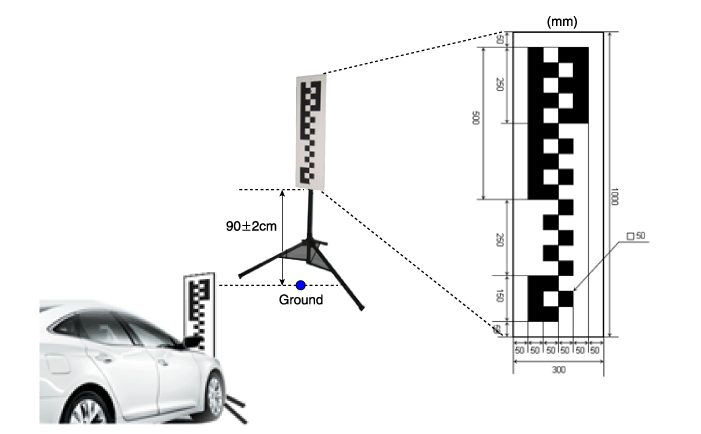
- Automatic Calibration Service Target Procedure
- Check the vehicle alignment and tire pressure to ensure correct alignment of the camera to the "world" before proceeding with calibration. The vehicle must be at its nominal production load capacity when performing the calibration procedure.
- The windshield must be clean, and the silk-screen print must be checked to ensure the camera is not blocked.
- Connect the diagnostic connector and start the vehicle. The camera module must not be activated by pressing the switch.
- The service calibration procedure may not operate correctly if any system-level fault is active.
- When replacing the ECU: the service technician initiates the SPTAC reset setting.
- The service technician aligns either the vehicle to the target or the target to the vehicle.
A. The lower edge of the target must be at a height of 90 cm ± 2 cm from the ground and aligned with the horizontal axis of the camera lens. B. Position the target along the longitudinal axis (centerline) of the vehicle within ± 5 cm of the target center. C. The calibration target must be positioned 2.7 m from the center of the front wheel (1.74 m from the bumper). 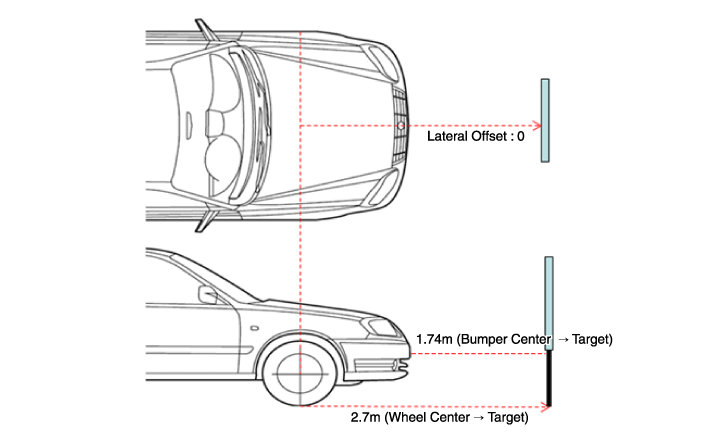
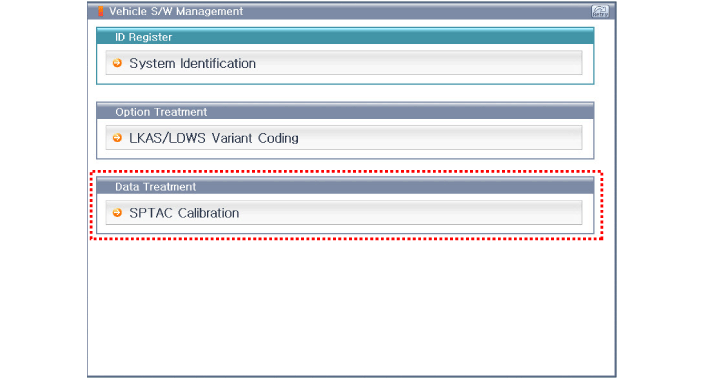
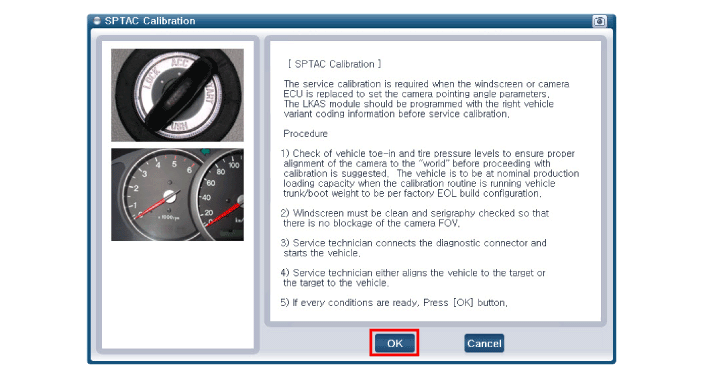

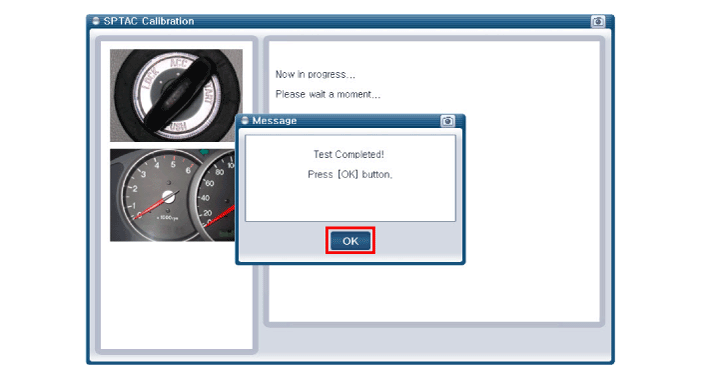
- The technician checks the target installation position and verifies the "OK" message on the diagnostic tool (GDS).
- Clear all DTCs.
- Turn the ignition OFF and then ON.
|

Test yourself
A quick Hyundai Sonata LF quiz: every answer comes with an explanation and a link to the manual page.
Was this page helpful?