Inspection On Vehicle
INSPECTION ON VEHICLE
PROCEDURE
1. CHECK REFRIGERANT PRESSURE USING MANIFOLD GAUGE SET
HINT:
The following examples show manifold gauge set readings and the corresponding air conditioning system problems.
(a) Read the manifold gauge pressure when the following conditions are met:
- All doors fully open.
- Engine running at idle.
- A/C switch set to ON.
- Temperature control set to MAX COOL.
- Fan speed set to HIGH.
- The intake air temperature with recirculated air selected is 30 to 35 °C.
(1) The air conditioning system operates normally Gauge Reading
|
|
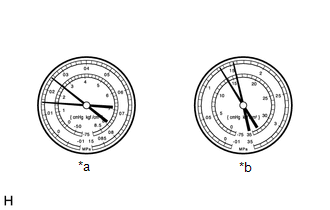
(2) The air conditioning system operates abnormally
- During operation, the low pressure side fluctuates between normal pressure and vacuum.
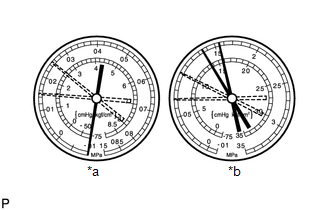
*a
LO
*b
HI
Symptom
The air conditioning system cools intermittently and then stops cooling.
Probable cause
Moisture in the air conditioning system freezes at the expansion valve orifice, temporarily stopping refrigerant flow.
After the system is stopped and the temperature rises, the ice melts and normal operation temporarily returns.
Diagnosis
Cooler dryer (built into the condenser reservoir) saturated with moisture
Moisture in the air conditioning system freezes at the expansion valve orifice and stops refrigerant flow.
Corrective Measures
Replace the cooler dryer
Remove moisture by repeatedly evacuating the air conditioning system
Recharge the air conditioning system with the correct amount of new or purified refrigerant.
HINT:
In the example above, moisture is present in the air conditioning system.
- Low pressure on both low and high pressure sides
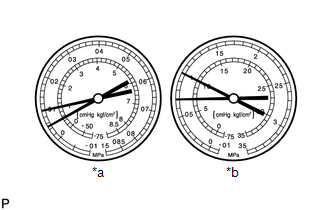
*a
LO
*b
HI
Symptom
The air conditioning system does not cool effectively
Insufficient cooling performance
Probable cause
Refrigerant leaks from the air conditioning system
Diagnosis
Insufficient refrigerant amount
Refrigerant leak
Corrective Measures
Check for refrigerant leaks and repair as necessary
Recharge the air conditioning system with the correct amount of new or purified refrigerant.
If the gauges indicate a pressure close to 0, evacuate the air conditioning system after the leak has been repaired.
HINT:
In the example above, the refrigerant amount is insufficient.
- Low pressure on both low and high pressure sides
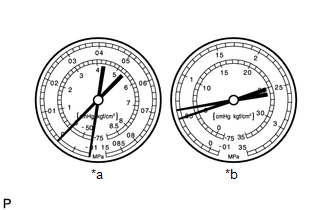
*a
LO
*b
HI
Symptom
The air conditioning system does not cool effectively
Frost has formed on the piping connecting the condenser and the evaporator
Probable cause
Refrigerant flow is obstructed by debris in the internal tubes of the condenser core.
Diagnosis
Condenser clogged
Corrective Measures
Replace the condenser
HINT:
In the example above, refrigerant circulation is weak.
- A vacuum is indicated on the low pressure side and a very low pressure is indicated on the high pressure side
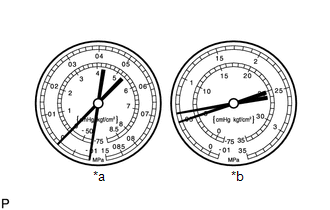
*a
LO
*b
HI
Symptom
The air conditioning system does not cool effectively (the cooling system may cool momentarily)
Frost or condensation visible on the piping upstream and downstream of the receiver/dryer assembly or the expansion valve
Probable cause
Refrigerant flow is restricted by moisture or contaminants in the air conditioning system
Expansion valve stuck in the closed position
Diagnosis
Refrigerant does not circulate
Corrective Measures
Replace the expansion valve
Replace the condenser
Evacuate the air conditioning system and recharge it with the correct amount of new or purified refrigerant
HINT:
In the example above, refrigerant does not circulate.
- Excessively high pressure on both low and high pressure sides
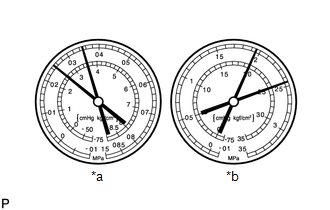
*a
LO
*b
HI
Symptom
The air conditioning system does not cool effectively
Probable cause
Unable to provide sufficient performance due to excessive refrigerant amount
Condenser cooling efficiency is insufficient
Diagnosis
Excessive amount of refrigerant in the air conditioning system because too much refrigerant was added during recharging
Condenser cooling efficiency is insufficient because the condenser fins are clogged or the condenser cooling fan is faulty
Corrective Measures
Clean the condenser
Check the operation of the condenser cooling fan
If the condenser is clean and the fan operates normally, check the refrigerant quantity and recharge the air conditioning system with the correct amount of new or recycled refrigerant
HINT:
In the example above, the air conditioning system is overcharged or the condenser cooling efficiency is insufficient.
- Excessively high pressure on both low and high pressure sides
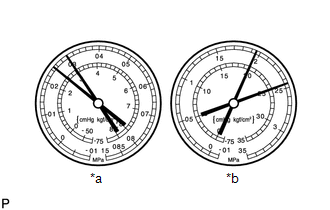
*a
LO
*b
HI
Symptom
The air conditioning system does not cool
Low pressure line too hot to the touch
Probable cause
Air in the air conditioning system
Diagnosis
Air present in the air conditioning system
Insufficient vacuum time when evacuating the air conditioning system
Corrective Measures
Replace the cooler dryer
Check the compressor oil: contamination or insufficient quantity
Evacuate the air conditioning system and recharge it with new or recycled refrigerant.
NOTICE:
These gauge readings appear when the air conditioning system has been opened, then recharged without being evacuated.
HINT:
In the example above, moisture is present in the air conditioning system.
- Excessively high pressure on both low and high pressure sides
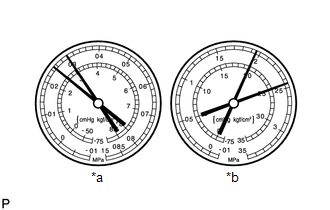
*a
LO
*b
HI
Symptom
The air conditioning system does not cool effectively
Large amount of frost or condensation on the low pressure line
Probable cause
The expansion valve may be stuck in the open position or is metering the refrigerant incorrectly
Diagnosis
Excess refrigerant in the low pressure line
Expansion valve opening too large
Corrective Measures
Replace the expansion valve
HINT:
The example above indicates a malfunction of the expansion valve.
- Pressure is too high on both the high and low pressure sides, or pressure is too low on the high pressure side
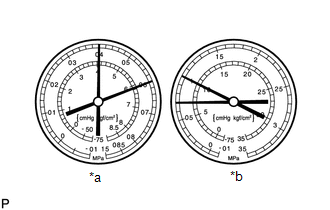
*a
LO
*b
HI
Symptom
The air conditioning system does not cool effectively
Probable cause
Internal leak in the compressor
Diagnosis
Low compression
Leak from a damaged valve or any other compressor component
Corrective Measures
Replace the compressor
HINT:
The example above indicates insufficient compressor compression.
(3) Gauge readings (reference)
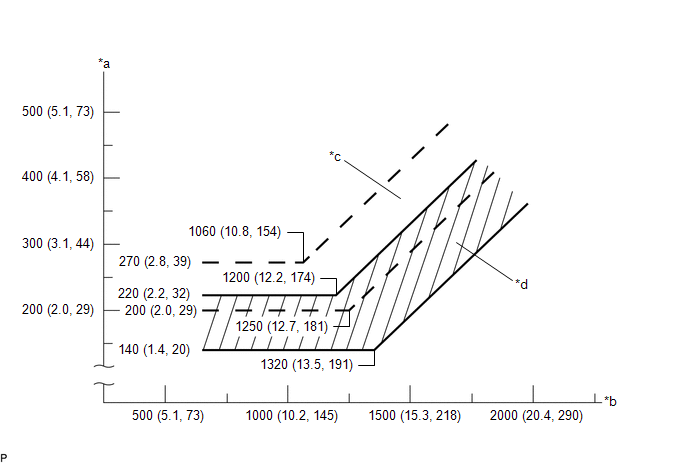
*a |
Low pressure side pressure in kPa (kgf/cm2, psi) |
*b |
High pressure side pressure in kPa (kgf/cm2, psi) |
*c |
Blower high zone |
*d |
Blower low zone |