Fuse Inspection, Electrical Equipment Service
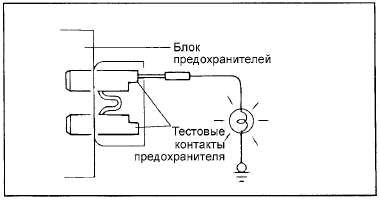
FUSE INSPECTION
A blade-type fuse has test terminals that allow its condition to be checked without removing it from the fuse block. The fuse is good if the test lamp lights when one probe is connected to one of the test terminals and the other probe is connected to ground. (Turn the ignition switch to the "ON" position to energize the circuit protected by the fuse.)
ELECTRICAL EQUIPMENT SERVICE
1. Before servicing electrical equipment, make sure the ignition is off and the wire is disconnected from the negative battery terminal.
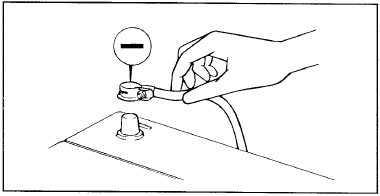
If the battery cable is disconnected, the trouble codes stored in the electronic control unit memory during diagnosis of the MFI (multi-point fuel injection) and ELC systems will be erased. Therefore, if necessary, read the diagnostic trouble codes before disconnecting the battery cable.
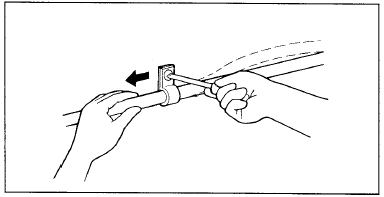
2. Secure the wiring with clips so that it has no slack. However, wires running to the engine or other vibrating parts must be routed with some slack, within limits that prevent engine vibration from causing the wires to contact nearby parts, and then secured with a clip.
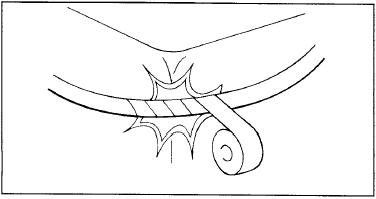
3. If any section of wiring crosses sharp edges or corners of parts (or passes through holes), wrap that section with insulating tape or an equivalent material to prevent damage to the wiring.
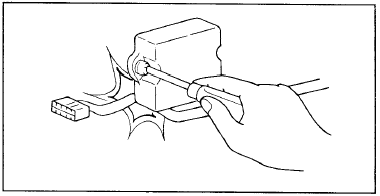
4. Be careful when installing any electrical components. Do not pinch or damage the wires.
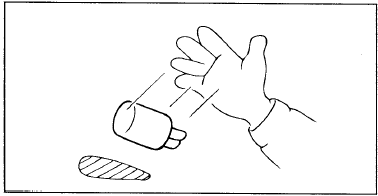
5. Never drop or strike relays, sensors or other electrical components.
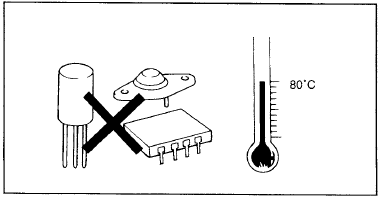
6. Electronic components used in electronic control units, relays, etc. can be easily damaged by heat. If a procedure that may heat components above 80°C (176°F) is required, remove the electronic components beforehand.
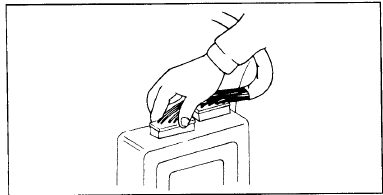
7. Loose connections cause malfunctions. Always check that connectors are fully engaged and locked.
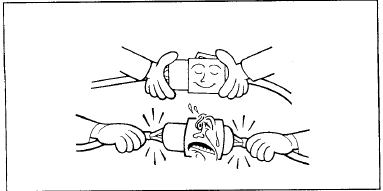
8. When disconnecting connectors, pull only on the connector housing. Do not pull on the wires.
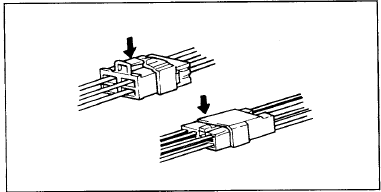
9. To disconnect a connector with a lock, press the lock as shown by the arrow in the illustration.
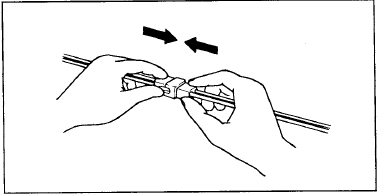
10. When connecting a connector with a lock, insert the connector until the lock clicks into place.
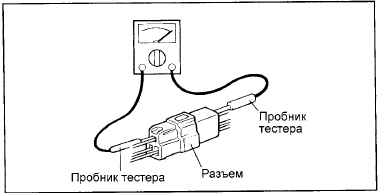
11. When checking circuit condition or voltage between connector terminals with a multimeter, insert the meter probes into the connector from the wire side. When checking a sealed (waterproof) connector, insert the multimeter probes through the hole in the rubber cover of the connector until they contact the terminals.
Be careful not to damage the wire insulation when performing this operation.
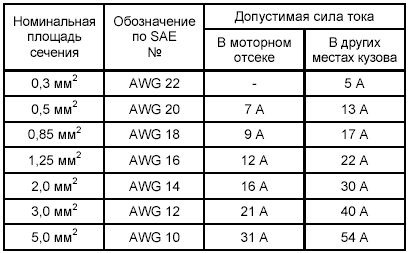
12. To prevent overloading the wiring, take into account the electrical load from additional electrical equipment and select the appropriate wire size (cross-sectional area).
Test yourself
A quick Hyundai Elantra CN7 quiz: every answer comes with an explanation and a link to the manual page.