Cooling System
Inspect the cooling system for damaged hoses, loose connections or leaks at the connections, or other possible causes of coolant leakage.
ANTIFREEZE/COOLANT
The engine cooling system uses a mixture of 50 % ethylene glycol antifreeze and 50 % distilled water. (For vehicles operated in tropical regions, the engine cooling system uses a mixture of 40 % ethylene glycol antifreeze and 60 % distilled water.) Since the cylinder head and water pump housing are made of aluminum alloy, make sure the ethylene glycol antifreeze concentration in the coolant is within 30-60 % to provide corrosion protection and an acceptable antifreeze freezing point.
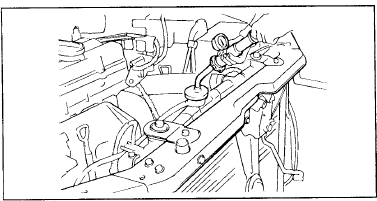
If the antifreeze concentration is below 30 %, the corrosion protection of the coolant is significantly reduced. If the concentration is above 60 %, the freezing point of the antifreeze increases (heat transfer efficiency decreases), which adversely affects the engine. Therefore, make sure the antifreeze concentration is within the specified range.
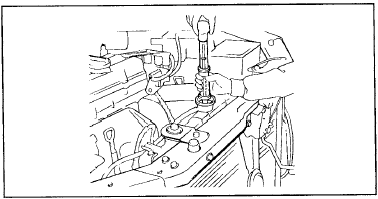
MEASURING ANTIFREEZE CONCENTRATION
Start the engine and let it run so that the coolant in the cooling system is fully mixed. Drain a small amount of coolant into a separate container, then measure the temperature and specific gravity of the coolant. Determine the antifreeze concentration and the safe operating temperature. If the antifreeze concentration in the coolant is low, add antifreeze to the nominal ratio. (40 % for tropical regions and 50 % for all other regions.)
COOLANT REPLACEMENT
1. Set the temperature control dial to the maximum heat position (MAX HOT).
2. Remove the radiator cap.
3. Loosen the drain plug and drain the coolant.
4. Drain the coolant from the reserve tank.
5. After the coolant has been completely drained, tighten the drain plug securely.
6. Fill the radiator with coolant up to the base of the filler neck.
7. Fill the reserve tank with coolant up to the "MAX" mark.
8. Start the engine and warm it up until the thermostat opens, then carefully remove the radiator cap and check the coolant level.
9. If the coolant level is at the base of the radiator filler neck, install the radiator cap securely.
10. Fill the reserve tank with coolant up to the "MAX" mark.
Test yourself
A quick Hyundai Elantra CN7 quiz: every answer comes with an explanation and a link to the manual page.