Suspension System
TPMS Receiver Description and Operation
In this manual: Suspension System
5steps
~30min
2/5difficulty
Done 0 of 5
Description
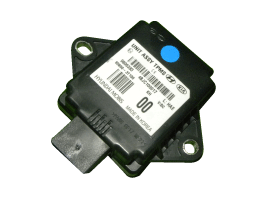
- The TPMS function monitors tire pressure and temperature and warns the driver of changes that could potentially affect driving conditions. The cluster warning lamp displays messages generated as a result of data processing. The ECU processes data received from the sensors, determines tire status, and then sends all necessary warning signals to the driver via the CAN line or hard-wired control line.
- Mode
- Virgin Mode
A. This mode is active when the unit is in stock as a service part, meaning there is no vehicle code, wheel size, or sensor ID data stored in its memory. B. In this mode, the receiver does not store radio signals received from the pressure sensors, and does not control the warning lamp. C. It also does not detect or store DTCs and does not perform automatic learning or automatic location functions. D. After turning the ignition on, use a diagnostic tool (GDS, etc.) or TPMS initiator to enter the vehicle code / wheel size / sensor ID. This changes the current mode to Normal. - Normal Mode
A. This mode applies when the vehicle is shipped from the factory. B. It performs all standard TPMS functions. C. Check the system indicator lamp (TPMS indicator) to determine the current TPMS receiver mode. D. In Virgin mode: when the IG is turned on, it stays on for 3 seconds, then flashes every half second. E. In Normal mode: when the IG is turned on, it stays on for 3 seconds, then turns off. (However, it stays on if a malfunction code exists.)
- Virgin Mode
Operation
- General Function
A. Auto-location/learning occurs only once per ignition cycle. B. When completed successfully, the 4 road wheel sensor IDs along with their corresponding road wheel locations are stored in memory for monitoring. C. Until auto-learning is completed, previously learned sensors (along with their corresponding locations) are monitored for low pressure / leakage warning. D. Spare tire inflation / DTC status is not displayed. - General conditions for learning new sensors:
A. The receiver must automatically identify the 4 road wheel sensors. B. Auto-location/learning operates only at speeds above 20 km/h. C. The receiver must determine that it is confident the sensor is not temporary: - Uses vehicle speed.
- Uses the confidence level of previously learned sensors.
D. Typical time to learn a new sensor when driving at speeds above 20 km/h is up to 10 minutes. - General conditions for canceling remote sensor learning:
A. It takes less than 10 minutes at a speed of 20-30 km/h. B. Reduced reliability depends on the vehicle speed and the number of sensors known to the receiver.
Test yourself
A quick Hyundai Genesis DH quiz: every answer comes with an explanation and a link to the manual page.
Was this page helpful?