Engine Mechanical System
Radiator Repair Procedures
In this manual: Engine Mechanical System
19steps
~114min
4/5difficulty
Done 0 of 19
Removal and Installation
- Disconnect the negative battery cable.
- Remove the engine undercover. (Refer to Engine and Transaxle Assembly - "Engine Undercover")
- Drain the coolant. (Refer to Cooling System - "Cooling".)
- Remove the cooling fan. (Refer to Cooling System - "Cooling Fan".)
- Disconnect the upper radiator hose (A).

- Disconnect the radiator lower hose (A).

- Remove the bolt (A) from the A/C tube bracket.
Tightening torque: 6.9 ~ 10.8 N·m
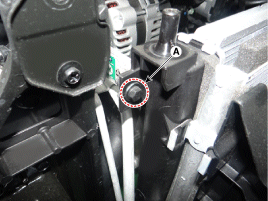
- Separate the condenser from the radiator (A), then pull the radiator (A) upward and remove it from the engine compartment.

- To install, perform the removal procedure in reverse order.
- Fill the radiator with coolant. (Refer to Cooling System - "Cooling".)
- Start the engine and check for leaks.
Inspection
Radiator Cap Test- Remove the radiator cap, moisten the seal with engine coolant, then install it on the tester.
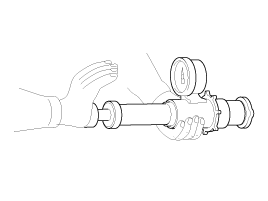
- Apply pressure of 93.2 to 122.6 kPa (0.95 to 1.25 kgf/cm², 13.51 to 17.78 psi).
- Check for pressure drop.
- If the pressure drops, replace the radiator cap.
- Wait until the engine has cooled, then carefully remove the cap from the radiator and fill the radiator with engine coolant. Then install it on the pressure tester.
- Connect the pressure tester to the radiator and apply pressure of 93.16 to 122.58 kPa (0.95 to 1.25 kgf/cm², 13.51 to 17.78 psi).
- Check for engine coolant leaks or a drop in pressure.
- Remove the tester and install the radiator cap.
Test yourself
A quick Hyundai i20 quiz: every answer comes with an explanation and a link to the manual page.
Was this page helpful?