In this manual: Heating, Ventilation, and Air Conditioning
24steps
~144min
4/5difficulty
Done 0 of 24
Precautions (R-134a)
When Handling Refrigerant
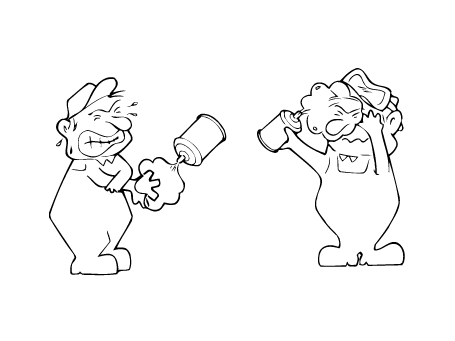
Liquid R-134a refrigerant is very volatile. A drop on the skin may cause local frostbite. Always wear gloves when handling refrigerant.
It is standard practice to wear protective goggles or safety glasses and gloves to protect the hands. If refrigerant gets into the eyes, flush them immediately with clean water.
The R-134a container is under high pressure. Never leave it in a hot place, and check that the storage temperature is not above 52 °C.
Use an electronic leak detector to check the system for refrigerant leaks. Note that R-134a, when in contact with flame, produces phosgene, a highly toxic gas.
Use only the lubricant recommended for R-134a systems. If lubricants other than the recommended type are used, system failure may occur.
PAG lubricant absorbs moisture from the atmosphere very quickly, so the following precautions must be observed:
When removing refrigerant components from the vehicle, cap the components immediately to prevent moisture from entering.
When installing refrigerant components on the vehicle, do not remove the cap until immediately before connecting the components.
Complete the connection of all refrigerant lines and hoses without delay to prevent moisture from entering the air conditioning system.
Use only recommended lubricant taken from a sealed container.
If an accidental discharge into the system occurs, ventilate the work area before resuming service.
Never open or loosen a connection until the system has been discharged.
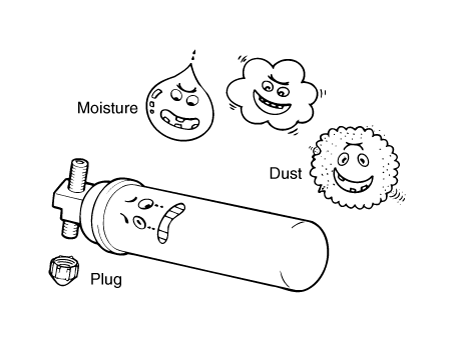
Immediately cover open component fittings with caps or plugs to prevent the entry of moisture or dust.
Do not remove the sealing caps from a replacement component until it is ready for installation.
Always install a new O-ring before connecting an open fitting. Lubricate and seal the fitting with refrigerant oil before connecting.
When it is necessary to open the refrigerant system, prepare all the items you will need to service the system so that it is not left open longer than necessary.
Close or plug all lines and fittings as soon as they are opened to prevent dirt and moisture from entering.
All lines and components in parts storage must remain capped or sealed until they are ready for use.
Never attempt to bend formed lines to make them fit. Use the correct line for the system you are servicing.
All tools, including the refrigerant dispensing manifold, manifold gauge set, and charging hoses must be kept clean and dry.
When replacing air conditioning system parts, when installing connecting parts: Flange with guide pin. Inspect the new O-ring for damage (use only the specified type) and apply compressor oil to it. Tighten the nut to the specified torque. Handling of Tubes and Fittings: The internal parts of the refrigerant system will remain chemically stable as long as clean refrigerant free of moisture and refrigerant oil are used. Abnormal amounts of dirt, moisture, or air may disrupt chemical stability and cause problems or serious damage. The following precautions must be observed.
Precautions (R-1234yf)
Liquid R-1234yf refrigerant is a flammable gas. The gas reduces the amount of oxygen available for breathing and causes asphyxiation at high concentrations. The victim may not realize they are suffocating.
Inhalation may affect the central nervous system and may cause drowsiness and dizziness.
Swallowing may cause gastrointestinal discomfort. It may cause skin irritation, eye irritation, and respiratory tract irritation. Do not breathe the vapor. Avoid contact with skin, eyes, and clothing.
In case of an emergency, the following precautions must be observed: The first aider must protect themselves. Immediately remove all contaminated clothing.
Inhalation: Move to fresh air. If not breathing, give artificial respiration. If breathing is difficult, give oxygen. Use oxygen as needed, provided a qualified operator is present. Call a physician.
Skin contact: If skin contact occurs, immediately flush with plenty of water. Rapid evaporation of the liquid may cause frostbite. If signs of frostbite are present, rinse (do not rub) with lukewarm water (not hot water). If water is not available, cover with a clean, soft cloth or similar covering. Call a physician. Wash contaminated clothing before reuse.
Eye contact: Immediately flush with plenty of water, including under the eyelids, for at least 15 minutes. In case of frostbite, use lukewarm water, not hot water. Call a physician.
Ingestion: Unlikely route of exposure. Since this product is a gas, refer to the inhalation section. Do not induce vomiting without medical advice. If conscious, drink plenty of water. Never give anything by mouth to an unconscious person. Call a physician immediately.
The following precautions must be observed when handling refrigerant:
Handle with care.
Wear personal protective equipment.
Do not breathe vapor.
Avoid contact with skin, eyes and clothing.
Make sure eyewash stations and emergency showers are located near the workstation.
Use only in well-ventilated areas.
Protect from sunlight and do not expose to temperatures exceeding 52°C (125°F).
Observe all standard precautions when handling and using compressed gas cylinders.
Use only certified cylinders.
Protect cylinders from physical damage.
Do not puncture or drop cylinders, and do not expose them to open flame or excessive heat.
Do not remove the screw cap until ready for use.
Always replace the cap after use.
Empty container is hazardous.
Prevent the formation of flammable or explosive vapor-air mixtures and avoid vapor concentrations above occupational exposure limits.
Keep product and empty containers away from heat and ignition sources.
Do not pressurize, cut, weld, braze, solder, drill, grind or expose containers to heat or sources of ignition.
Take precautionary measures against static discharge.
Electrical equipment must be properly protected according to the applicable standard.
Use explosion-proof equipment.
Do not use spark-producing tools.
No smoking.
The following precautions must be observed when storing refrigerant:
Pressurized container. Protect from sunlight and do not expose to temperatures above 52 °C. Do not puncture or incinerate, even after use.
Store containers tightly closed in a dry, cool and well-ventilated place.
Store away from heat and ignition sources.
Storage areas must be well ventilated.
Provide adequate ventilation, especially in enclosed areas.
Protect cylinders from physical damage.
Store away from incompatible substances.
Store in original packaging.
Uncontrolled release of R-1234yf refrigerant into the work area may result in high concentrations of R-1234yf, which may be flammable. R-1234yf systems must be serviced only in well-ventilated work areas.
When servicing, maintaining or repairing air conditioning systems using flammable refrigerants (flammable or higher), the workplace must comply with all applicable national, regional or local workplace safety regulations relating to high pressure or flammable gases.
Avoid breathing refrigerant vapor and lubricant mist. To remove refrigerant from the air conditioning system, use recovery and recycling service equipment certified to meet the requirements of the applicable SAE standards.
Do not pressurize any mobile air conditioning system with R-134a or R-1234yf using shop air or other refrigerants such as HCFC-22 (R-22) for leak testing. Due to possible chemical reactions, air/R-134a mixtures may become flammable at elevated pressure, and the system may be contaminated and structurally damaged.
To prevent refrigerant accumulation in case of a major refrigerant leak, open the vehicle windows and doors when charging the air conditioning system.
To prevent accidental refrigerant release and minimize safety hazards, connect any refrigerant service equipment to the vehicle only with the engine off and after the refrigerant pressure on the high-pressure side has been reduced (approximately 2-3 minutes).
For all refrigerants, observe the handling procedures specified in the refrigerant manufacturer's Safety Data Sheet (SDS).
Service personnel must know the location of the high-pressure relief valve when servicing the vehicle. Service personnel must not stand under the vehicle when charging the refrigerant system due to the possibility of sudden high-pressure discharge from the pressure relief valve.
When Handling Refrigerant
Some practices, techniques and procedures, as well as information, tools and equipment commonly used in diagnosing and servicing mobile R-12 and R-134a air conditioning systems differ for systems using R-1234yf. Modifications and adjustments must be made based on the individual characteristics of each refrigerant. No technician may perform service or repair of a mobile air conditioning system using R-1234yf without training in refrigerant handling. In accordance with SAE J2845, the refrigerant system must be serviced by trained and certified technicians to ensure proper and safe operation.
Service personnel must always wear appropriate personal protective equipment when handling or servicing systems containing any refrigerant.
Service personnel must read and follow the applicable Material Safety Data Sheets (MSDS), which contain safety information and proper use of personal protective equipment. - Avoid any contact with liquid or gaseous refrigerant. - Wear safety goggles with side shields and gloves (insulated against heat loss and impermeable to refrigerant) when working on the refrigerant circuit. - Refrigerant contact with skin may cause frostbite. In this case, flush the affected area with lukewarm water. Consult a physician immediately regarding affected skin areas.
If complaints persist, seek medical attention immediately after exposure to high refrigerant concentrations. Complaint symptoms may include: rapid breathing, shortness of breath, headache, rapid pulse, dizziness.
Avoid breathing air conditioning refrigerant and lubricant vapor or mist. Use service equipment to remove refrigerant from the air conditioning system. Use only recovery equipment certified to meet the requirements of applicable SAE standards.
Liquid R-1234yf refrigerant evaporates very quickly. A drop on your skin may cause localized frostbite. Always wear gloves when handling refrigerant.
It is standard practice to wear protective goggles or safety glasses and gloves to protect the hands. If refrigerant gets into the eyes, flush them immediately with clean water.
The R-1234yf container is under high pressure. Never leave it in a hot place, and make sure the storage temperature is below 52 °C.
Use an electronic leak detector to check the system for refrigerant leaks. Be aware that R-1234yf, when in contact with flame, produces phosgene, a highly toxic gas.
Use only the lubricant recommended for R-1234yf systems. If lubricants other than those recommended are used, system failure may occur.
PAG lubricant absorbs moisture from the atmosphere very quickly, so the following precautions must be observed:
When removing refrigerant components from the vehicle, cap the components immediately to prevent moisture from entering.
When installing refrigerant components on the vehicle, do not remove the cap until immediately before connecting the components.
Complete the connection of all refrigerant lines and hoses without delay to prevent moisture from entering the air conditioning system.
Use only recommended lubricant taken from a sealed container.
If an accidental discharge into the system occurs, ventilate the work area before resuming service.
Clean all dirt, grease and debris from and around refrigerant connections before servicing and disconnecting the connections.
?
Test yourself
A quick Hyundai Palisade quiz: every answer comes with an explanation and a link to the manual page.