Supplemental Restraint System (SRS) - Precautions
The front and side supplemental restraint system (SRS) consists of 6 airbags.
Check which types of airbags your vehicle is equipped with by locating the "SRS AIRBAG" markings. These markings are placed where the airbags are installed.
Airbags are installed in the following locations:
- Steering wheel (driver's airbag)
- Instrument panel on the passenger side (passenger's airbag)
- Outboard sides of the front seatbacks (side airbags)*
- Front and rear pillars and roof rails on both sides (curtain airbags)*
The airbag system provides additional protection in certain situations, so it is important to always wear your seat belt.
If seat belts are not fastened, the airbags cannot provide proper protection in a crash. Fastening the seat belt is necessary to:
- Prevent the passenger from striking the inflating airbag.
- Reduce the risk of injury in collisions that do not deploy the airbags, such as a rollover or a rear impact.
- Reduce the risk of injury in frontal, frontal-oblique or side collisions that are too weak to deploy the airbags.
- Reduce the risk of an occupant being ejected from the vehicle.
- Reduce the risk of lower body and leg injuries in an accident, which airbags do not protect against.
- Keep the driver in a position that allows control of the vehicle.
Small children who cannot be protected by seat belts must be properly secured in a child seat (page 2-24).
Carefully check which child seat is required for the child you are transporting, and follow the child seat installation recommendations in this owner's manual as well as the recommendations provided by the child seat manufacturer.
WARNING
In vehicles equipped with airbags, wearing seat belts is mandatory: Not wearing seat belts in a vehicle equipped with airbags endangers safety in a collision. The airbags alone will not prevent serious injuries. The appropriate airbags will deploy only in the first frontal, frontal-oblique or side collision of sufficient severity. Occupants should always wear their seat belts.
Do not transport children in the front passenger seat.
Transporting a child under 12 years of age in the front seat is dangerous. A deploying airbag can strike the child, causing serious injury or death. In a collision of sufficient severity, a sleeping child leaning against the door may be struck by the side airbag. Whenever possible, always transport children under 12 in the rear seat, using a child seat appropriate for the child's age and height.
Special danger! Never use a rear-facing child seat on the front passenger seat unless the airbag is deactivated: NEVER use a rear-facing child seat on a front seat protected by an ACTIVE AIRBAG. This can result in the DEATH or SERIOUS INJURY of the child.
Even in a minor collision, the child seat can be struck by a deploying airbag and forced rearward, causing serious injury or death to the child. If the vehicle is equipped with a front passenger airbag switch, always set the switch to OFF when installing a rear-facing child seat on the front passenger seat.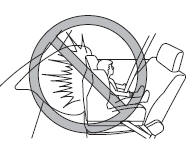
Do not sit too close to the driver's or passenger's airbag: Sitting too close to the driver's or passenger's airbag, or placing your hands or feet on it, poses a serious risk. The driver's and passenger's airbags deploy with great force and speed.
Being positioned too close to the airbag risks serious injury. The driver should always keep their hands only on the rim of the steering wheel. The front passenger should always keep their feet on the floor. Front occupants should always position their seats as far as possible from the airbags, sit upright, lean against the seatback, and wear their seat belts.
Sit in the middle of the seat and fasten your seat belt correctly: Sitting too close to the side airbag, placing your arm on it, leaning against the door, or leaning out of an open window is dangerous.
The side airbag deploys with great force and speed from the outer side of the front seatback and occupies the space along the front door on the side of the impact. A person sitting too close to the door or leaning against the window, or a person sitting in the rear seat with their hands on the side of the front seatback, may suffer serious injuries. Leave free space for the side airbags and curtain airbags to deploy, sit in the middle of the seat, and always wear your seat belt correctly.
Do not attach any objects to the front seat airbag locations: Attaching any objects in these locations endangers safety.
In a collision, such objects may hinder or prevent airbag deployment or cause injury to occupants.
Do not attach any objects to and/or near the zones of action of the side airbags: Attaching objects to the front seats in a way that covers the outer side of the seatback endangers safety. In a collision, such objects may hinder or prevent the airbag from deploying from the outer side of the seatback, eliminating the benefit of additional side protection, or change the direction of airbag deployment in a dangerous way. In addition, the airbag may be punctured, releasing the gas inside.
Do not hang nets, map pockets or backpacks with side straps on the front seatbacks. Never use front seat covers. Always keep the area on the side of the side airbags clear to allow them to deploy in a side collision.
Do not place any objects on or near the zones of action of the curtain airbags: Attaching any objects near the curtain airbag zones, such as the windshield, side windows, front and rear pillars, along the roof edge, and grab handles, endangers safety.
In a collision, these items may obstruct or prevent the deployment of the curtain airbags mounted in the front and rear pillars and along the roof edges, eliminating their additional protection or dangerously changing the direction in which the airbag deploys. In addition, the airbag may be punctured, releasing the gas inside.
Do not attach additional hangers or other items to the grab handles.
Hang clothing directly on the existing hangers. Always leave clear space for the curtain airbags to deploy.
Do not touch SRS components after the airbags have deployed: Touching system components after the airbags have deployed (inflated) is a safety hazard. Immediately after deployment, they are very hot.
There is a risk of burns.
Never install any additional equipment on the front of the vehicle: Installing additional equipment such as tubular bumper guards (kangaroo bar, bull bar, push bar, or similar), snow plows, or winches is a safety hazard. They may damage the crash sensor system, which may cause the airbags to deploy unexpectedly or the sensors to fail to respond in a collision. As a result, front seat occupants may be seriously injured.
Do not modify the suspension: Modifying the vehicle suspension is a safety hazard. Changing the vehicle height and/or suspension prevents accurate collision detection, which may cause the airbag to deploy incorrectly or unexpectedly, resulting in serious injury.
Do not modify the front doors or leave damage unrepaired.
Always have damaged front doors inspected by a specialist service; we recommend a Mazda Authorized Service Center.
Modifying the front doors or leaving damage unrepaired is a safety hazard. Each front door has a side impact sensor that is a component of the SRS. Drilling holes in the front doors, leaving the opening after removing a door speaker, or leaving doors unrepaired may adversely affect sensor operation and prevent it from correctly detecting impact force in a collision. If the side impact sensor does not detect a side impact correctly, the side airbags, curtain airbags, and seat belt pretensioners may not function properly, which may result in serious passenger injury.
Do not modify the airbag system: Modifying the airbag system components or wiring is a safety hazard. The system may be accidentally activated or damaged. Never modify any part of the airbag system. Do not attach any decorations, badges, or other items to the airbag mounting locations. Do not install any additional electrical devices on or near system components or their wiring. Specialist services can assist with removing and reinstalling the front seats; we recommend a Mazda Authorized Service Center. It is important to protect the wiring harnesses and airbag connections to ensure that the airbags do not deploy accidentally, that the driver seat position sensor is not damaged, and that the seats keep their airbag connectors intact.
Do not place luggage or other items under the front seats.
Placing luggage or other items under the front seats is a safety hazard. Components necessary for the safety system to operate may be damaged, and as a result the relevant airbags may not deploy in a collision, which may result in death or serious injury. To prevent damage to the components necessary for the passive safety system to operate, do not place luggage or any other items under the front seats.
Do not drive the vehicle with damaged airbag/seat belt pretensioner components: Airbags or seat belt pretensioners must be replaced after any collision that caused them to deploy or be damaged. Only a specialist service, we recommend a Mazda Authorized Service Center, can fully assess the effectiveness of these systems in a subsequent potential accident. Driving with airbags or seat belt pretensioners that were deployed in a collision or are damaged will not provide the necessary protection in a further potential accident, which may lead to serious injury or death.
Do not disassemble internal SRS components: Removing any parts such as the front seats, instrument cluster, steering wheel, or parts of the front and rear pillars and roof edges that contain airbag components or sensors is a safety hazard. These parts contain essential components of the airbag system. This may cause accidental airbag deployment, resulting in serious injury. These parts may be removed only by a specialist service; we recommend a Mazda Authorized Service Center.
Proper disposal of the airbag system: Improper disposal of an airbag or scrapping a vehicle with functional airbags may pose a serious hazard.
Failure to follow safety precautions may result in personal injury.
Specialist services can provide information on the safe disposal of airbags or scrapping a vehicle equipped with an airbag system.
We recommend contacting a Mazda Authorized Service Center.
CAUTION
When the airbags deploy, a loud inflation noise will be heard and some smoke will be released. This does not cause any injury; however, the airbag material may cause minor skin abrasions on contact.
If you sell your Mazda, please inform the new owner about the airbag system and the need for them to read the instructions.
The label placed in a visible location warns against using a rear-facing child seat on the front passenger seat.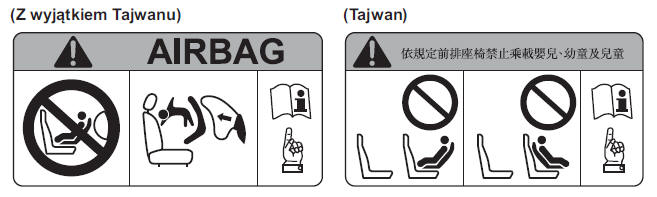
Test yourself
A quick Mazda 2 quiz: every answer comes with an explanation and a link to the manual page.