Forward Obstruction Warning (FOW)
The Forward Obstruction Warning (FOW) is a system that warns the driver of a possible collision by means of an indicator and an audible alarm on the instrument panel when the vehicle is travelling at approximately 15 km/h or more and the system's radar sensor determines that your vehicle could collide with a vehicle or obstacle ahead of you.
WARNING
Do not rely entirely on the Forward Obstruction Warning (FOW) system and always drive carefully:
The Forward Obstruction Warning (FOW) is only designed to reduce collision damage. Its ability to detect an obstacle is limited depending on the obstacle, weather or traffic conditions. Therefore, if the accelerator pedal or brake pedal is depressed by mistake, an accident may result. Always check the safety of the surrounding area and depress the brake or accelerator pedal while keeping a sufficient distance from vehicles ahead of or behind you.
NOTE
The Forward Obstruction Warning (FOW) system operates when all of the following conditions are met:
- The ignition switch is turned on.
- The Forward Obstruction Warning (FOW) system is turned on.
- The vehicle speed is at least 15 km/h.
- The relative speed between your vehicle and the vehicle or obstacle ahead of you is approximately 15 km/h―145 km/h.
The Front Obstruction Warning (FOW) system may not operate under the following conditions:
- When there is a possibility of striking only part of the vehicle or the obstacle ahead of you.
- When your vehicle accelerates rapidly and approaches the vehicle ahead of you.
- The Dynamic Stability Control (DSC) is malfunctioning.
- Your vehicle is traveling at the same speed as the vehicle ahead of you.
- The brake pedal is depressed.
- The brake pedal is depressed.
- The steering wheel is being turned.
- The selector lever is being operated.
- The turn signal is being used.
Although the objects that activate the system are four-wheeled vehicles, the radar sensor may detect the following objects, identify them as obstacles, and activate the Front Obstruction Warning (FOW) system.
- There are objects on the road approaching a curve (including guardrails and snowbanks).
- A vehicle appears in the opposite lane while turning or driving around a curve.
- When crossing a narrow bridge.
- When passing under a low or narrow gate, or when driving through a tunnel.
- When entering an underground parking facility.
- There are metal objects, bumps or protruding objects on the road.
- When you suddenly approach the vehicle ahead of you.
- When driving in areas with tall grass or hay.
- Two-wheeled vehicles such as motorcycles or bicycles.
- Pedestrians or non-metallic objects such as standing trees.
Display indication
The operating status or malfunctions of the Front Obstruction Warning (FOW) system are shown in the instrument cluster display. If a malfunction is indicated, check the vehicle conditions or have it inspected by an authorized Mazda dealer, according to the message displayed.
Refer to Indicator and Warning Lights on page 4-24.
The display can also be activated by pressing the INFO switch on the steering wheel.
Refer to Trip Computer and INFO Switch on page 4-20.
Collision warning
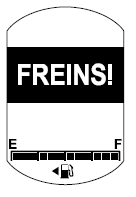
If there is a possibility of a collision with a vehicle or obstacle ahead of you, a continuous warning beep sounds and a warning is shown in the display.
Handling the radar sensor
The Front Obstruction Warning (FOW) radar sensor is installed behind the front grille.
Refer to Radar Sensor on page 4-85.
Test yourself
A quick Mazda 6 quiz: every answer comes with an explanation and a link to the manual page.