Oil level sensor
OPERATION
The sensor consists of a wire with a high resistivity coefficient. When current flows through the wire, its thermal conductivity differs depending on whether it is immersed in a liquid or exposed to air.
After a fixed time, a voltage difference appears across the sensor terminals depending on how far the wire is immersed. This voltage difference is processed by an electronic unit which manages the level display and the "low oil level" warning on the central liquid crystal display.
When the ignition is switched on, the central display shows the oil level as "bars" for about 30 seconds before switching to the total and trip odometer display (or "odometer" function).
NOTE: Turning the trip odometer reset button before the timer ends causes the "odometer" function to be displayed.
FAULT FINDING
If a short circuit or open circuit is detected while measuring the oil level, the display immediately reverts to the total odometer/clock.
CHECKING
The sensor resistance must be between 6 and 20 ohms.
The sensor is considered short-circuited if the value is below 4 ohms.
The sensor is considered open-circuited if the value is above 22 ohms.
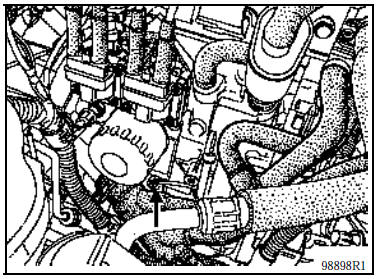
LOCATION
Example: F engine
Test yourself
A quick Renault Kangoo quiz: every answer comes with an explanation and a link to the manual page.