Occupant Classification System (OCS)
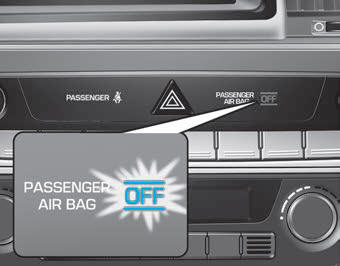
Your vehicle is equipped with an Occupant Classification System (OCS) in the front passenger seat.
Main Components of the Occupant Classification System
- Sensor located in the front passenger seat cushion.
- Electronic system that determines whether the passenger airbag systems should be enabled or disabled.
- Indicator located on the instrument panel that illuminates the words "PASSENGER AIR BAG OFF" to indicate that the front passenger airbag is deactivated.
- The airbag warning lamp on the instrument panel is linked to the OCS.
The OCS is designed to detect a properly seated front passenger and determine whether the front passenger airbag should be enabled (allowed to deploy) or not.
The purpose is to help reduce the risk of injury or death from airbag deployment for certain front passengers, such as children, by automatically turning off the airbag.
For example, if a child restraint of the type specified in the regulations is installed on the seat, the occupant classification sensor may detect it and cause the airbag to turn off.
For adult passengers seated in the front passenger seat and properly wearing their seat belts, the passenger airbag should not automatically turn OFF.
However, for small adults, it may be turned off if the person is not sitting properly (for example, not sitting upright, sitting on the edge of the seat, or otherwise not in their proper position). This may cause the sensor to turn off the airbag.
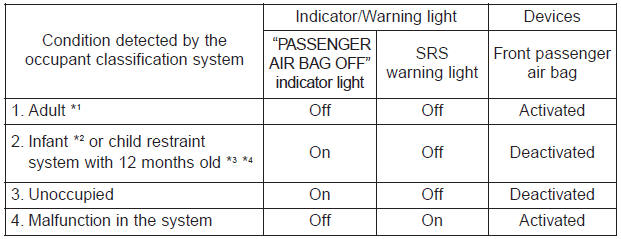
You will find the "PASSENGER AIR BAG OFF" indicator on the center instrument panel. This system detects conditions 1-4 in the following table and activates or deactivates the front passenger airbag depending on these conditions.
Always make sure that you and all passengers in the vehicle are seated properly and wear the seat belt correctly for the most effective protection from the airbag and seat belt.
The OCS may not operate correctly if a passenger takes actions that may affect the occupant classification system. These include:
- Failing to sit upright.
- Leaning against the door or center console.
- Sitting sideways on the front of the seat.
- Placing feet on the instrument panel or on other places that reduce the weight on the front passenger seat.
- Improperly fastening the seat belt.
- Reclining the seatback.
- Wearing thick clothing, such as ski wear or hip protectors.
- Installing an additional thick cushion on the seat.
- Placing electrical devices (such as a laptop or satellite radio) on the seat with an inverter charger.
Conditions and Operation of the Front Passenger Occupant Classification System
WARNING
Riding in an incorrect position or placing a load on the front passenger seat when it is not occupied by a passenger adversely affects the OCS. To reduce the risk of serious injury or death:
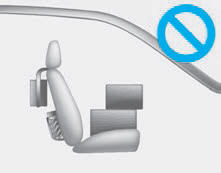
• NEVER place heavy objects in the front seat pocket or seatback pocket, and never hang items on the front passenger seat.
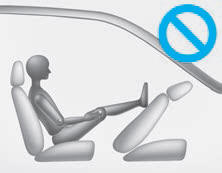
• NEVER place your feet on the front passenger seatback.
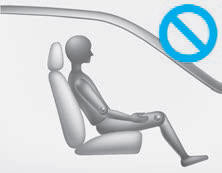
• NEVER sit so that your hips are shifted toward the front of the seat.
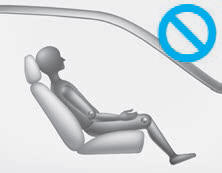
• NEVER ride with the seatback reclined while the vehicle is moving.
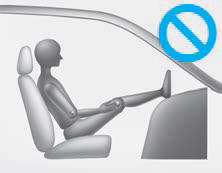
• NEVER put your feet on the instrument panel.
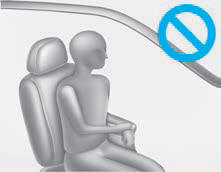
• NEVER lean against the door or center console, or sit on one side of the front passenger seat.
• Do not place electronic devices (for example, a laptop computer, non-original DMB, navigation, satellite audio, video games, MP3 players, AC inverter, etc.) in the front passenger seatback pocket or on the front passenger seat.
• Do not place a mat on the front passenger seat.
• Do not place any objects under the front passenger seat.
• Do not place sharp objects on the front passenger seat. They may damage the occupant detection system if they puncture the seat cushion.
• Avoid getting liquids on the front passenger seat; this may cause the OCS to malfunction. Keep the front passenger seat dry at all times.
Correct Sitting Position for the OCS

If the "PASSENGER AIR BAG OFF" indicator light is on when an adult is seated in the front passenger seat, turn the ignition switch to the LOCK/OFF position and ask the passenger to sit properly (sitting upright with the seatback in the vertical position, centered on the seat cushion with the seat belt fastened, legs comfortably extended and feet on the floor). Restart the engine and keep the passenger in this position. This will allow the system to detect the occupant and turn on the passenger air bag. If the "PASSENGER AIR BAG OFF" indicator light is still on, ask the passenger to move to the rear seat.
WARNING
Never allow an adult passenger to sit in the front passenger seat when the "PASSENGER AIR BAG OFF" indicator light is on. In a collision, the air bag will not deploy while the indicator light is on. Ask your passenger to adjust their position on the seat. If the "PASSENGER AIR BAG OFF" indicator light remains on after the passenger has taken the correct position and the vehicle has been restarted, the passenger should move to the rear seat, because the air bag will not deploy.
NOTICE
The "PASSENGER AIR BAG OFF" indicator light illuminates for approximately 4 seconds after the ignition switch is turned to the ON position or the engine is started. If the front passenger seat is occupied, the OCS classifies the front passenger within a few more seconds.
Test yourself
A quick Hyundai Sonata LF quiz: every answer comes with an explanation and a link to the manual page.