Running gear, axles, steering
Checking inner constant velocity joint
In this manual: Running gear, axles, steering
~2min read
The joint is to be dismantled to renew the grease if it is heavily soiled, or to check the running surfaces of the balls for wear and damage.  Note The ball hub and joint body are paired. Mark position in relation to each other with a waterproof felt-tip pen prior to removal. |
Removing
|
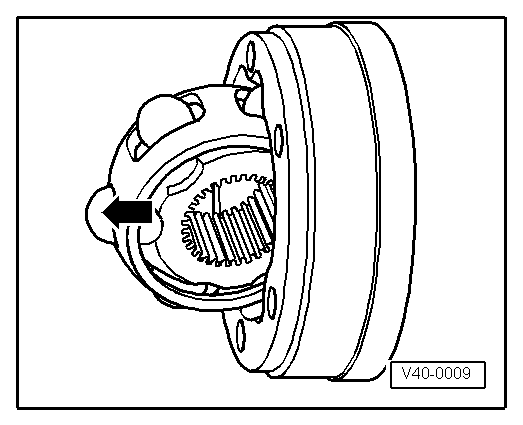 |
Note Excessive circumferential backlash in the joint is noticeable during load change jolts. In this case the joint must be renewed. Smoothing and traces of wear of the balls are no reason to renew the joint. Installing |
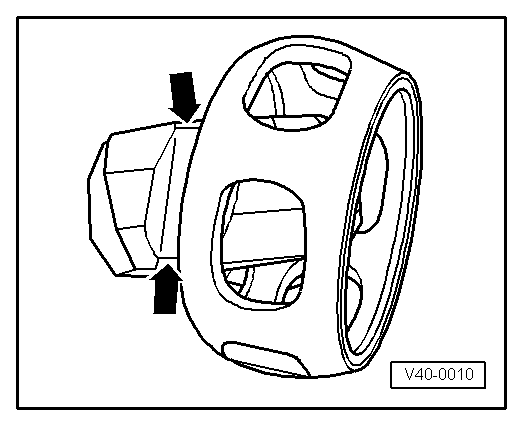 |
Install in reverse order of removal, observing the following:
|
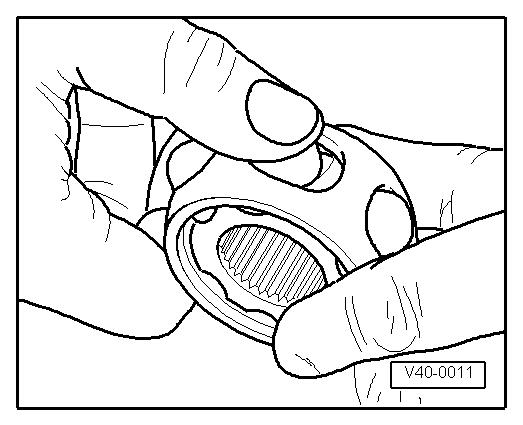 |
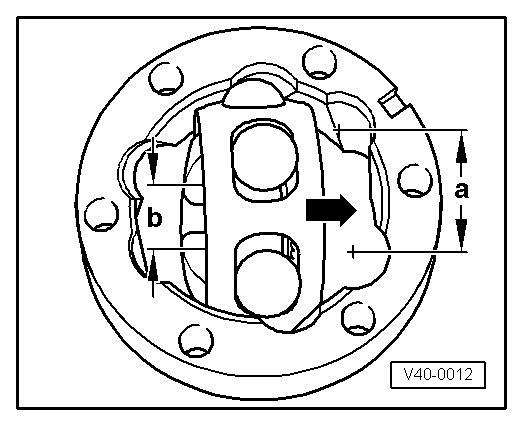
When inserting, ensure that the wide spacing -a- on the joint body is aligned with the narrow spacing -b- on the hub after it is swung in. Chamfer on internal diameter of ball hub (splines) must face large diameter of joint body.
|
 |
|
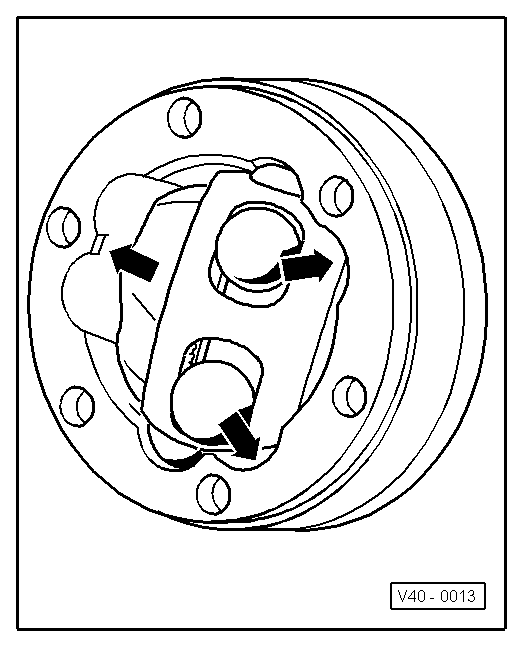 |
Checking function of constant velocity joint:The constant velocity joint is correctly assembled if the ball hub can be moved by hand backwards and forwards over its entire range of axial movement. |
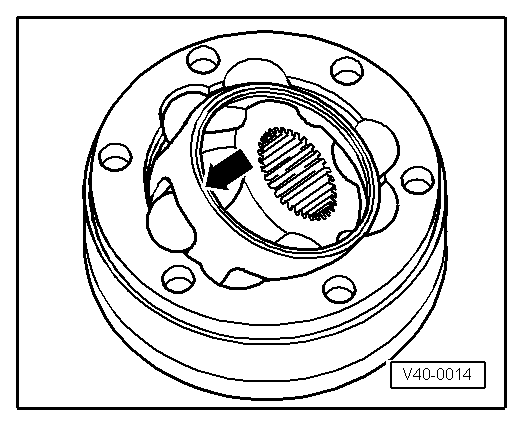 |
Test yourself
A quick Volkswagen Golf quiz: every answer comes with an explanation and a link to the manual page.
Was this page helpful?