Manifold Absolute Pressure Sensor (MAP)
GENERAL INFORMATION
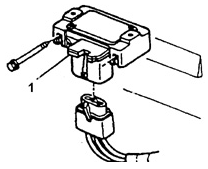
Manifold Absolute Pressure Sensor (MAP)
1. MANIFOLD ABSOLUTE PRESSURE SENSOR
The MAP sensor converts the intake manifold pressure, which
depends on engine load and crankshaft speed, into an electrical
voltage..
With the throttle closed, the MAP sensor signal voltage is low, and with the throttle open it is high. As the throttle opens, the MAP signal changes in the
opposite direction compared to vacuum gauge readings. The MAP sensor is also used to measure atmospheric pressure with the engine
not running, which allows the ECM to adapt control algorithms to the specific
altitude above sea level, which allows the ECM to adapt control algorithms to the specific
altitude above sea level..
The ECM supplies the MAP sensor with a 5 V reference voltage. A change in intake manifold pressure causes a corresponding change in the electrical resistance of the
MAP sensor and the signal voltage.
The ECM determines the intake manifold pressure from the MAP signal voltage. At high pressure (low vacuum), the MAP sensor outputs a high voltage signal and the ECM increases fuel supply to the engine. At
low pressure (high vacuum), the MAP signal voltage decreases and the ECM reduces fuel supply. If the MAP sensor or wiring fails, the ECM sets a trouble code
for malfunction. The MAP sensor is also used to measure atmospheric pressure.
fault
33..
The MAP sensor is used to measure atmospheric pressure. With the ignition on and the engine not running, the ECM uses the MAP signal to correct air-fuel mixture control (compensation for changes in air density, which
depends on altitude above sea level). Altitude compensation helps reduce
the adverse effect of altitude above sea level on the level of harmful
substances in exhaust gases and on engine power. The atmospheric pressure value stored in the ECU memory is periodically updated during steady
driving of the vehicle and during full opening of the throttle valve.
Remove or disconnect:
PROCEDURE.
1. Vacuum hose..
2. Electrical connector..
3. Mounting screws..
4. Sensor..
Installation
PROCEDURE.
1. Sensor and mounting screws..
2. Electrical connector..
3. Vacuum hose.
Test yourself
A quick Daewoo Nexia quiz: every answer comes with an explanation and a link to the manual page.