Tyre maintenance
Note: If parked next to a kerb, do not touch the tyre sidewall.
If you must park on a hill, proceed slowly with the wheels turned perpendicular to the kerb.Regularly check the tread for cuts, foreign objects or signs of uneven wear. Uneven wear may mean that the wheel alignment does not meet specifications.
Check the tyre pressures (including the spare wheel) when the tyres are cold, every two weeks or before starting a journey.Road hazards
No matter how carefully you drive, there is always a possibility of a tyre going flat. Drive slowly to the nearest safe area, away from traffic. This may cause further damage to the flat tyre, but personal safety is more important.If you feel vibration or steering instability while driving, or suspect a vehicle or tyre fault, reduce speed immediately. Drive carefully until you can leave the road safely. Stop the vehicle and check the tyres for damage. If a tyre is damaged or flat, remove the wheel and replace it with the spare wheel.
Wheel alignmentStriking the edge of a kerb or a pothole can affect the alignment or damage the front tyres. If the vehicle pulls to one side, the wheels may be misaligned. Contact an authorised dealer to have the wheel alignment checked. Incorrect alignment of the front or rear wheels can cause uneven or excessive tyre wear, so it must be corrected by an authorised dealer. Driven wheels and vehicles with independent rear suspension may require four-wheel alignment.
An unbalanced wheel and tyre assembly can cause uneven tyre wear.Note: Tyre damage caused by incorrect alignment or balance is not covered by the warranty.
Note: Wheel alignment and balancing are the responsibility of the vehicle owner.Tyre rotation
Note: If the tyres show uneven or premature wear, check the wheel alignment and balance or correct any problems that may exist before rotating the tyres.Note: After rotating the tyres, check and adjust the tyre pressures to the vehicle requirements.
To ensure even wear and a longer service life for the front and rear tyres of the vehicle, it is recommended that they are rotated at regular intervals, as described in the Scheduled Maintenance chapter. Rotate the wheels as shown in the table at regular intervals of 10,000 km.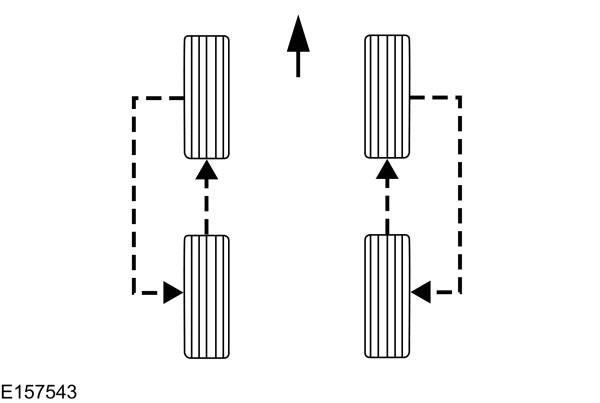
Test yourself
A quick Ford Ka quiz: every answer comes with an explanation and a link to the manual page.