Protecting Your Vehicle's Finish
Washing
To protect your vehicle's paint from rust and wear, wash it thoroughly with warm or cold water at least once a month.
If you use your vehicle for off-road driving, you must wash it after every off-road trip. Pay special attention to removing any accumulations of salt, mud, dirt, and other foreign materials. Make sure the drain holes in the lower edges of the doors and rocker panels remain clear and clean.
Insects, resin, tree sap, bird droppings, industrial fallout, and similar deposits may damage your vehicle's finish if not removed immediately.
Even a quick wash with plain water cannot completely remove all these deposits. Use a mild soap that is safe for painted surfaces. After washing, rinse the vehicle thoroughly with warm or cold water. Do not allow soap to dry on the finish.
High-Pressure Washing
- When using a high-pressure washer, maintain sufficient distance from the vehicle. Insufficient clearance or excessive pressure may cause component damage or water penetration.
- Do not spray the camera, sensors or their surroundings directly with a high-pressure washer. The impact of high-pressure water may cause the device to malfunction.
- Do not bring the nozzle tip close to boots (rubber or plastic covers) or connectors, as they may be damaged if they contact high-pressure water.
WARNING
After washing the vehicle, check the brakes while driving slowly to see if they have been affected by water before proceeding. If braking performance is reduced, dry the brakes by lightly applying them while maintaining a slow forward speed.
NOTICE
- Do not use strong soap, chemical cleaners, or hot water, and do not wash the vehicle in direct sunlight or when the body is warm.
- Be careful when washing the windows of your vehicle. Especially with high-pressure water, water may seep through the windows and wet the interior.
- To avoid damaging plastic parts, do not clean them with chemical solvents or strong cleaners.
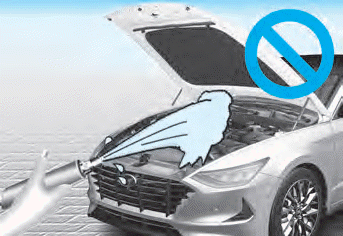
NOTICE
- Washing the engine compartment with water, including high-pressure water washing, may cause electrical circuits located in the engine compartment to malfunction.
- Never allow water or other liquids to contact electrical/electronic components inside the vehicle, as this may cause damage to them.
NOTICE
Matte paint (if equipped): Do not use automatic car washes with rotating brushes, as they may damage the vehicle's surface. Steam cleaners that wash the vehicle surface at high temperature may cause oil to adhere and leave stains that are difficult to remove.
Use a soft cloth (such as a microfiber towel or sponge) when washing the vehicle, and dry it with a microfiber towel. When washing your vehicle by hand, do not use a cleaner containing wax. If the vehicle surface is very dirty (sand, mud, dust, contamination, etc.), rinse the surface with water before washing the vehicle.
Waxing
A good layer of wax provides a barrier between your paint and environmental contamination.
Maintaining a good layer of wax on your vehicle will help protect it.
Wax the vehicle when water no longer beads on the paint.
Always wash and dry the vehicle before waxing. Use a quality liquid or paste wax and follow the manufacturer's instructions. Apply wax to all metal trim to protect it and maintain its shine.
Removing oil, resin, and similar materials with a spot remover will usually remove wax from the finish. Be sure to reapply wax to these areas, even if the rest of the vehicle does not yet need waxing.
NOTICE
- Removing dust or dirt from the body with a dry cloth will scratch the finish.
- Do not use steel wool, abrasive cleaners, or strong cleaning agents containing strongly alkaline or caustic substances on chrome or anodized aluminum parts. This may damage the protective coating and cause discoloration or wear of the finish.
NOTICE
Matte paint finish (if equipped) Do not use protective polishing agents such as cleaners, abrasives, and polishes. If wax has been applied, remove the wax immediately with a silicone remover. If any resin or resin contamination is present on the surface, use a resin remover to clean it. However, be careful not to apply excessive pressure to the painted area.
Test yourself
A quick Hyundai Elantra CN7 quiz: every answer comes with an explanation and a link to the manual page.