Automatic Transmission System (A8LF1)
Transmission Fluid Temperature Sensor (Main Harness)
In this manual: Automatic Transmission System (A8LF1)
19steps
~114min
4/5difficulty
Done 0 of 19
Specifications
Specification
▷ Type: Negative temperature coefficient type| Temperature [(°C)°F] | Resistance (kOhm) |
| (-40) -40 | 48.1 |
| (-20) -4,0 | 15,6 |
| (0) 32,0 | 5,88 |
| (20) 68,0 | 2,51 |
| (40) 104,0 | 1.120 |
| (60) 140,0 | 0,612 |
| (80) 176,0 | 0,329 |
| (100) 212,0 | 0,186 |
| (120) 248,0 | 0,109 |
| (140) 284,0 | 0,067 |
| (150) 302,0 | 0,053 |
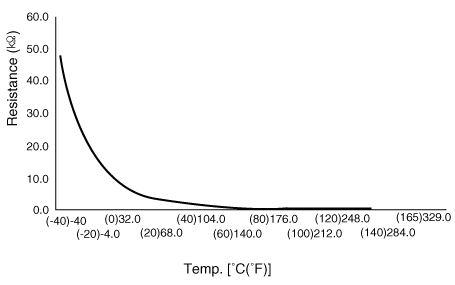
Description and Operation
Description
- The sensor used is a thermistor (NTC), whose resistance changes with temperature.
- The transmission fluid temperature sensor detects the automatic transmission fluid temperature and sends the reading to the TCM.
- When the TCM supplies approximately 5 V to the sensor, the sensor output value changes according to the ATF temperature.
- This is an NTC (negative temperature coefficient) sensor whose resistance is inversely proportional to temperature level. The data generated by this sensor is used to determine the damper clutch engagement and release zones within the low and high temperature ranges, and to perform hydraulic control correction during shifting.
- The transmission fluid temperature sensor is installed on the valve body and integrated with the main harness.

Circuit Diagrams
Wiring Diagram

Repair Procedures
Inspection
|

Removal
|

- Turn the ignition switch OFF and disconnect the negative (-) battery cable.
- Remove the battery and battery tray. (Refer to Engine Electrical System - "Battery")
- Remove the air duct and air cleaner assembly. (Refer to Engine Mechanical System - "Air Cleaner")
- Remove the under cover. (Refer to Engine Mechanical System - "Engine Room Under Cover")
- Drain the engine coolant. (If equipped with ATF warmer) (Refer to Engine Mechanical System — "Engine Coolant").
- Loosen the drain plug (A) and reinstall it after draining the ATF completely.
Tightening torque: 33.3–43 N·m


- Replace the gasket before reinstalling the drain plug.
- Loosen the locking bolt (A) and remove the bracket.
Tightening Torque: 9.8–11.8 N·m

- Loosen the mounting bolts (A) and remove the bracket.
Tightening Torque: 9.8–11.8 N·m

- Disconnect the ATF cooler hose (A).
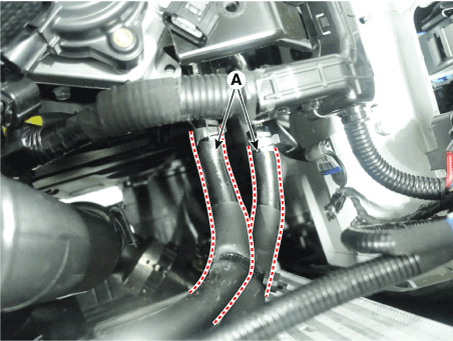

- Carefully install the clamp so as not to damage the hose.
- Install the clamp in the correct direction so that it does not interfere with other parts.
- After installation, start the engine and check for leaks from the hose.
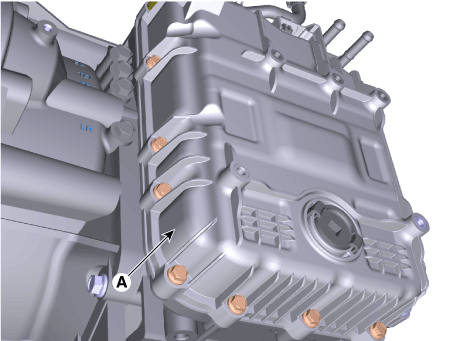
- Loosen the upper bolts (A) of the valve body cover.
Tightening torque: 11.8–13.7 N·m

- Loosen the bolts and remove the valve body cover (A).
Tightening torque: 11.8–13.7 N·m

- Be careful when removing the valve body cover, because residual ATF remains in the cover.

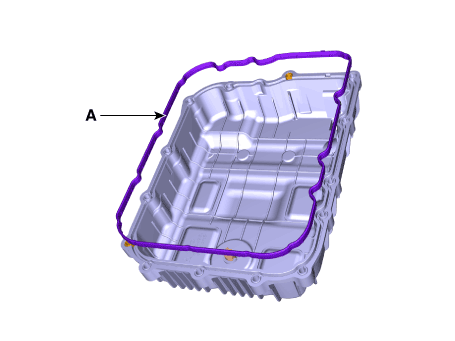
- Replace the gasket (A) before reinstalling the valve body cover.
- After installation, start the engine and check for leaks from the valve body cover.
- Loosen the bolts and then disconnect the main harness (A).
Tightening Torque: 9.8–11.8 N·m

- Loosen the bolts, then remove the valve body assembly (A).
Tightening torque: (A) 9.8–11.8 N·m
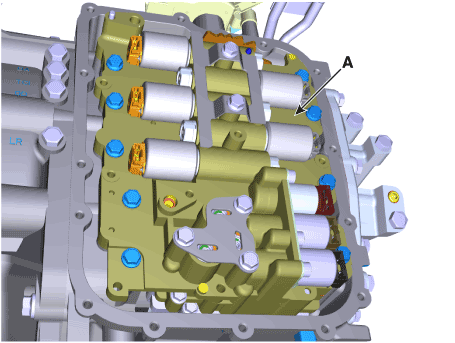

- Attach the manual pin (B) to the detent lever (A) and assemble the valve body.

- Attach the manual pin (B) to the detent lever (A) and assemble the valve body.
- Disconnect the speed sensor connector (A).

- Disconnect the main connector (A).
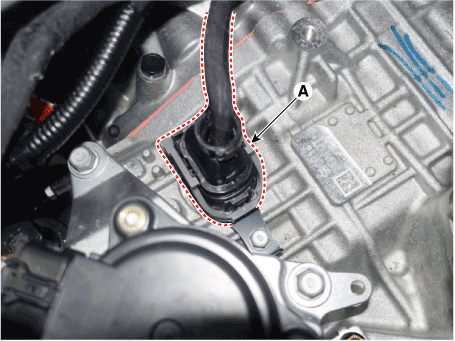
- Loosen the bolt, then remove the clamp retainer (A).
Tightening Torque: 9.8–11.8 N·m
- Remove the main connector (B) by pressing it downward.


- Replace the O-ring (A) before reinstalling the solenoid valve connector.

- Replace the O-ring (A) before reinstalling the solenoid valve connector.
Installation
- To install, reverse the removal procedure.
- Fill the automatic transmission with fluid and check the fluid level. (Refer to Automatic Transmission System — "Automatic Transmission Fluid").

- After checking or replacing the ATF level, be sure to remove any residual ATF from the transmission case. (Pay particular attention to removing residual ATF between the automatic transmission case and the valve body cover.)
Test yourself
A quick Hyundai Palisade quiz: every answer comes with an explanation and a link to the manual page.
Was this page helpful?