Blind-Spot Collision Warning (BCW) / Blind-Spot Collision-Avoidance Assist (BCA)
Description of the System
The Blind-Spot Collision Warning system uses radar sensors in the rear bumper to monitor and warn the driver of approaching vehicles in the driver's blind-spot zone.
1) Blind spot
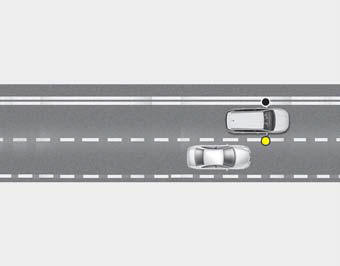
It warns by detecting vehicles in the blind spots. The blind-spot detection range varies depending on vehicle speed.
Note that if your vehicle is traveling much faster than the vehicles around you, the warning will not appear.
2) High-speed closing
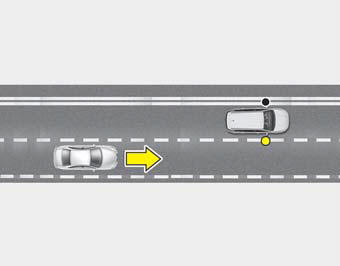
The BCW function warns you when a vehicle is approaching in the adjacent lane at high speed. If the driver turns on the turn signal when the system detects an approaching vehicle, the system sounds a warning alarm.
Blind-Spot Collision-Avoidance Assist
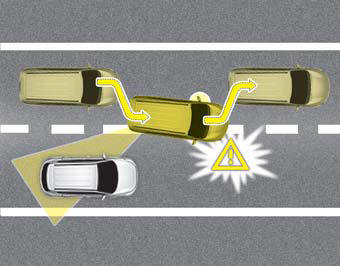
Blind-Spot Collision-Avoidance Assist detects the vehicle ahead through the camera mounted on the upper front windshield and detects side/rear areas through the rear corner radars.
BCA may activate the Electronic Stability Control (ESC) according to the possibility of collision with an approaching vehicle during a lane change. This is to reduce the risk of collision or reduce collision damage.
WARNING
- Always stay aware of road conditions while driving and be alert for unexpected situations even while Blind-Spot Collision Warning and Blind-Spot Collision-Avoidance Assist are operating.
- Blind-Spot Collision Warning and Blind-Spot Collision-Avoidance Assist are supplementary systems to assist you. Do not rely solely on the systems. Always pay attention while driving for your safety.
- Blind-Spot Collision Warning and Blind-Spot Collision-Avoidance Assist do not replace proper and safe driving. Always drive safely and be careful when changing lanes or backing up the vehicle. Blind-Spot Collision Warning and Blind-Spot Collision-Avoidance Assist cannot detect every object near the vehicle.
Test yourself
A quick Kia Cadenza VG Owner's Manual quiz: every answer comes with an explanation and a link to the manual page.