Lubricants and fluids. Engine air filter. Pollen filter. Cabin air filter
Maintenance of the air and pollen filters is essential for the performance and service life of the Kia Opirus (2003–2012). This chapter explains in detail the steps for replacing the engine air filter, pollen filter and cabin air filter, including safety and care notes. In dusty environments, filters should be replaced more often to maintain air quality and engine efficiency. The chapter also covers the handling of cleaning agents and lubricants, particularly when refilling the windshield washer system. Clear warnings help prevent accidents caused by wrong fluids or improper use. This is a comprehensive guide to responsible vehicle care.
Lubricants and fluids
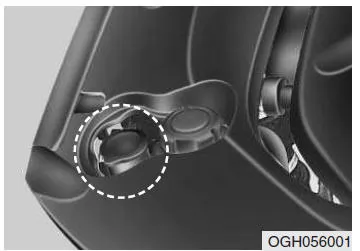
Check the windshield washer fluid level
The reservoir is transparent, so the fluid level can be seen at a glance.
Check the washer fluid level and top up with fluid as needed. If no suitable cleaning agent is available, clear water can be added. However, we recommend using a suitable cleaning agent and, in winter, adding additional antifreeze so that the washer fluid does not freeze.
WARNING- Do not fill engine coolant or radiator antifreeze into the windshield washer reservoir.
- If engine coolant is sprayed onto the windshield, your visibility may be severely reduced, and you could lose control of the vehicle.
- The cleaning and antifreeze agent for the windshield and rear window contains alcohol and is flammable under certain conditions. Therefore, never allow sparks or flames to come into contact with this fluid or the washer fluid reservoir. Otherwise, the vehicle and its occupants could be damaged.
- The windshield washer fluid is toxic to people and animals. Never drink this fluid, and avoid all contact with it. Otherwise, very serious and fatal OGH056001 injuries could occur.
Lubricating body components
All movable body components, such as door hinges, hood hinges and latches, should be lubricated at every oil change. Use a cold-resistant lubricant for lubricating the latches.
Make sure that the secondary hood safety catch holds the hood securely after the hood has been released from the vehicle.
Engine air filter
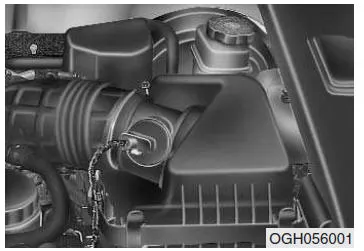
Replacing the air filter element
We recommend having the air filter replaced by your Kia dealer during the scheduled inspections.
The air filter element is made of solid paper and must be replaced when necessary. The filter is not designed to be cleaned and reused.
1. Remove the engine compartment cover.
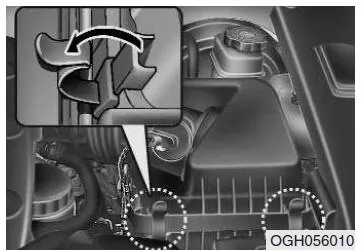
2. Release the clips of the air filter cover and remove the cover.
3. Wipe out the air filter housing with a clean, damp cloth.
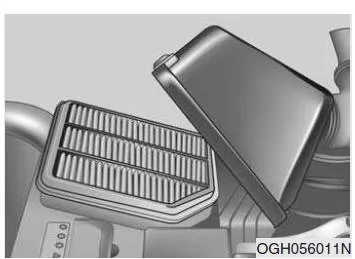
4. Replace the air filter element.
We recommend that the air filter element be replaced with an original Kia part.
5. Secure the clips of the air filter cover and reinstall the engine compartment cover.
Replace the air filter element according to the schedule in the maintenance plan.
If the vehicle is used mainly in dusty environments or on sand, replace the air filter element more often than specified in the standard maintenance schedule (see the special maintenance schedule for severe operating conditions).
CAUTION- Never drive without the air filter element. This would lead to excessive engine wear.
- Driving without an air filter promotes backfiring, which could cause a fire in the engine compartment.
- When removing the air filter, make sure that dust and contaminants do not enter the air intake duct. This could cause damage.
Pollen filter
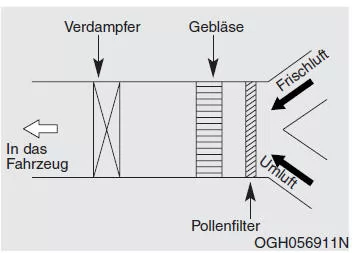
The pollen filter is located between the evaporator and the blower. It filters the air that is directed into the vehicle.
If the filter has collected dust and other particles over a long period, the airflow into the vehicle may be reduced, and it may carry an increased amount of dust.
For this reason, the pollen filter should be replaced regularly at the intervals specified in the maintenance plan. If the vehicle is used mainly in dusty environments or on sand, replace the pollen filter more often.
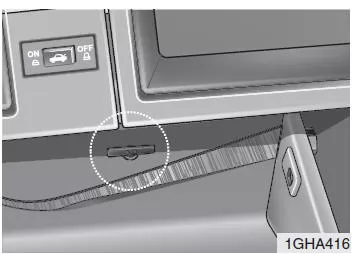
Replacing the Pollen Filter
We recommend having the pollen filter replaced by your KIA dealer during the scheduled maintenance inspections.
1. Partially open the glove box. Reach into the glove box and pull out the elastic cord. Now press the retaining clip through the hole in the back wall of the glove box door and open the glove box fully.
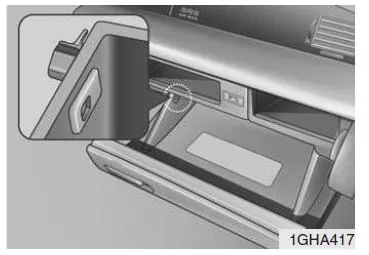
2. With the glove box open, grasp both sides of the glove box, press the stoppers inward and pull the glove box out of the instrument panel. Then let the glove box drop so that it is only held by its hinges.

3. Pull the hooks under the air conditioning filter upward and remove the cover.

4. Replace the pollen filter.
5. Installation is the reverse of removal.
NOTE
When installing the air conditioning filter, make sure the arrow mark on it points downward. If the filter is installed in the reverse direction, it may cause noise and the filter's effectiveness may be reduced.
Cabin Air Filter
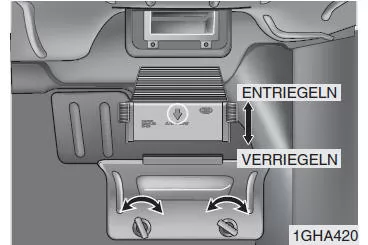
1. Open the trunk lid.
2. Remove both plastic screws of the service cover and remove the cover. The service cover is located at the upper right area of the trunk.
3. Push the holders on both sides of the filter upward to release the filter.
4. Replace the cabin air filter.
5. Installation is the reverse of removal.
NOTE
When installing the air conditioning filter, make sure the arrow mark on it points downward. If the filter is installed in the reverse direction, it may cause noise and the filter's effectiveness may be reduced.
Regular inspection and maintenance of operating fluids, the air filter and the pollen filter on the Kia Opirus 2003–2011 are essential for the vehicle's performance and service life. A clean air filter protects the engine from contaminants, and a fresh pollen filter ensures a comfortable cabin climate.
Filters should always be replaced according to the maintenance schedule and more frequently when driving under severe conditions. This keeps the Kia Opirus reliable and comfortable at all times.
Using genuine parts ensures proper function and prevents unnecessary wear or damage to the engine and cabin air system.
Test yourself
A quick Kia Opirus quiz: every answer comes with an explanation and a link to the manual page.